As the demand for sustainable alternatives to conventional plastics grows, biodegradable polymers like PLA are attracting increasing attention for applications ranging from packaging to consumer goods. However, their long-term durability in real-world humid conditions remains a critical challenge.
A new study published in Polymer Degradation and Stability, led by researchers from IMDEA Materials, analyzes how prolonged exposure to heat and humidity affects PLA reinforced with different two-dimensional (2D) nanomaterials. The work, authored by Petronela Chovancová, Miguel Hernández del Valle, Dr. Maciej Haranczyk, and Dr. Juan Pedro Fernández Blázquez, provides insights into the degradation mechanisms and effective strategies for extending the lifespan of bio-based polymers.
The IMDEA Materials team investigated the effects of long-term hygrothermal aging by exposing PLA nanocomposites to conditions representative of real-world environments: 40 °C and 75% relative humidity for six months. Each composite material contained one of three 2D nanoreinforcements: organomodified nanoclays (NC), graphene nanoplatelets (GNP), or hexagonal boron nitride (hBN).
After six months, the unreinforced PLA and the NC-reinforced PLA experienced severe losses in impact strength, with an approximately 80% reduction in impact toughness. Rheological analysis also showed a drastic decrease in melt viscosity, indicating extensive degradation of the polymer structure.
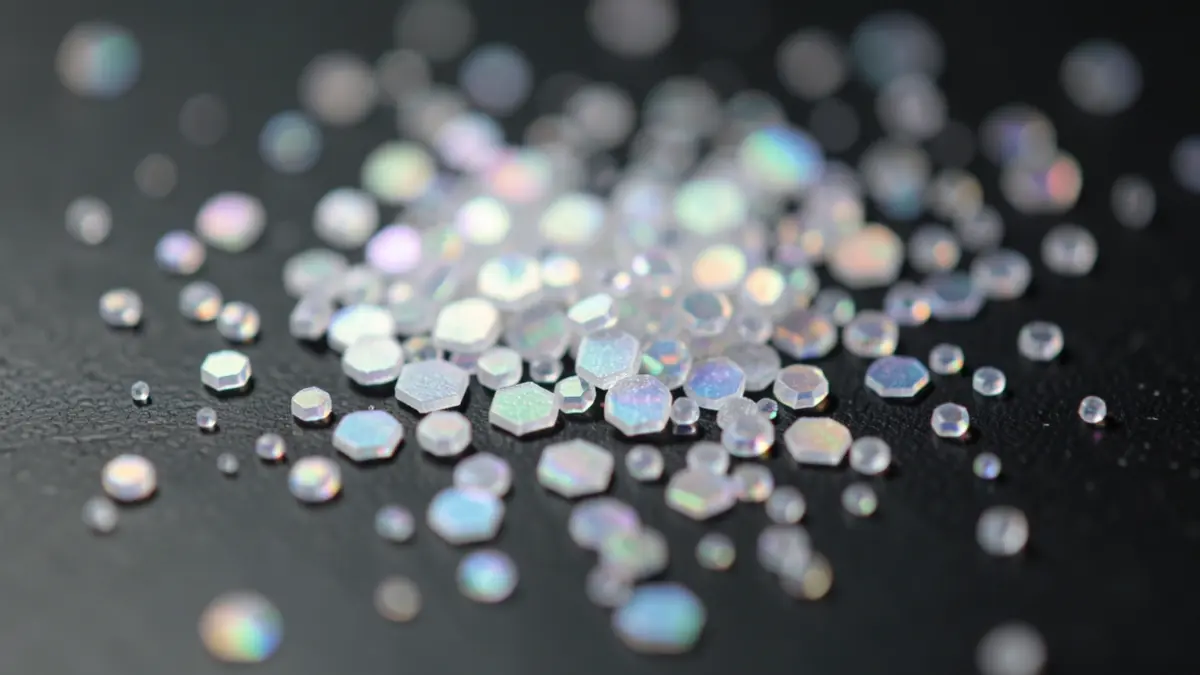
Among all the analyzed nanomaterials, hexagonal boron nitride (hBN) offered the best overall performance. The hBN-reinforced nanocomposite retained approximately 86% of its original impact toughness after six months of aging, significantly outperforming other formulations. Thermal analysis also indicated that this additive helped maintain stable crystallization behavior throughout the conditioning period.
The findings suggest that hBN is a promising nanoreinforcement for enhancing the performance of PLA-based materials subjected to prolonged humid conditions. The researchers distinguished between short-term water exposure, which primarily causes reversible plasticization, and long-term exposure, which leads to hydrolytic scission of polymer chains. These insights can contribute to the development of biodegradable materials for applications where moisture exposure is a significant factor.
The presented work is part of the project PID2023-150813OB-I00, funded by MICIU/AEI/10.13039/501100011033 and European Union FEDER funds.