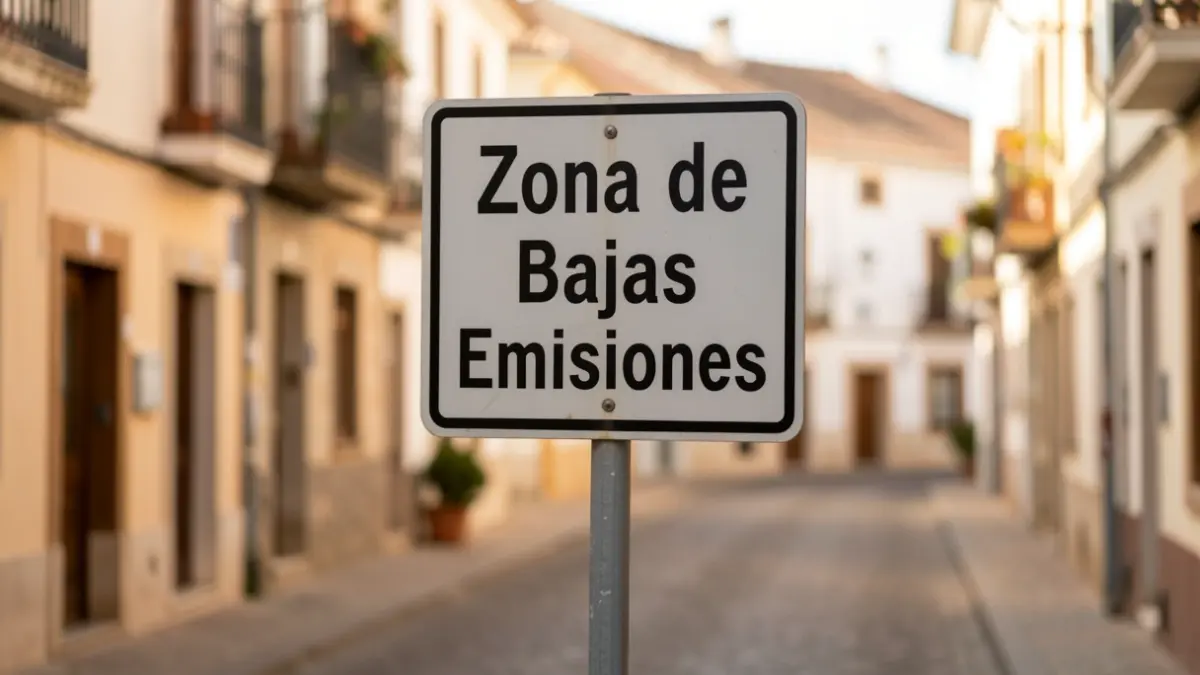
The Alcorcón council will give the green light this Wednesday to the Mobility and Low Emission Zone (ZBE) Ordinance, a key step to comply with state legislation. The new regulation, after overcoming public exhibition and objection periods, aims to limit the circulation of the most polluting vehicles in accordance with the Climate Change and Energy Transition Law, which requires municipalities with over 50,000 inhabitants to establish these zones.
Alcorcón's ZBE will extend across almost the entire urban area, including the residential areas of Fuente Cisneros and Campodón. However, important commercial and industrial zones such as Parque Oeste, Lucero, Urtinsa, and Ventorro del Cano will remain outside its scope. The Department of Ecological Transition and Mobility has emphasized that the objective is to comply with European and state regulations without harming the municipality's citizens.
One of the main novelties is the six-month adaptation period without economic penalties. During this phase, the system will operate with an informative and educational character, allowing drivers to familiarize themselves with the new regulations before the effective application of the sanctioning regime.
Residents of Alcorcón will not face access or parking restrictions, regardless of their vehicle's environmental sticker. Limitations will primarily target polluting vehicles without a sticker registered outside the municipality that pass through the city. Municipal sources assure that the intention is "not to penalize Alcorcón residents" and to focus restrictions on transit traffic with a higher environmental impact.
The ordinance also includes a system of special authorizations for non-residents with justified reasons, such as work-related travel, care for dependents, medical appointments, or administrative procedures. These authorizations will be personal, temporary, and linked to a single vehicle, requiring prior municipal resolution.
The municipal opposition, represented by the PP and Vox parties, has expressed its rejection of the model. The Popular Party considers the measure "disproportionate, discriminatory, and harmful," arguing that air quality in Alcorcón already meets European parameters. They question the exclusion of key commercial and industrial areas and fear that the division of the municipality into 26 mobility management areas could lead to the future implementation of the Regulated Parking Service (SER).
In summary, residents of Alcorcón will be able to drive normally, while vehicles without environmental stickers from other municipalities will face limitations, with exceptions and an initial penalty-free period to facilitate adaptation to the new Low Emission Zone.