The exhibition, dedicated to the prehistorian Luis Gerardo Vega Toscano, focuses on the site of El Vellón, one of the most significant testimonies of human presence in the Iberian interior during the Upper Paleolithic, a period marked by a considerably colder climate than today.
As part of the initiative 'The Present of Madrid Archaeology', the exhibition brings to the public the results of relevant archaeological research. A selection of materials, coordinated by Elena Carrión and Paloma de la Peña, allows visitors to learn about the daily life, subsistence, and adaptability of this human group to a demanding environment.
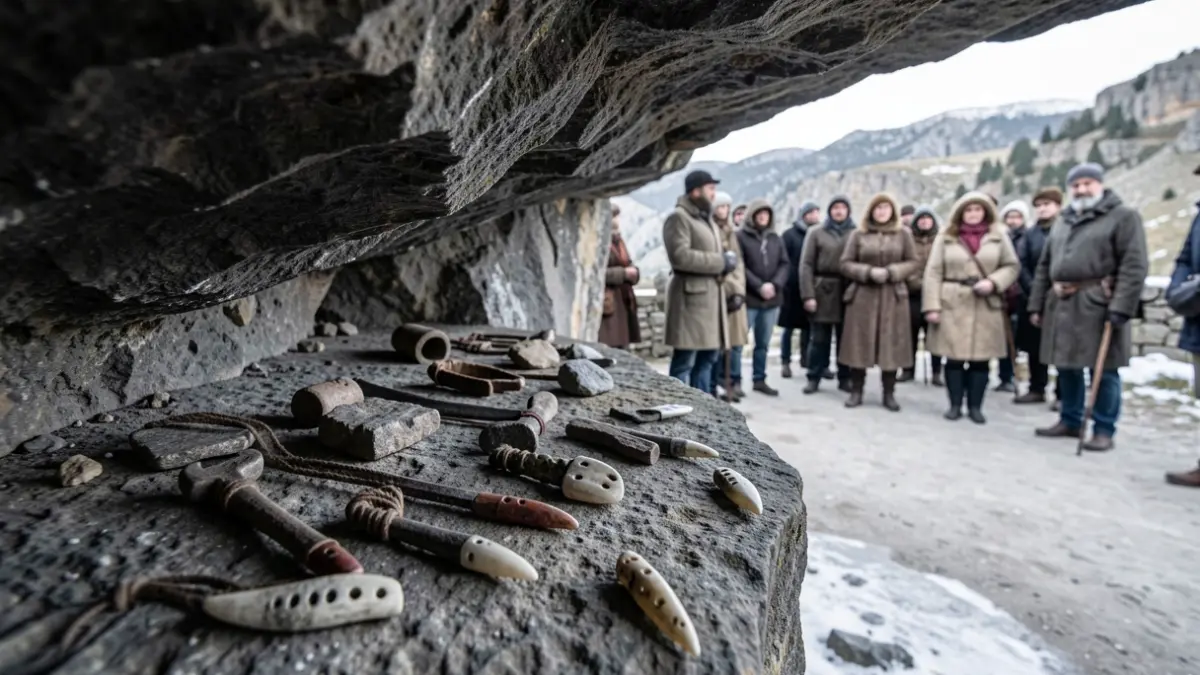
Among the exhibited pieces are stone tools made primarily from flint and rock crystal, bone industry remains, and personal adornments such as four perforated fox canines. Also displayed are azagaya points, projectiles likely used in hunting activities.
The research also includes a study of the microfauna documented at the site, identifying the Nordic vole (Microtus oeconomus), a rodent characteristic of cold environments whose presence provides valuable information about the climatic conditions of the region at the end of the Paleolithic.
To commemorate the exhibition, MARPA has published an educational volume that gathers works by various specialists to delve deeper into the findings from El Abrigo del Monte.