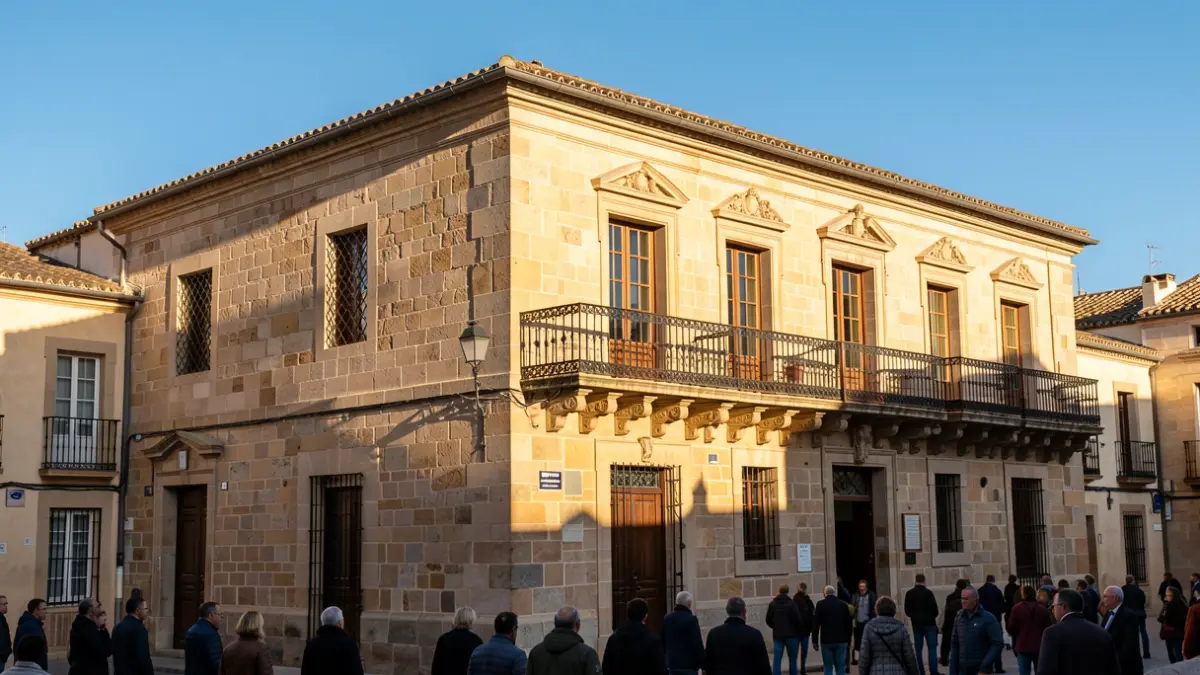
The Minister of Territorial Policy and Democratic Memory, Ángel Víctor Torres, presided over the ceremony on June 4th to place a plaque identifying the former Francoist penal detachments linked to the construction of the Madrid-Burgos railway as a Place of Democratic Memory. This official recognition honors the thousands of individuals who endured forced labor and repression during the dictatorship. The event took place at the penal detachment in Bustarviejo.
The installation of this plaque follows the publication in the Official State Gazette on May 21st of the declaration of the eleven enclaves associated with these detachments as Places of Democratic Memory. Between 1941 and 1955, approximately 6,000 Republican prisoners worked under extreme conditions in these locations.
One of the greatest atrocities committed during the dictatorship
In his speech, Minister Torres highlighted that these penal detachments were “one of the greatest atrocities committed during the dictatorship.” He recalled that the railway work spanned “fourteen grim years of injustice, inhumanity, and hardship to which they were condemned for defending democracy.” The minister described this chapter of dark history as a “double condemnation,” as it not only subjected the prisoners but also “condemned the families – the women and their children – who lived there with them in conditions of misery.”
As an example, he presented the case of Lucía Díaz, whom he met in 2024 during a visit to the former detachment in Chozas de la Sierra. “Lucía was born in a four-square-meter shack under the bridge her father was building under slave labor conditions. And so it was for thousands of people who lived in these places where desolation can still be felt today,” he remarked.
Torres emphasized that this recognition is an act of justice, reparation, and defense of human rights, crucial for preserving the memory of those who suffered Francoist repression and for ensuring future generations learn about these events to prevent their recurrence. He reiterated the commitment to continue placing plaques at declared Places of Memory and concluded with a message to democrats: “We should all agree that these places become Places of Memory.”
The penal detachments of the Madrid-Burgos railway represent one of the harshest episodes of forced labor during the dictatorship. Republican prisoners performed dangerous tasks such as tunnel excavation under the System of Sentence Redemption of the Patronato de la Merced. Women and children were also forced to relocate to these enclaves, surviving in precarious conditions. The declaration of these sites aims to preserve the memory of those who endured this repression.
The event was attended by the Secretary of State for Democratic Memory, the Government Delegate in the Community of Madrid, the mayors of Bustarviejo, Soto del Real, and Valdemanco, as well as representatives from memorial and neighborhood groups, reaffirming the Spanish Government's commitment to memory and reparation policies.