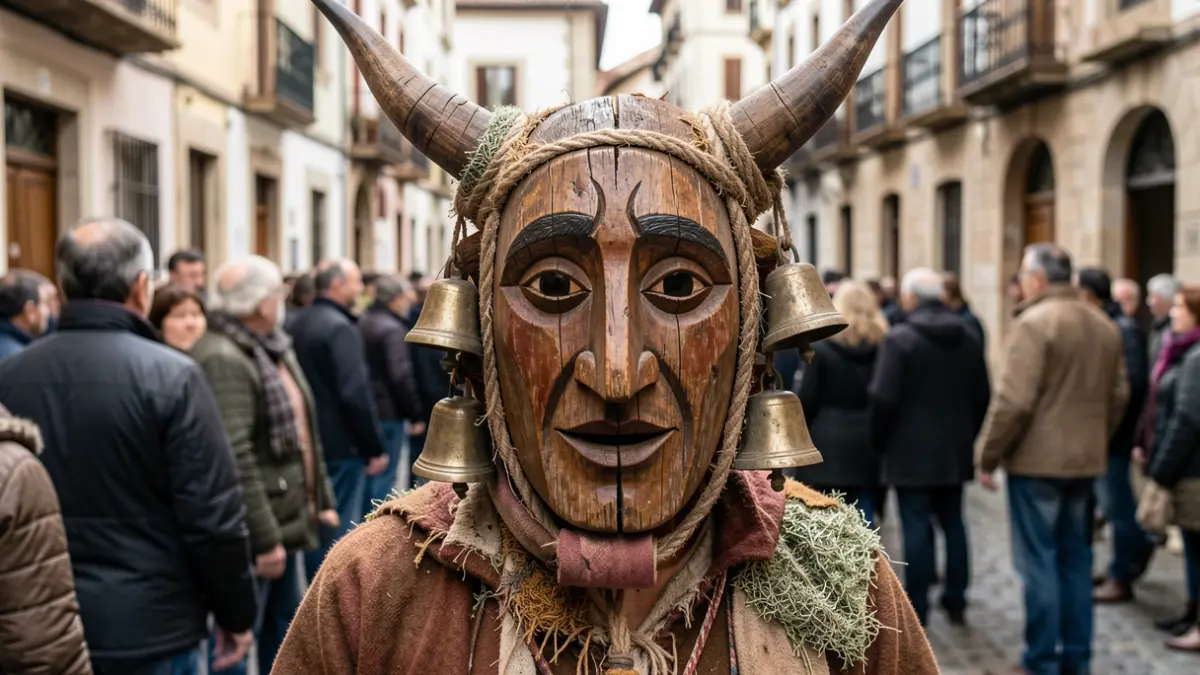
These celebrations, part of the cultural heritage of numerous localities, feature the central figure of the 'vaquilla' (little bull). This structure, representing the animal, is traditionally built with wooden rods, horns, and a cow's tail, adorned with elements like scarves, ribbons, and bells. The festival often includes characters such as 'vaquilleros' (bull-herders) and other specific roles for each municipality.
The expediente outlines three main zones where this cultural manifestation is maintained: the Western subzone (including Fresnedillas de la Oliva and Los Molinos), the Central subzone (with towns like Colmenar Viejo, Miraflores de la Sierra, Lozoya, and Canencia), and the Northeast subzone (featuring locations such as Villavieja del Lozoya, Navarredonda and San Mamés, and Prádena del Rincón).
Although they all share the figure of the 'vaquilla', each town maintains its own way of celebrating the festival, with some having a stronger religious emphasis and others a more carnival-like or pagan character.
The Fiesta de la Vaquilla in Colmenar Viejo is particularly noteworthy, declared of National Tourist Interest in 1986, involving around 25 groups. The expediente also highlights the importance of shared meals, with typical dishes like Madrid stew and local sweets, and the symbolic slaying of the 'vaquilla' at the end of the celebration.
The Community of Madrid acknowledges that these traditions have varying levels of vitality, with some gaining new momentum while others face risks such as depopulation or lack of generational succession. Safeguarding measures proposed include actions tailored to each municipality, training in intangible heritage, support for schools, and promotion of research.