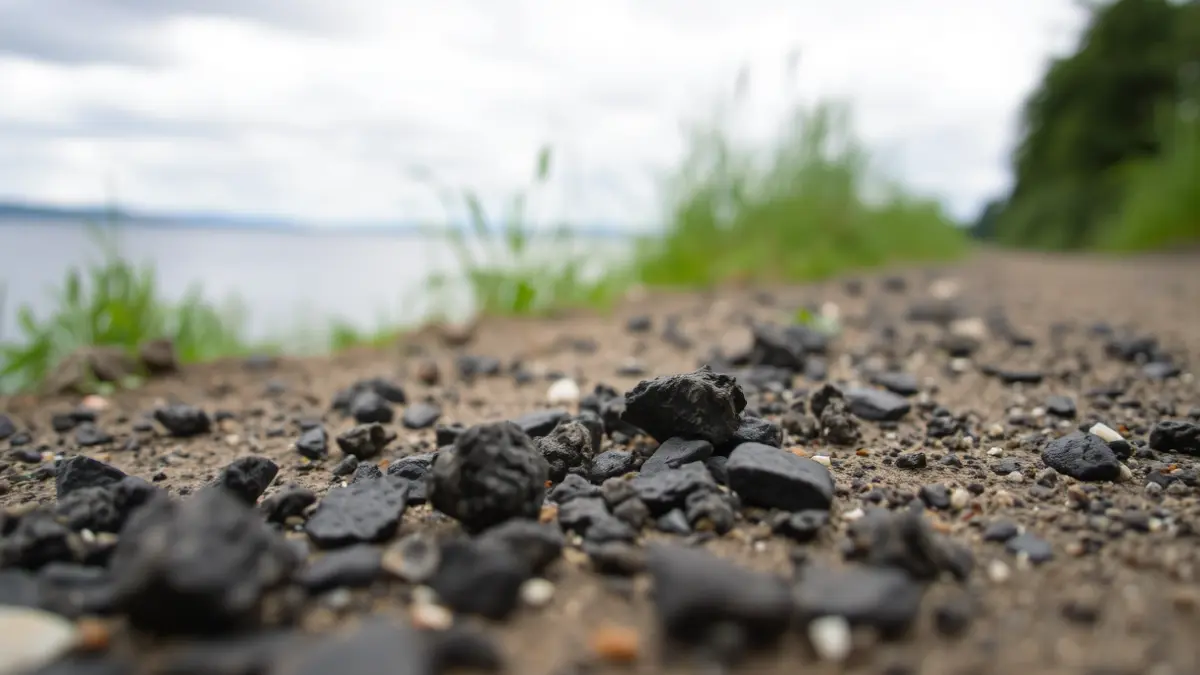
In late March, residues from asphalt milling on one of Valdemorillo's streets began appearing in a sensitive natural area. What was initially considered an isolated dump has escalated into a broader environmental problem, according to the municipal opposition.
The waste, resulting from the removal of the asphalt's surface layer on A2 street, is a mixture of fragments and particles that may contain tar, hydrocarbons, and heavy metals. The concern focuses on the fact that this material has been spread along paths near the Boquerón Reservoir, an area surrounded by livestock trails and of special ecological value for the town.
“"The most dangerous thing is that it is actually right on the border of a livestock trail, a royal cattle track. That is truly dangerous."
The apprehension intensifies with the possibility that, with rainfall, these loose materials could run off and filter heavy metals into the soil, contaminating the groundwater that supplies the reservoir. The opposition has pointed out that the area is a natural asset with its own habitat that could be severely affected.
“"As soon as it starts raining, what will happen? Well, the heavy metals themselves will run off and filter into the ground and end up contaminating the groundwater that supplies the Boquerón reservoir."
Tension rose on April 24, when the City Council, instead of removing the waste, began spreading it along the paths around the reservoir. This action has been interpreted by the opposition as a disregard for previous warnings and a decision detrimental to the municipality's natural heritage.
The opposition has also questioned the contractual management of the work, suggesting that the company awarded the resurfacing contract should be responsible for the removal and recycling of the waste. For its part, the Consistory has argued that the dumping area corresponds to unconsolidated urban land and that there is no intention to affect the livestock trail. However, the opposition has countered that, although administratively urbanizable, the reality of the terrain remains that of an undeveloped natural space.
“"It is an urbanizable area, yes, but it is not urbanized, that is the problem. The land is not prepared for that and, furthermore, it can move or filter into the ground or invade livestock trails."
Local residents' indignation has grown over what they consider another failure to fulfill promises for the recovery of this natural environment, whose protection and improvement have been recurring demands for years.