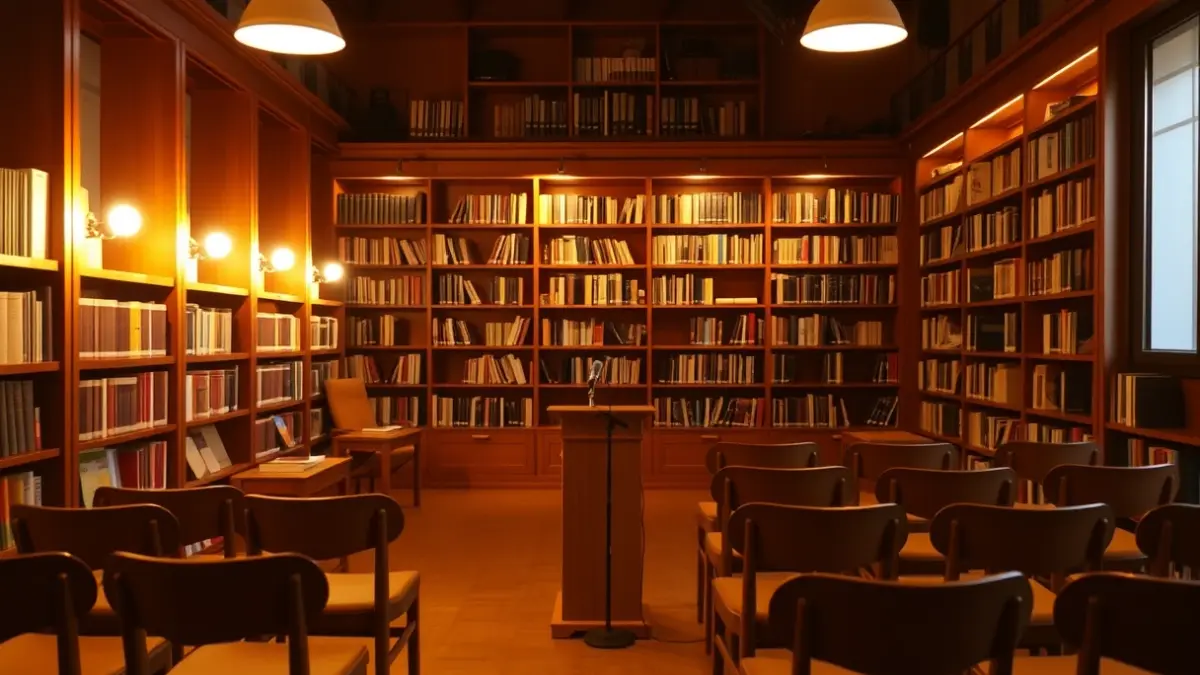
On Monday, April 20, at 7:00 PM, the Casa de la Cultura in Majadahonda will be the venue for a conference titled “Latest News on the Life and Death of Federico García Lorca.” The presentation will be given by a professor and doctor in Audiovisual Communication, invited by the Colectivo Cultural de Majadahonda, and promises a profound review of the celebrated poet’s figure.
The talk will offer an opportunity to analyze Lorca’s work from a renewed perspective, focusing on the impact of women in his life and literature. This approach is not only because the organizing collective, initially female and now mixed, promotes the event, but also due to the deep understanding the writer showed towards the female universe in an era when Spanish society was not yet ready for it.
“"Lorca was, in essence, a writer who understood women before Spain was ready to listen to them."
The speaker’s research reveals that Lorca, in addition to being a student with ups and downs, a restless traveler, and a prolific creator, found his main emotional support and most stable environment in women. His mother, a passionate teacher and reader, was his first literary educator. His sister and figures such as actresses Margarita Xirgu and Encarnación López “La Argentinita,” along with other intellectual friends, formed a circle where the poet felt free and understood. The conference is also expected to explore the influence of other lesser-known women in his life, such as Margarita Manso and Anna Maria Dalí.
The modernity of the female characters in works such as La casa de Bernarda Alba, Yerma, or Doña Rosita la soltera is a testament to Lorca’s ability to portray sexual repression, psychological violence, desire, and social suffocation without moralizing. The poet did not write “about women,” but “from them,” an empathy that maintains the relevance of his characters to this day. Tragedy, according to Lorca, does not arise from excess, but from impossibility, and in this impossibility, women become a symbol of a nation yearning for freedom.
The speaker, with over four decades of research into the poet’s life and death, will offer new data and perspectives, from the Lorca who declared himself “Catholic” in the United States to new interpretations of his assassination. The session will be interactive, featuring unreleased audiovisual material, seeking to humanize Lorca’s figure as a brilliant, contradictory, and vulnerable man who found in the feminine a mirror to explore freedom, desire, and tragedy. The conference is an invitation to rediscover the poet through the lens of those who best understood him: women.