For decades, Plaza de España was an area with great potential but poor utilization in Madrid. Its design prioritized parking and vehicular traffic, disconnecting it from the monumental richness of its surroundings, which include the Royal Palace, the Edificio España, the Torre de Madrid, and the Temple of Debod. However, an ambitious renovation has radically changed its appearance.
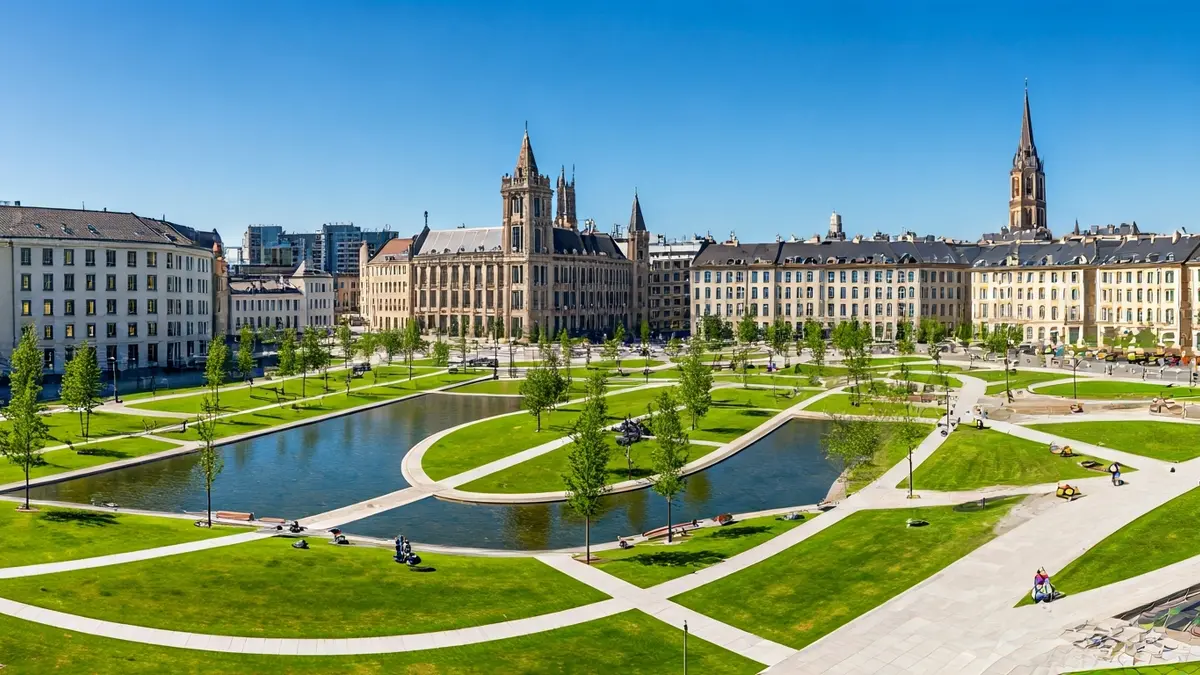
The redevelopment, part of a broader pedestrianization project for Madrid's historic center, has transformed the square into a new green axis. This space now links the Royal Palace with Gran Vía, offering more green areas, expanded pedestrian zones, water features, vegetation, and resting areas. Furthermore, visual continuity has been achieved with the Jardín del Moro and other nearby parks.
The difference between the before and after of Plaza de España is remarkable. Surface parking was eliminated, space for vehicles was drastically reduced, and areas dedicated to pedestrians and green spaces were greatly expanded. The square has gained visual and pedestrian cohesion, seamlessly connecting with the Royal Palace to the west and Gran Vía to the east.
Among the implemented improvements are the elimination of hundreds of surface parking spaces, the planting of trees, and the creation of green areas with Mediterranean vegetation. Water features and fountains were also installed, turning the square into a place to linger. Access for people with reduced mobility was optimized, urban furniture and lighting were renewed, and clear pedestrian continuity was established between the Temple of Debod, the Royal Palace, and Gran Vía.
Plaza de España enjoys a privileged location in Madrid, just a few minutes' walk from the Royal Palace, the Temple of Debod, Gran Vía, the Malasaña neighborhood, and the Parque del Oeste. This centrality makes it an attraction for both Madrileños seeking leisure in the city center and tourists visiting the capital's main monuments. The reform has solidified its role, transforming it into a destination in itself, not just a thoroughfare. The terraces of adjacent bars have become popular viewpoints in the historic center.
The square's opening to the public was phased starting in 2021, although construction began before the pandemic. By the end of 2021, the space was fully operational in its new configuration. Surface parking has been completely removed, although underground options exist nearby. The square is part of Madrid's Low Emission Zone (ZBE), which restricts access for polluting vehicles to the city center, a measure compatible with its new pedestrian design.
The reform of Plaza de España is a clear example of how prioritizing pedestrians in the historic center of a large city can create more pleasant, human, and harmonious spaces that align with their monumental surroundings. The new green axis connecting the Royal Palace and Gran Vía is now one of the main reasons to enjoy a stroll through the heart of Madrid.