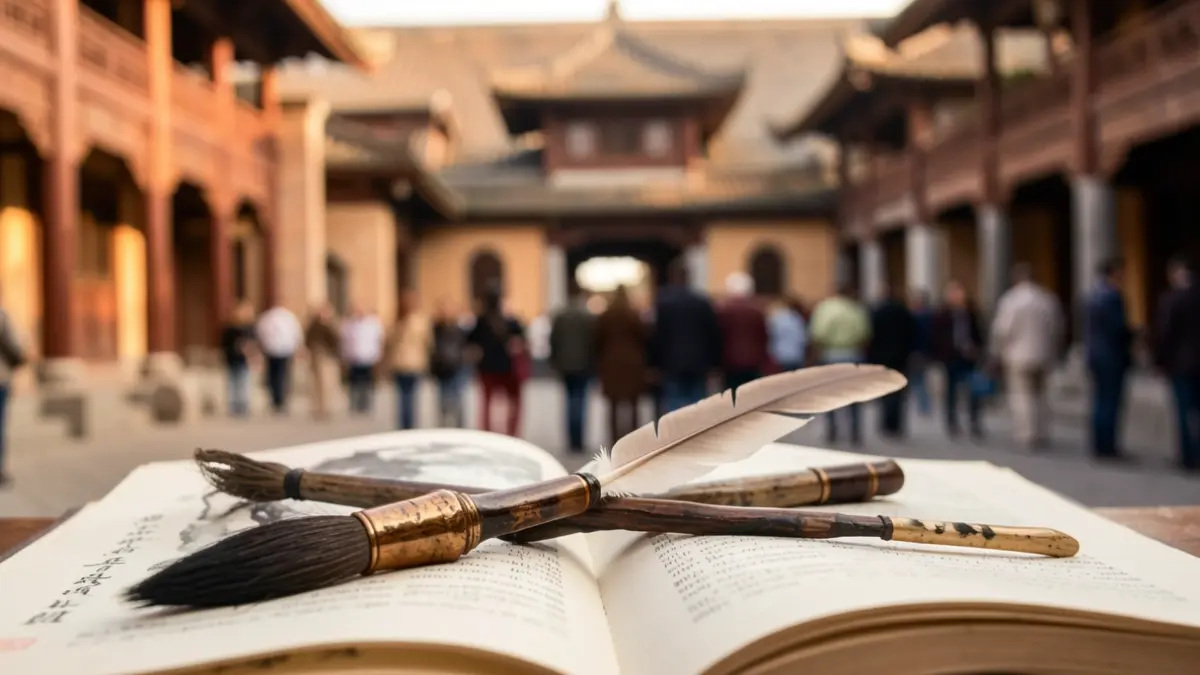
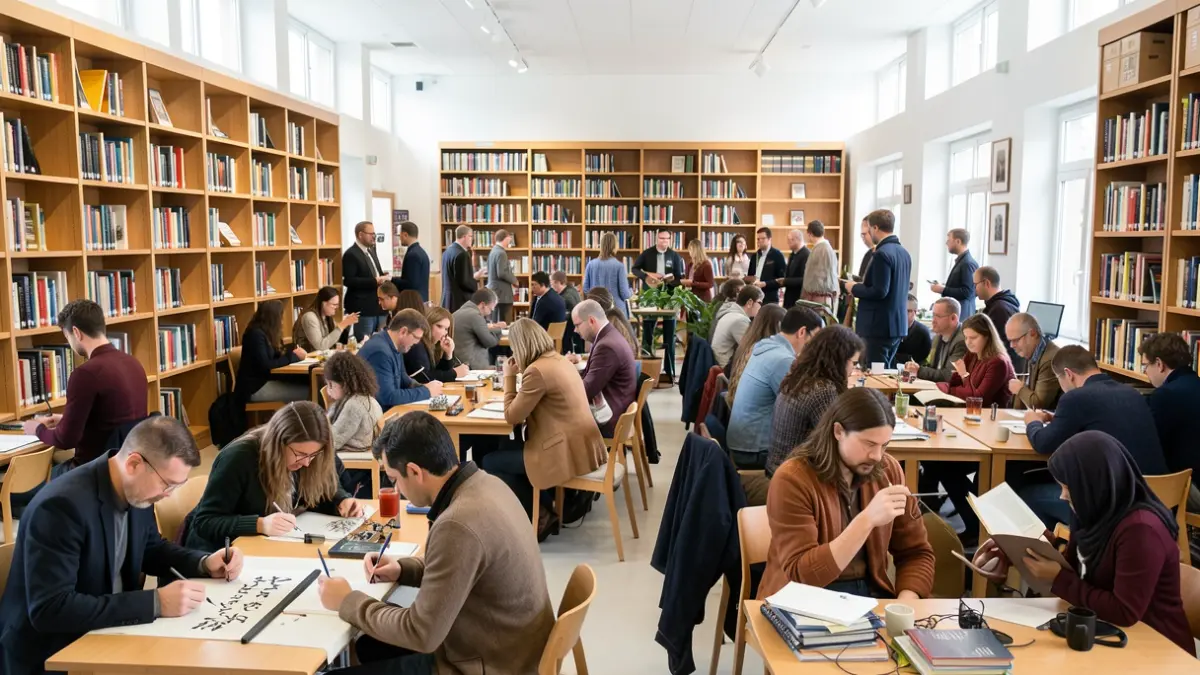
The day, aimed at highlighting the faculty's linguistic and academic richness, included events in languages such as Catalan, Basque, Portuguese, Arabic, Chinese, Japanese, and Korean. Activities were diverse, featuring concerts, poetry readings, calligraphy and dance workshops, linguistic breakfasts, round tables, exhibitions, and the traditional 'banquet of languages'.
The inaugural event was "Arab Female Voices of Yesterday and Today," which included a concert of the oud, an ancient Arab instrument, performed by Hames Bitar, and a poetry recital by authors Maisoun Shukair, Nesrine Khouri, and Abla Jaber. This activity served as a tribute to the Arabic and Islamic Studies department, established at the faculty in 1843.
Other organized activities included the exhibition "Latin America in Romanian Translations (1945-1989)," the seminar "Traveling to the South Atlantic," "Diversity Has the Floor. Festival of Words and Curiosities," accessibility initiatives, a French-Spanish linguistic exchange, Asian calligraphy workshops, a round table on women translators, the presentation of the book "Polymetry and Translation: Life is a Dream in 33 Languages" (2026) by Erik Coenen, a rapid translation duel, a Greek dance workshop, and a tribute to the poet Rainer María Rilke.
The celebrations began on November 10th with a presentation of books on Taiwanese literature, a recital and singing in Basque, and a Catalan-Spanish poetic translation workshop. The festivities will conclude on November 17th with a practical writing workshop and an introduction to Chinese characters.