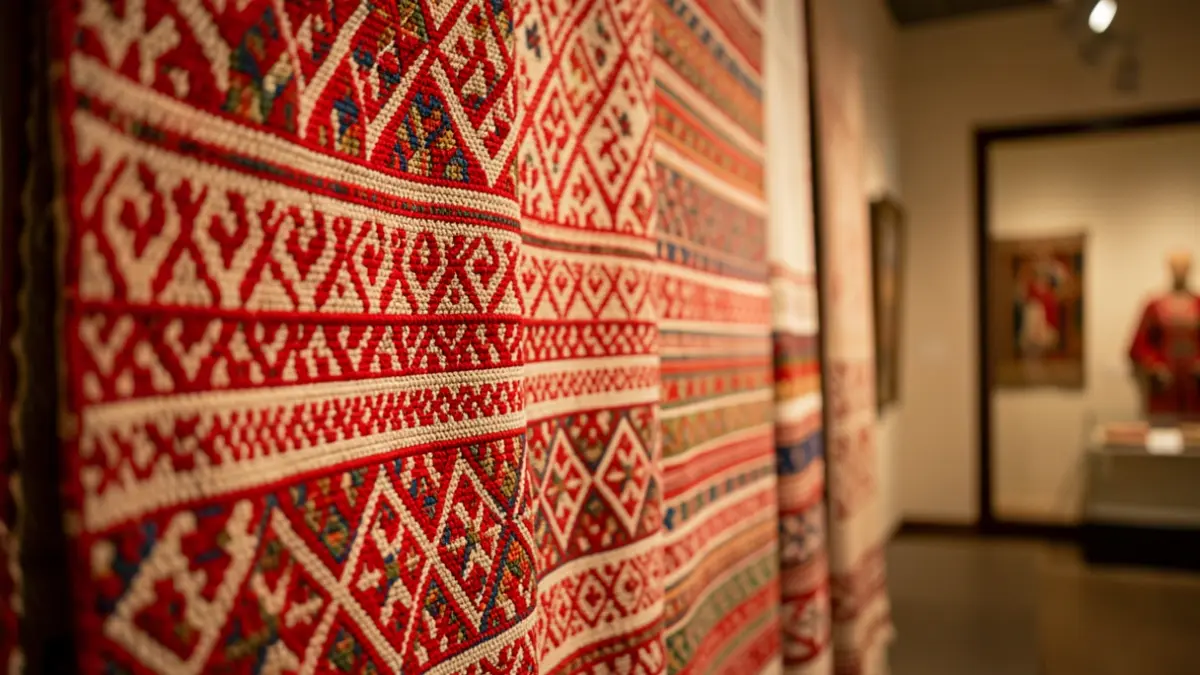
The exhibition, organized with the Romanian Cultural Institute and the Romanian Peasant National Museum, presents a unique collection of "scoarțe" (traditional Romanian tapestries) and other textile objects from various regions of Romania, including Muntenia, Banat, Moldavia, and Transylvania. These pieces, belonging to the Romanian Peasant National Museum, are traveling outside their country of origin for the first time.
During the inauguration event, attended by representatives from 15 embassies and personalities from the Romanian cultural scene, the Director General of the Royal Tapestry Factory, Alejandro Klecker de Elizalde, highlighted the exhibition's importance in preserving and disseminating textile heritage and traditional crafts, as well as fostering dialogue between European cultures.
Raluca Mihăilă, Chargé d'Affaires of the Embassy of Romania in Spain, emphasized that the exhibition invites visitors to discover the richness of Romanian tapestries as artistic expressions and carriers of cultural identity. She noted that this initiative, in the year of the 145th anniversary of diplomatic relations between Spain and Romania, strengthens the cultural ties between both countries.
The director of the Romanian Cultural Institute in Madrid, Maria Floarea Pop, underscored the exhibition's significance during the 20th anniversary of the institute's activity in Spain, inviting reflection on the relevance of traditions in contemporary society and art, and their capacity to shape cultural identity and build bridges between cultures.
Virgil Ștefan Nițulescu, director of the Romanian Peasant National Museum, described the exhibition as an invitation to discover a familiar yet surprising European culture, where the red color of the tapestries tells a universal story of how humans transform matter, imbuing it with meaning and beauty.
The exhibition features 17 "scoarțe" tapestries and 47 objects related to spinning, weaving, interior textiles, and traditional clothing. The color red, prominent in many pieces, symbolizes life, energy, protection, and joy in Romanian tradition. The traditional techniques for creating these tapestries were inscribed on UNESCO's Representative List of the Intangible Cultural Heritage of Humanity in 2016.