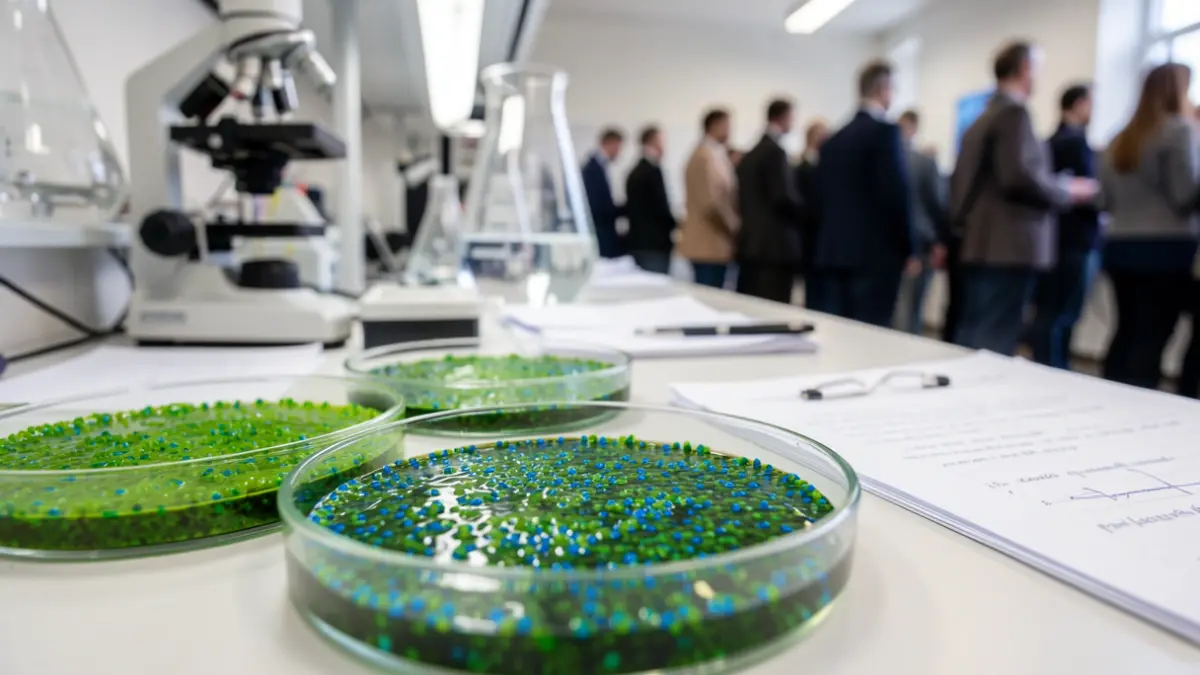
The research groups INNOVAPROT and Lípidos from the Institute of Food Science Research (CIAL, CSIC-UAM) participated last Saturday in the Future Fair, held at the Círculo de Bellas Artes in Madrid, as part of the Solarpunk event. During the day, the scientific teams engaged the public with their research on microalgae and their potential to contribute to healthier and more sustainable food, through educational activities, product demonstrations, and tastings.
The stand combined scientific information with practical experiences. Visitors learned about the role microalgae can play in the future of food and discovered products that already incorporate them, such as salt, honey, pasta, or pet food. Additionally, tastings of juices, kombucha, and nachos/breadsticks enriched with microalgae species Chlorella and Spirulina, known for their nutritional and technological interest, were offered.
For five years, the INNOVAPROT and Lípidos groups have collaborated to study the development of new bioactive ingredients from microalgae. Their research focuses on obtaining extracts rich in proteins, lipids, and other beneficial compounds through sustainable processes. These extracts are evaluated to improve the nutritional profile of foods and develop nutraceutical supplements. They collaborate with the company Macami Biotech on this initiative.
Microalgae are a natural source of high-quality proteins and healthy lipids like omega-3s, as well as bioactive compounds with beneficial health effects. Their cultivation requires fewer resources than many conventional protein sources and they are considered a promising biotechnological platform to address challenges of sustainability and food security.
The Future Fair, integrated into the Solarpunk event, aimed to be a meeting space for science, innovation, and citizens to reflect on sustainable scenarios. CIAL's participation demonstrated how research contributes to creating healthier, more resilient, and environmentally friendly food systems.