
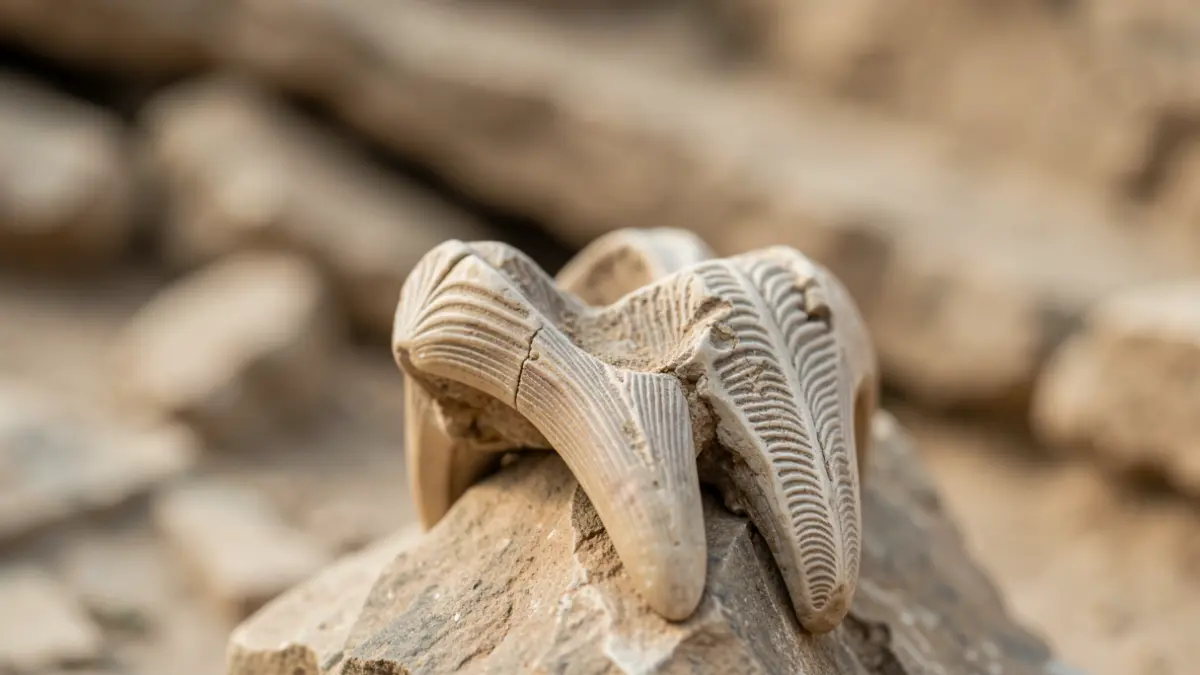
A research team led by the Complutense University of Madrid (UCM), with participation from the Institute of Geosciences (IGEO, CSIC-UCM) and the National Museum of Natural Sciences (MNCN-CSIC), has determined this climate change based on the analysis of dental enamel from fossil horses. The remains come from two sites: Los Valles de Fuentidueña (Segovia), dated 9.6 million years ago, and Batallones-10 (Madrid basin), from 9.1 million years ago.
The results indicate that the animals from Batallones-10 experienced a much more pronounced seasonal variability than those from Segovia. "This difference suggests that, during that interval of approximately half a million years, an intensification of seasonality occurred, likely related to more marked contrasts in temperatures or water availability," explains Dánae Sanz Pérez, a researcher at UCM at the time of the study. This change coincides with the so-called Vallesian Crisis, an episode of faunal turnover and transformation of European ecosystems.
Despite the climatic changes, individuals from both sites maintained a diet based primarily on C3 vegetation, characteristic of open woodlands and grasslands. "This suggests that changes in seasonality were not necessarily accompanied by significant modifications in the diet of these animals," highlights Laura Domingo, a titular professor at UCM.
The serial sampling technique applied to 141 dental enamel samples allowed for the analysis of stable oxygen ( 18 O) and carbon ( 13 C) isotopes. The 18 O values along the dental crown of the horses from Batallones-1 showed a sinusoidal pattern related to greater thermal or hydrological seasonal variability, while those from Los Valles de Fuentidueña showed a flatter pattern, indicating less marked seasonality.
This study demonstrates the potential of fossil dental enamel as an archive of climatic information and will allow for a more precise reconstruction of past environmental conditions. The next step will be to extend this analysis to other fossil sites in the Iberian Peninsula and to other mammal groups to investigate whether the intensification of seasonality was a widespread phenomenon.