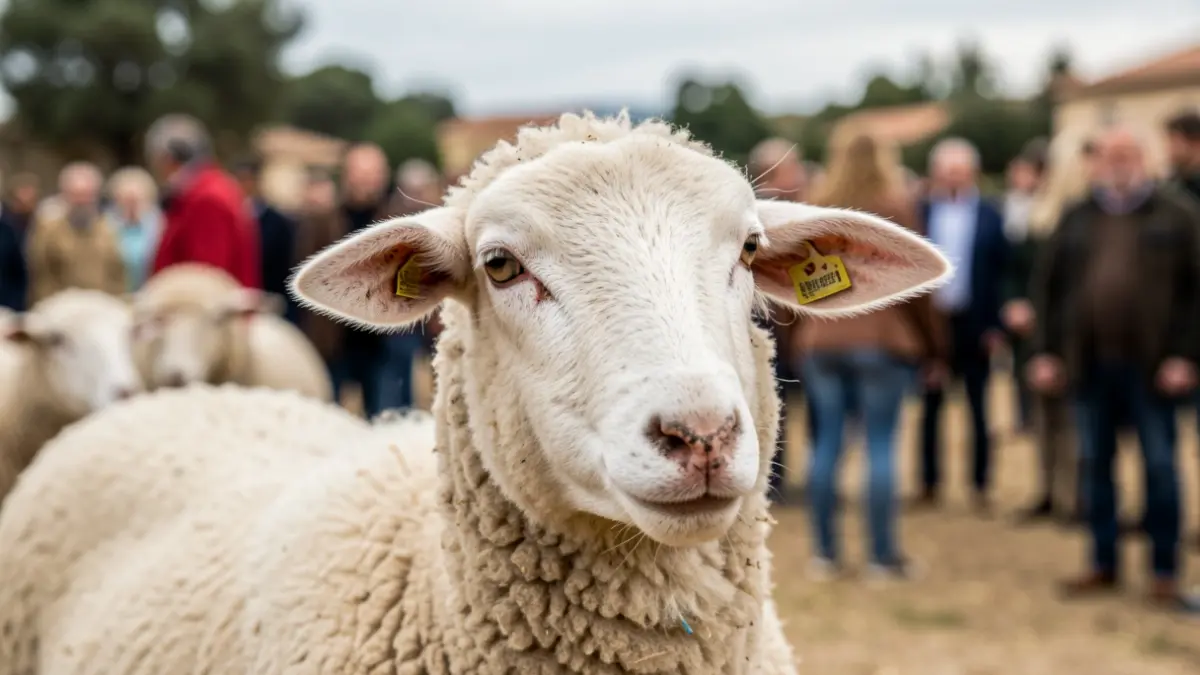
The animals, which lacked the necessary health guarantees and legal documentation for their sale, were intended for the Lamb Festival held last May. The operation began after Municipal Police officers detected an irregular unloading of sheep in a plot of land in Cañada Real Galiana.
The investigation confirmed that the livestock was being illicitly distributed for mass consumption. Due to the health risks, the Livestock Service of the Community of Madrid requested the intervention of the SEPRONA unit of the Civil Guard. The technical inspection revealed that the 119 lambs, approximately four months old, did not have the mandatory identification tags to ensure traceability.
“"It is suspected that the documentation was intentionally manipulated to conceal the animals' real whereabouts and evade mandatory health controls."
The investigation determined that the animals' transport, originating from the province of Guadalajara, violated current regulations. The certificates provided indicated a slaughterhouse in Zaragoza as the final destination, but evidence showed the lambs never reached it. Given the lack of traceability and the potential risk of disease transmission, the Community of Madrid ordered the sanitary sacrifice of the seized animals.
The three investigated individuals—the owner, the transporter, and the receiver in Madrid—face charges for alleged document forgery. The investigation remains open to clarify all details of this parallel distribution network. Authorities reaffirm their commitment to food safety and the importance of acquiring meat products through authorized commercial and sanitary channels.