
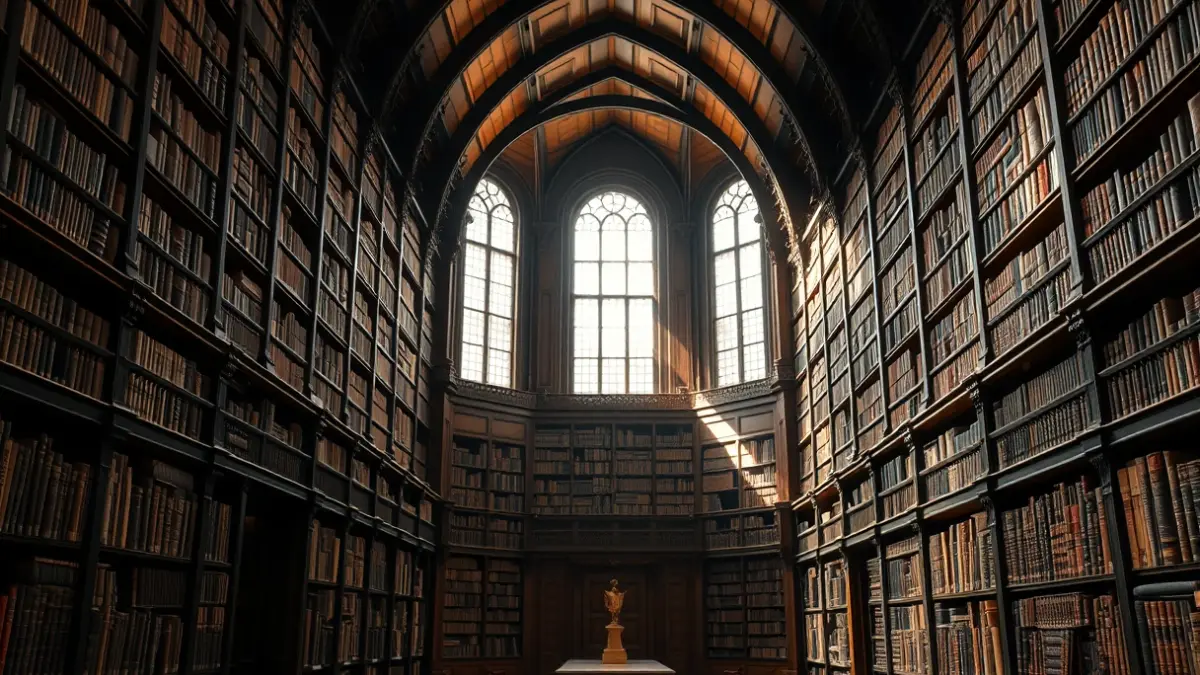
Every day, thousands of people pass by the imposing facade of the building on Paseo de Recoletos, unaware that within its walls lies an essential part of Spain's history and knowledge. Books, maps, newspapers, manuscripts, and centuries of wisdom are preserved behind one of Madrid's most recognizable structures.
The cornerstone of the current National Library of Spain building was laid on April 21, 1866. This act symbolized Madrid's consolidation as a cultural epicenter of the nation, transcending mere architecture.
The institution, however, has much older roots. It was founded in 1712 by Philip V as the Royal Library, with the mission of compiling and preserving scattered bibliographic heritage. This pioneering project recognized the importance of protecting written output as a fundamental pillar in the construction of a country.
A key factor in its expansion was the implementation of the obligation for printers to submit copies of their publications, a measure that predated the current legal deposit. Thanks to this regulation, thousands of minor works were saved that would otherwise have been irretrievably lost.
During the 19th century, the building also shared space with the National Archaeological Museum, thus uniting the country's written and material memory in one location. Despite prolonged construction, marked by political crises and resource shortages, the final result became one of Madrid's great cultural symbols.
Currently, the National Library safeguards an invaluable legacy, including incunabula, first editions, historical newspapers, engravings, musical scores, and works linked to literary and artistic figures such as Francisco de Goya or Miguel de Cervantes. More than just a library, it represents a silent bulwark against oblivion.