The Rivas Vaciamadrid City Council will launch a project this summer to air-condition public educational centers using aerothermal systems. The primary goal is to enhance thermal comfort in classrooms, decrease energy consumption, and gradually replace conventional heating systems.
The first phase of this initiative has an investment of 14.2 million euros and is part of a broader plan to extend this system to all municipal public schools and early childhood centers. The construction work will take place during the summer non-academic period to ensure the centers are ready with the new system at the start of the next school year.
In this initial stage, interventions will occur in the five municipal early childhood centers—Casa de Niños El Dragón, Luna Lunera, Platero, Rayuela, and Pippi Langstrump—as well as in the public schools Jarama, Las Cigüeñas, Mario Benedetti, and El Olivar. Sports pavilions within these centers will also be included where appropriate.
According to the council, this action responds to the significant increase in temperatures in recent years and the need to adapt school buildings to current climatic conditions. The City Council has emphasized that this project is being promoted despite not being a direct municipal responsibility and that it has involved the educational community in its planning phase.
The aerothermal system will provide both heating in winter and cooling during the warmer months. Additionally, according to municipal sources, it will facilitate classroom ventilation and contribute to reducing carbon dioxide emissions and the consumption of fossil fuels.
The project also includes upgrading the lighting in the centers, replacing current fixtures with LED technology equipped with presence and light intensity detectors to optimize energy efficiency.
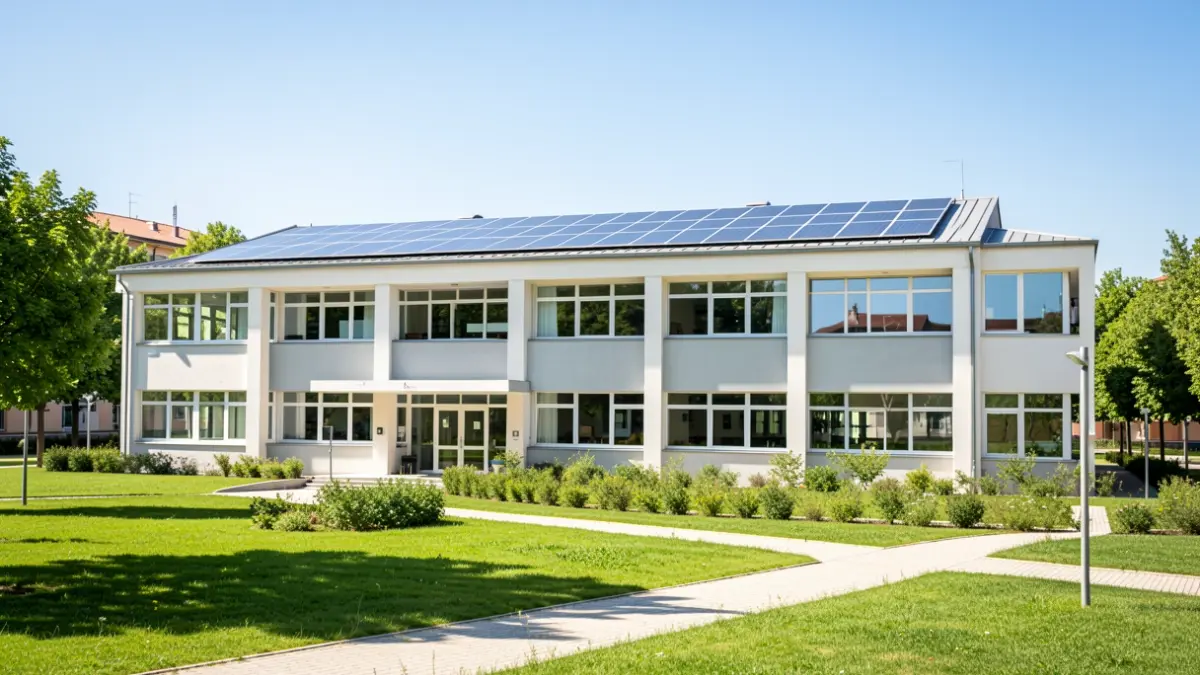
Furthermore, the City Council has indicated that the energy consumption of these new facilities will be linked to electricity generation through solar panels, thus integrating into the energy-saving strategies already implemented in the educational centers.