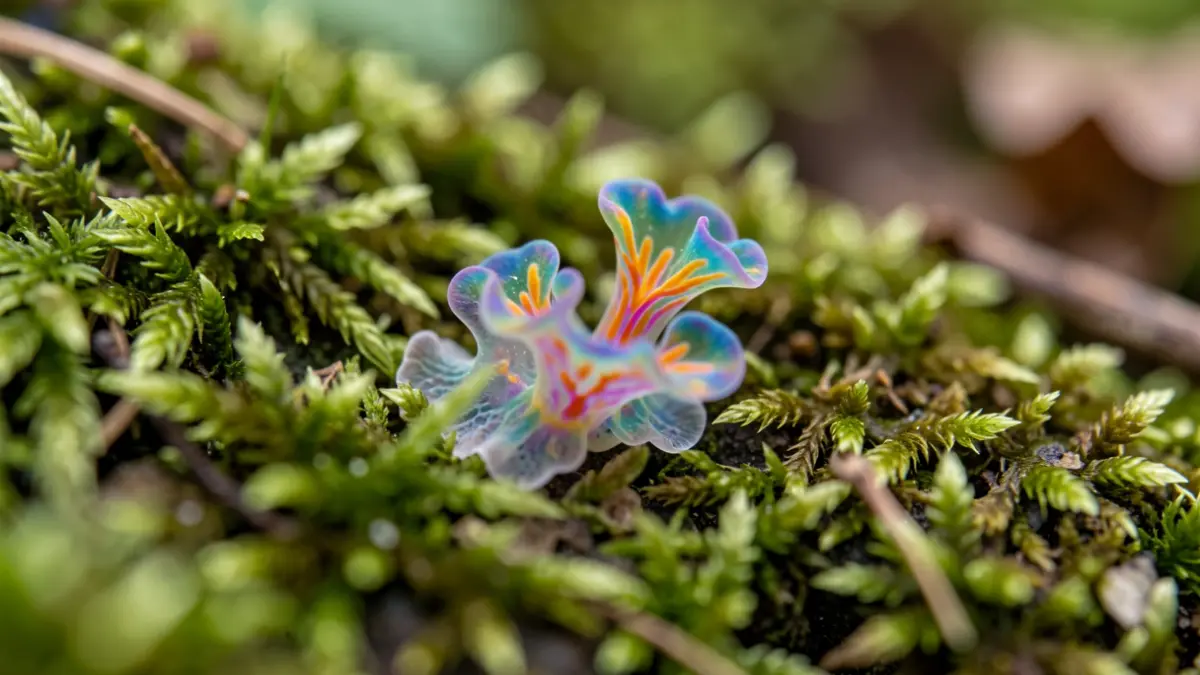
The exhibition Photomyxo, located in terminal 2 of Madrid-Barajas Airport, introduces the public to Myxomycetes, microscopic creatures described as ‘magical’ for their contribution of life, color, and diversity to the world.
These organisms, also known as plasmodial slime molds, are not true fungi but belong to the Protist group (Amoebozoa). They inhabit almost all terrestrial ecosystems, feeding on bacteria, yeasts, and other fungi, and play a crucial ecological role in decomposing organic matter and controlling microbial populations, despite their limited public recognition.
The exhibition features 30 photographs by Carlos de Mier, a technician at the RJB-CSIC and imaging specialist, who has spent over a decade photographing these microorganisms. According to de Mier, the objective is educational: “we aim to present a group of living beings that play a fundamental ecological role, are part of our natural heritage, but due to their small size, around 1 mm, go completely unnoticed”.
The images allow visitors to learn about some of the more than 1000 species of Myxomycetes found on our planet, including organisms from national parks, extreme environments like Antarctica, and species that existed 100 million years ago, witnessing significant historical events like the extinction of the dinosaurs. Carlos de Mier's photographs reveal the variety of forms, chromatic palette, and diversity of these enigmatic microorganisms.
The exhibition, a collaboration between the Royal Botanical Garden-CSIC and AENA, can be visited in T2 of the airport until September 30. A virtual exhibition is also available on the institutional website of the Royal Botanical Garden.