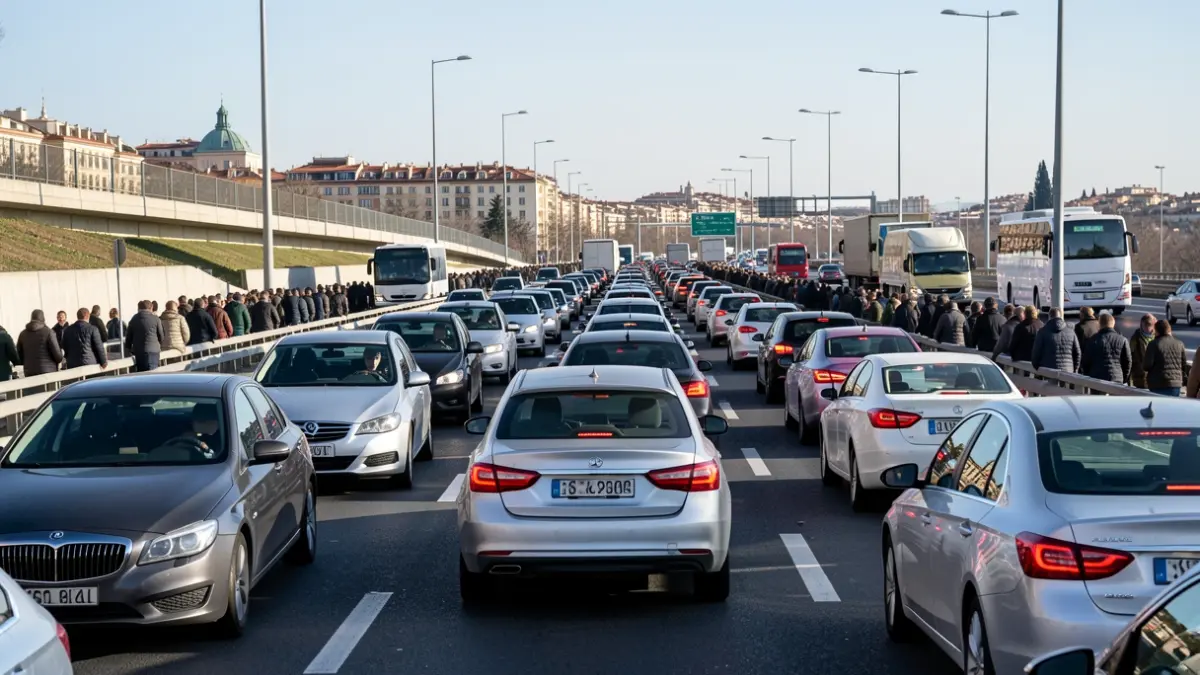
Traffic jams are concentrated on the M-40, A-2, and A-3, according to data from the General Directorate of Traffic (DGT). On the A-2, congestion is located between kilometer points 19 and 20 in the increasing direction, affecting the vicinity of San Fernando de Henares and Torrejón de Ardoz. Similarly, the A-3 experiences slow traffic between kilometers 14.5 and 16 towards Valencia, between Madrid and Rivas. The M-40, on its stretch towards the A-5, also sees congestion between kilometers 22.5 and 23.5.
The DGT anticipates a total of 5,610,000 movements during the Special Operation, which will last until midnight on Sunday, August 16th. These displacements include both long-distance and short-distance journeys across the national territory. In addition to the usual movements for the mid-month change, trips to coastal areas, beaches, and second homes are expected, taking advantage of the holiday month.
This weekend coincides with numerous patron saint festivals in various towns, which will likely increase short-distance travel. Higher traffic volumes are expected on both main and secondary roads, particularly during the nights and early mornings.
On Saturday, August 15th, heavy traffic will continue from early morning in the direction leaving major urban centers and on routes connecting to the coast and summer resort areas. On Sunday, August 16th, the morning will be challenging for short-distance routes and access to beaches, while in the afternoon, between 6 PM and 11 PM, the return journey for those ending their break will begin.
This operation is launched following a previous weekend described as "tragic" by the DGT, with 19 fatalities in traffic accidents. The agency reiterates the importance of extreme caution with road safety measures and, especially, avoiding driving under the influence of alcohol or drugs.
To ensure safety, Traffic has implemented regulation, management, and surveillance measures. The operation involves agents from the Traffic Group of the Civil Guard, personnel from the Traffic Management Centers, maintenance technicians, and emergency services.
Material resources include fixed and mobile speed control radars, cameras, unmarked vans to monitor mobile phone and seatbelt usage, as well as helicopters and drones for aerial surveillance. Unmarked vehicles and motorcycles will patrol all types of roads to check driver behavior.
In areas of high congestion, reversible and additional lanes will be set up with cones during peak hours, and alternative routes will be established to facilitate traffic flow.