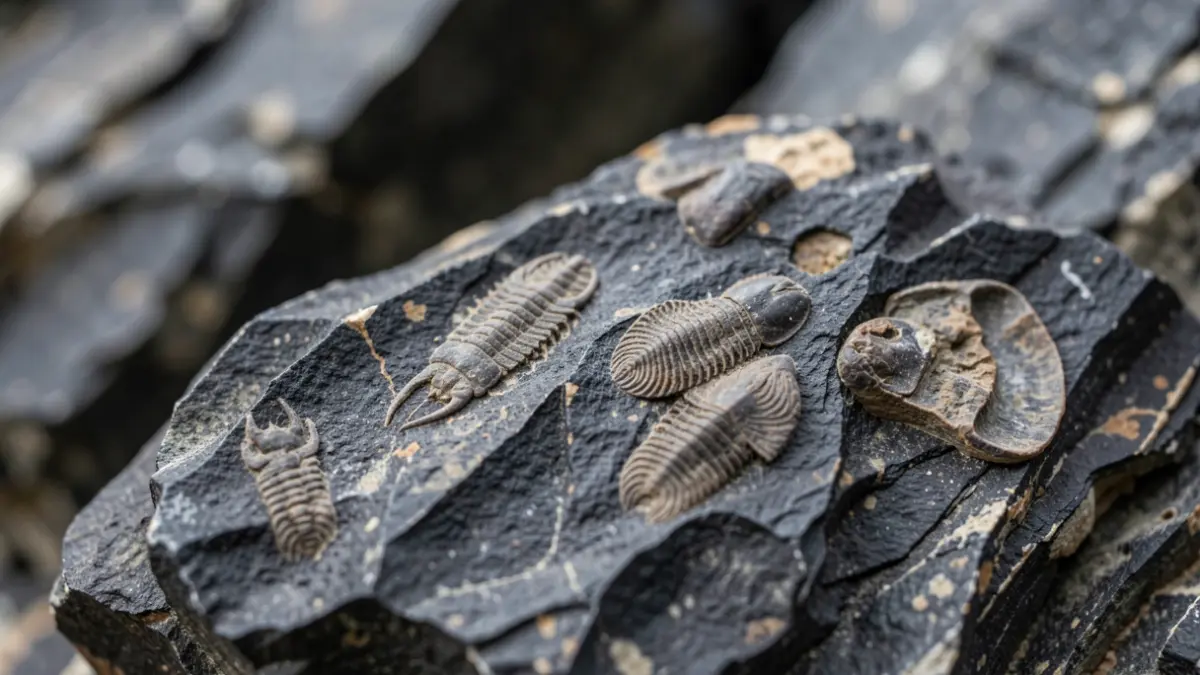
The remains, belonging to various groups of marine invertebrates such as trilobites, brachiopods, mollusks, and graptolites, were discovered in Paleozoic slate outcrops in the vicinity of Patones and El Atazar. These fossils are preserved in very ancient marine rocks forming part of the region's geological basement, which have undergone intense deformation and metamorphism through successive orogenies, making their discovery exceptionally rare.
The research, which reviews previous paleontological information on the Paleozoic era of the Sierra Norte of Madrid and Guadalajara, provides new data on the marine fauna that inhabited the area when the Madrid territory was covered by ancient seas. According to the authors, these findings represent the oldest body fossils known in the Community of Madrid.
Their age is slightly later than fossil footprints (ichnites) attributed to marine arthropods, discovered around 1864 by engineer and geologist Casiano de Prado in Puebla de la Sierra, which have not been subject to detailed study since then.
The work involved paleontologist Sara Romero from the Paleontology Area of the Faculty of Geological Sciences at the Complutense University of Madrid, and Juan Carlos Gutiérrez-Marco, a researcher at the Institute of Geosciences (CSIC-UCM).
The results will be presented at the 80th scientific session of the Geological Society of Spain on Friday, May 29th at 9:00 AM at the Higher Technical School of Mining and Energy Engineers of Madrid (c/ Ríos Rosas, 21). This meeting commemorates the centenary of the XIV International Geological Congress held in Madrid in 1926.
The full study on the Madrid fossils will be published in the scientific journal Geogaceta, along with other contributions from the meeting.