The program “Nutrition and health, a pending subject,” driven by Environmental Health in Schools, aims to instill knowledge about macronutrients, healthy fats, and consumption frequency through playful activities. This initiative has been implemented in about twenty public and subsidized schools in districts such as Carabanchel, Usera, and Puente de Vallecas, reaching approximately 1,200 students through more than 50 workshops during March, April, and May.
“"There is a clear correlation between childhood obesity and less healthy habits in families with fewer resources. That is why the program focuses on districts with higher vulnerability rates."
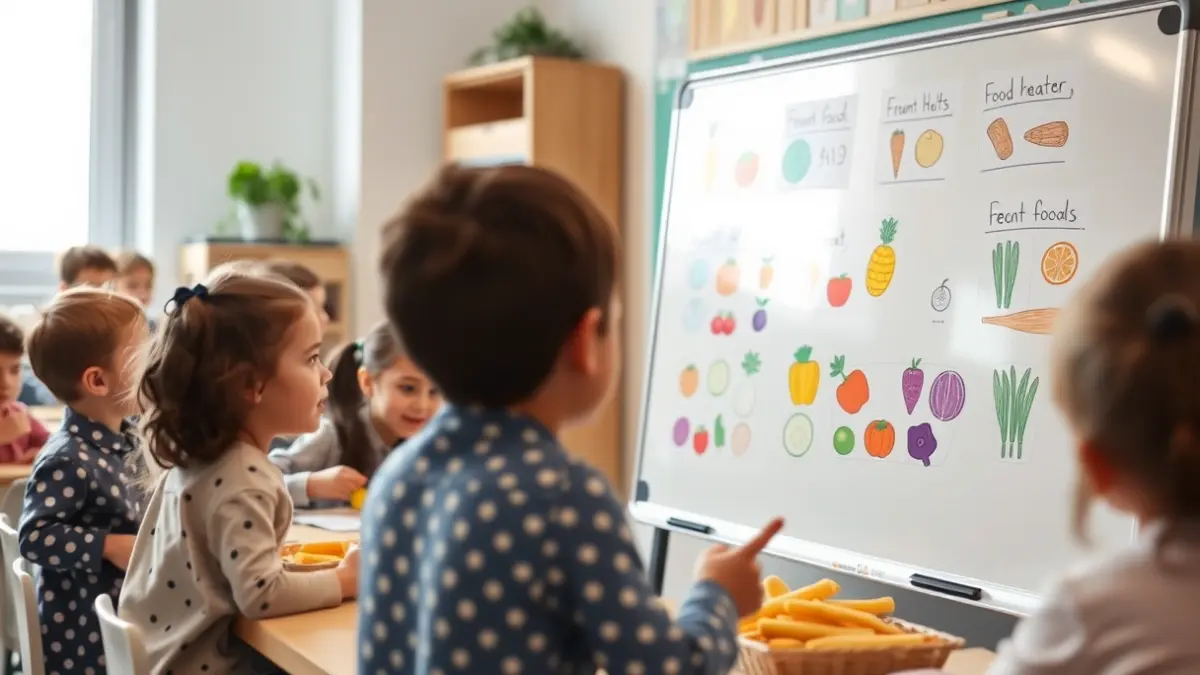
The workshops, far from being theoretical classes, begin with questions that encourage reflection, such as “Why do we eat?” or “What does the body need to function?”. From there, children learn to identify nutrients and classify foods, debunking misconceptions like the idea that all fats are harmful. Gamification is a key tool in this process.
One of the central activities is designing a healthy plate, which should include half vegetables and fruits, a quarter protein, and another quarter whole grains, always accompanied by water. The dynamic concludes with the “food traffic light,” a visual system that classifies foods into daily consumption (green), weekly (yellow), and occasional (red).
“"Social pressure and advertising have a great influence. It is a global problem."
The program also addresses the influence of social pressure and advertising on eating habits. Students are encouraged to analyze their snacks and consider healthier alternatives, such as fruits or nuts, instead of industrial pastries. The goal is for children to act as transmitters of this knowledge in their homes, bringing materials and guides with ideas for healthy breakfasts and lunches.
The recent entry into force of the Royal Decree on school canteens, promoted by the Ministry of Social Rights, Consumer Affairs and Agenda 2030, marks a turning point in food in Spain. This regulation, applied since last month, makes mandatory criteria that were previously only recommendations, seeking to guarantee healthy and sustainable food for all students and reduce inequalities in vulnerable socioeconomic environments.
“"It is a complete success. Children will now have access to a balanced meal, at least at school."
The decree establishes stricter planning, with mandatory consumption frequencies for certain foods, and limits the use of fried and ultra-processed foods, while enhancing the presence of fruits, vegetables, legumes, and seasonal products. In this context, schools and nutrition workshops are presented as fundamental tools for sowing small-scale changes, with the hope that children will develop a new perspective on what they eat.