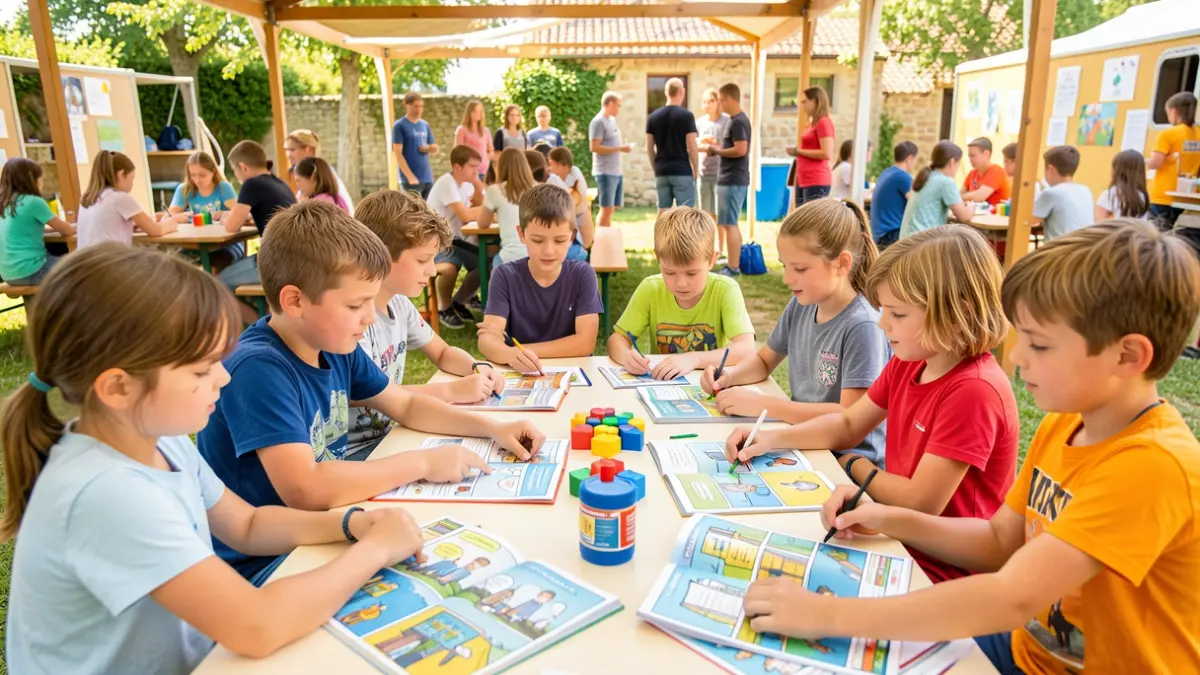
The Madrid City Council, in collaboration with the CEOE Foundation, has launched the educational project 'Olegario', aimed at around 450 minors aged 8 to 12. The initiative takes place in the municipal camps of the 'MadridCamp: Concilia en Vacaciones' program and aims to teach business skills and concepts such as taxes or R&D&I in a didactic manner.
The project is based on the comic 'Olegario, the goblin who became an entrepreneur', which uses drawings and dialogues to explain financial education. It also fosters critical thinking, effective communication, and conflict resolution through participatory activities.
José Fernández, delegate for Social Policies, Family, and Equality, visited one of the camps at CEIP Príncipe Felipe, accompanied by the councilor for Fuencarral-El Pardo, José Antonio Martínez Páramo, and the president of CEIM, Miguel Garrido. During the visit, the children formed a company and overcame obstacles such as the loss of a supplier, learning about competition and profit management.
Participants highlighted that they learned about taxes and suppliers. Fernández emphasized the importance of the entrepreneur figure for the country's development, promoting initiative and employment.
Miguel Garrido, president of CEIM, stressed the goal of familiarizing children with the business world from an early age, demystifying the figure of large companies and presenting it in an accessible way.
This pilot experience has been integrated into the 'MadridCamp: Concilia en Vacaciones' network, a municipal resource to facilitate family reconciliation during non-school periods. Despite being in an initial phase in ten centers, an "extraordinary" outcome is expected.
The municipal summer program offers 13,800 places in various public schools. Activities take place in July and August in bi-weekly shifts, from Monday to Friday, from 7:30 AM to 4:00 PM, with a dining service available.
To access the service, minors must be registered residents, and at least one parent must be working. Places are reserved for minors with special educational needs and for those in emergency situations or at risk of social exclusion.
The initiative, which offers over 41,000 places across its various camp types, is complemented by sports camps and activities organized by the districts.