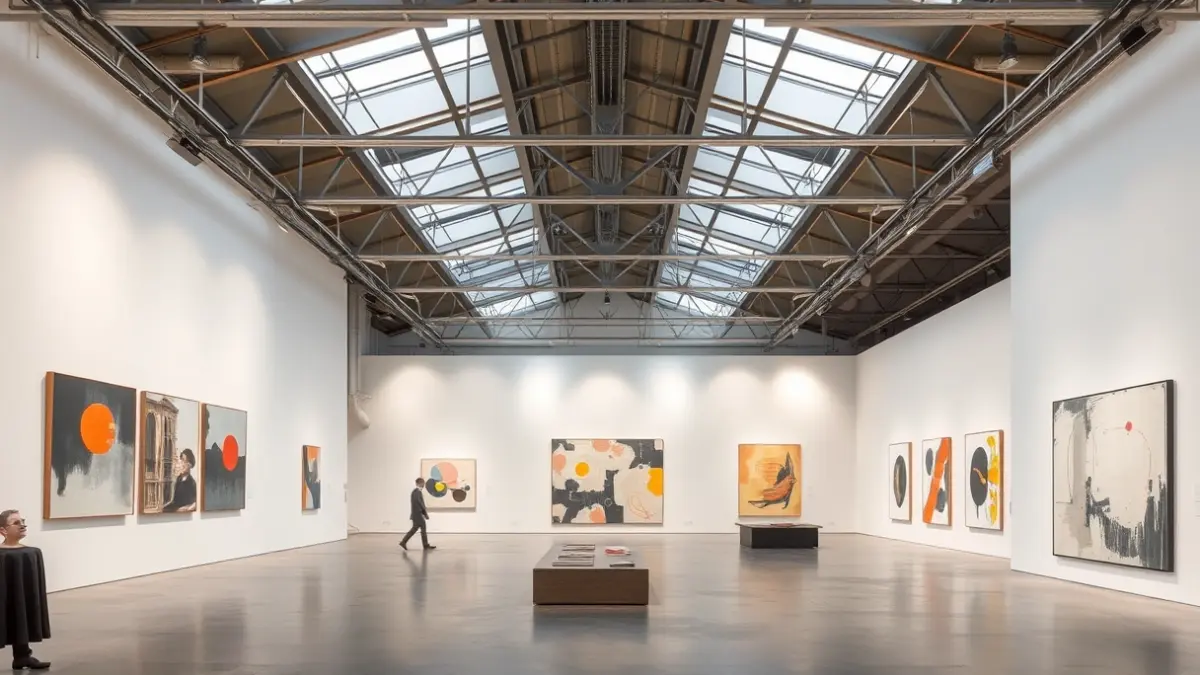
Organized by Intermediae Matadero and Mayrit, the exhibition brings together a dozen international artists and collectives, offering a profound reflection on the concept of "model" in contemporary society.
Curated by Eduarda Neves and Mohammad Salemy, the (Super)Models exhibition analyzes the evolution of models, from their origins to current "supermodels" such as algorithms and economic systems, which not only interpret reality but also construct it and influence decision-making.
The proposal offers a critical reading of structures such as algorithms or economic systems, which condition decision-making and define what is possible.
The exhibition prompts questions about the impact of these models in terms of normalization, exclusion, and predictability, exploring how they operate and what aspects of reality they omit or standardize. These inquiries run through all the selected works.
Participating artists include Adad Hannah (United States), Adrià Julià (Spain), Lúcia Prancha (Portugal), Hugo Canoilas (Portugal), Ece Canli (Turkey), Babak Golkar (United States/Canada), Attila Richard Luckas (Canada), Daniel Hölzl (Austria), Abie Franklin (Israel), John Gerrard (Ireland), Abbas Zahedi (United Kingdom), and the POoR Collective (United Kingdom).
Notable works include Symphony for an Economy of Extinction (2026) by Adrià Julià, an installation examining the undemocratic nature of certain economic models. Also featured are Fauxsimile by Ece Canli, addressing repetition in algorithmic systems, and Sellers (Goebbels) by Babak Golkar, linking historical propaganda strategies with contemporary consumer dynamics.
The (Super)Models exhibition is part of the Mayrit 2026 program, a biennial event that solidifies Madrid as a key international platform for reflection on contemporary design and architecture.