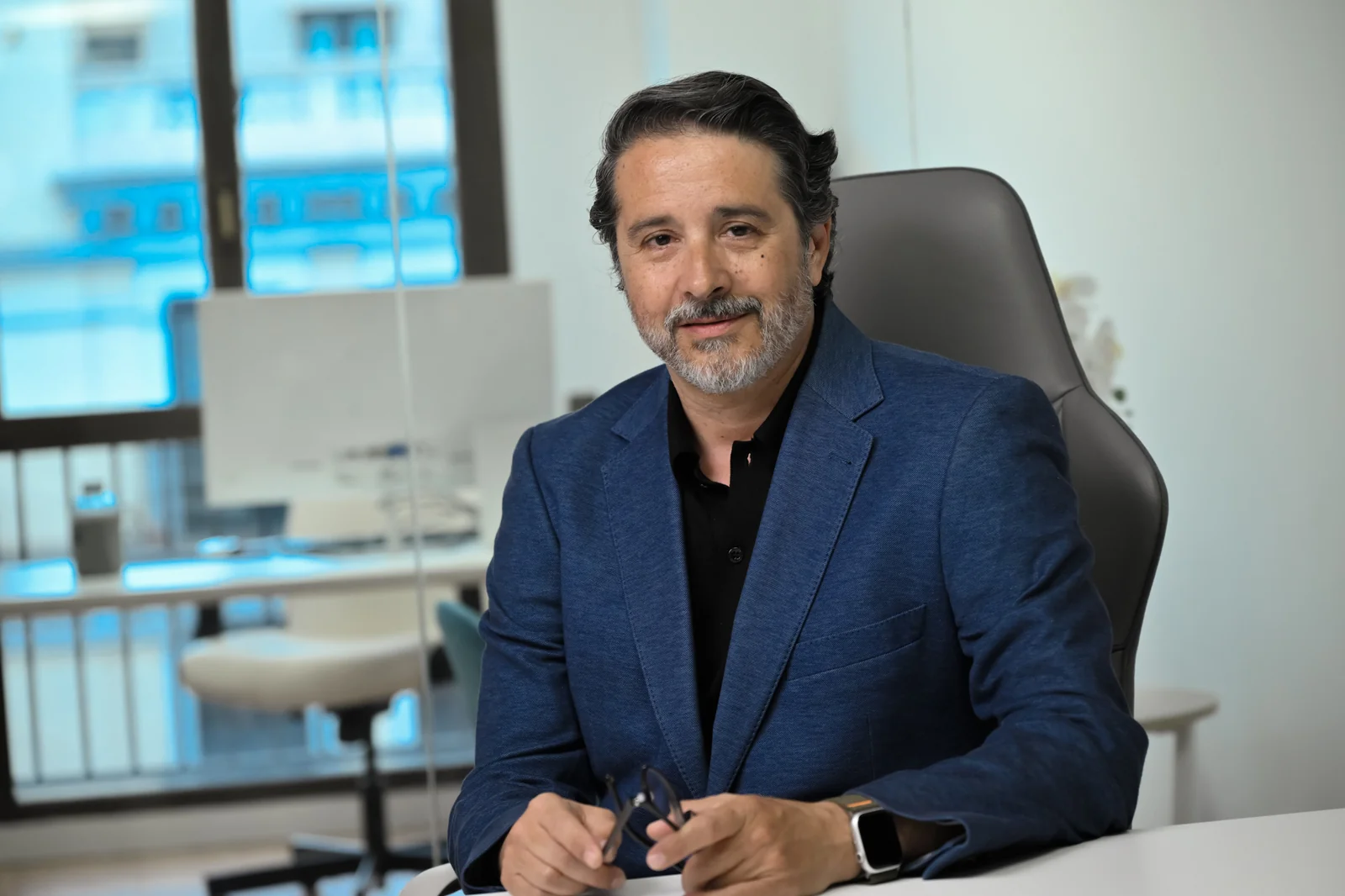
The first debate panel, 'The transport system in Madrid: Network, Intermodality, and Planning', held as part of the III Transport and Logistics Conference organized by Madridiario, brought together key figures in Madrid's mobility sector. The event, moderated by Juan Pajares, director of Madridiario, analyzed the challenges facing the region. Participants included Alfonso Sánchez Vicente, General Manager of EMT Madrid; Ignacio Pérez-Carasa, Director of Institutional Relations at ALSA; Pablo Rodríguez Sardinero, General Manager of the Regional Transport Consortium of Madrid; and Juan Tébar Molinero, Operations Director of Metro de Madrid.
The speakers agreed on the need for greater coordination among operators and defended public transport as a fundamental pillar for travel in the Community of Madrid. The impact of artificial intelligence (AI) was discussed, with Alfonso Sánchez Vicente highlighting its crucial role in both internal management and user services. EMT already uses AI to optimize the charging of electric buses, automatically exchanging information to determine the optimal charging time.
Technological innovation drives the environmental transformation of EMT. The company has invested in renewing its fleet, becoming the first major European city to eliminate diesel buses. It has 452 electric buses and plans to add 120 more, reaching 27% zero-emission vehicles. Furthermore, it has launched Spain's first green hydrogen plant linked to a public urban transport operator. The growth of BiciMAD, with 13.7 million uses last year, and the development of mobility hubs were also highlighted.
Ignacio Pérez-Carasa, from ALSA, emphasized sustainability as a central theme, stating that collective transport is key to decarbonization. ALSA has incorporated over 250 zero-emission vehicles and plans to further reduce its emissions by an additional 27% by 2030. The company also monitors operations and driving to improve safety, achieving significant reductions in accident rates in cities like Lisbon and Granada. The importance of women's integration into the sector was noted, with women representing 21% of the workforce.
Pablo Rodríguez Sardinero, from the Regional Transport Consortium of Madrid, explained that the Consortium coordinates the entire system of the Community of Madrid, unifying organizational structure and fares. A historic demand record was reached in 2025 with 1.787 billion journeys. Planning for new urban developments such as Los Ahijones and Los Berrocales was highlighted, along with advancements in digitalization through the Citram system, connected to the DGT (General Directorate of Traffic) for real-time traffic monitoring.
Juan Tébar Molinero, from Metro de Madrid, detailed the modernization of Line 6, the busiest line, which serves 13 municipalities. Leisure travel habits have increased by 30% compared to pre-pandemic levels. The renovation of Line 6, which will include automation and new digital trains, will provide 70% more capacity. The efficient management of data was emphasized as the future of public transport.
The event, organized by Madridiario, was sponsored by Metro de Madrid and GAM, with collaboration from Alsa, the Official College of Architects of Madrid (COAM), and Diariocrítico. The conference could be followed live via streaming and social media with the hashtag #MadridSeMueve.