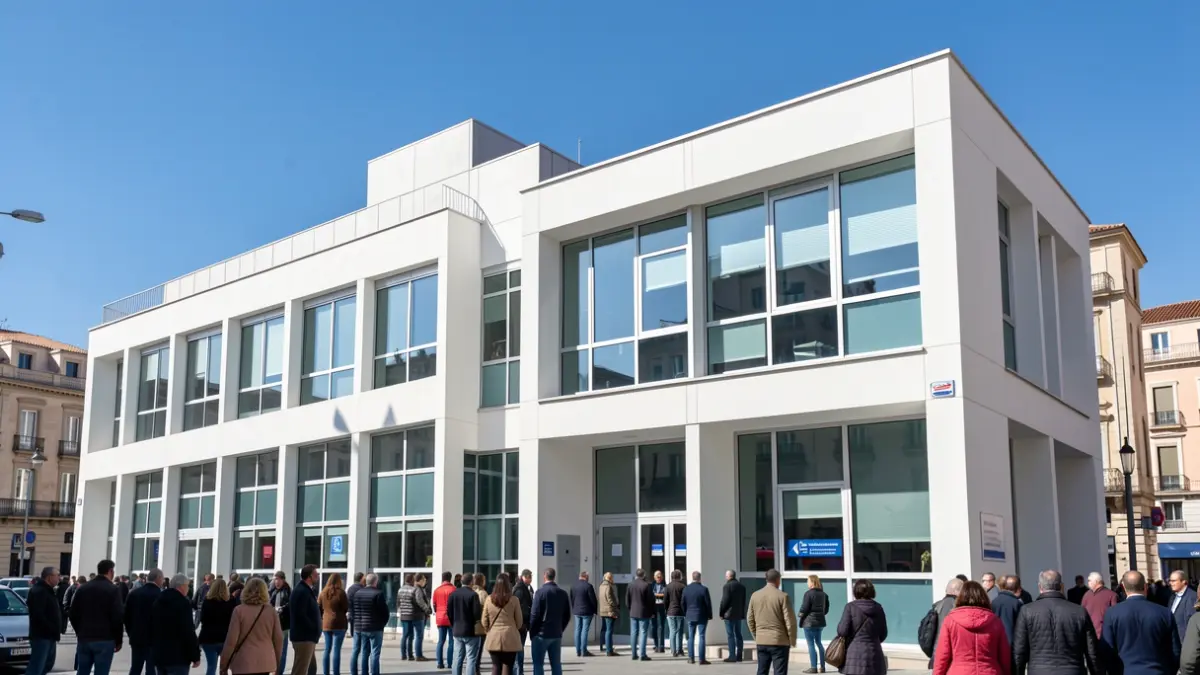
The deputy mayor and delegate for Security and Emergencies, Inma Sanz, reported this investment during a visit to the construction work of the new teaching block for the Center for Training in Security and Emergencies (CIFSE). The works, with a budget of 16.8 million euros, are expected to be completed in the first quarter of 2027.
CIFSE is the municipal educational center responsible for the training for entry, promotion, and updating of the City Council's security and emergency corps, such as the Municipal Police, the Firefighters Corps, SAMUR-Civil Protection, and Mobility Agents.
The new teaching block aims to meet the growing demand for space for training activities, which require large open areas for practical simulations. The new building will add 9,720 m2 and will be integrated with the main building, including a basement for parking, workshop classrooms, a main hall, and multipurpose classrooms on its various floors.
During the construction, remains of the carapace of a giant tortoise, the species Titanochelon bolivari, dating back over 15 million years, were found. The remains will be transferred to the Archaeological and Paleontological Museum of the Community of Madrid.
Currently, CIFSE has about twenty classrooms and spaces to train more than five hundred students simultaneously, including shooting ranges and a diving pool. In the last four years, technological resources were reinforced with new Wi-Fi, digital whiteboards, and microphone systems.
The importance of CIFSE extends beyond training, also serving as a workplace and training ground for serious or significant procedures, such as the Protocol for Action in Complex Incidents (PIC).