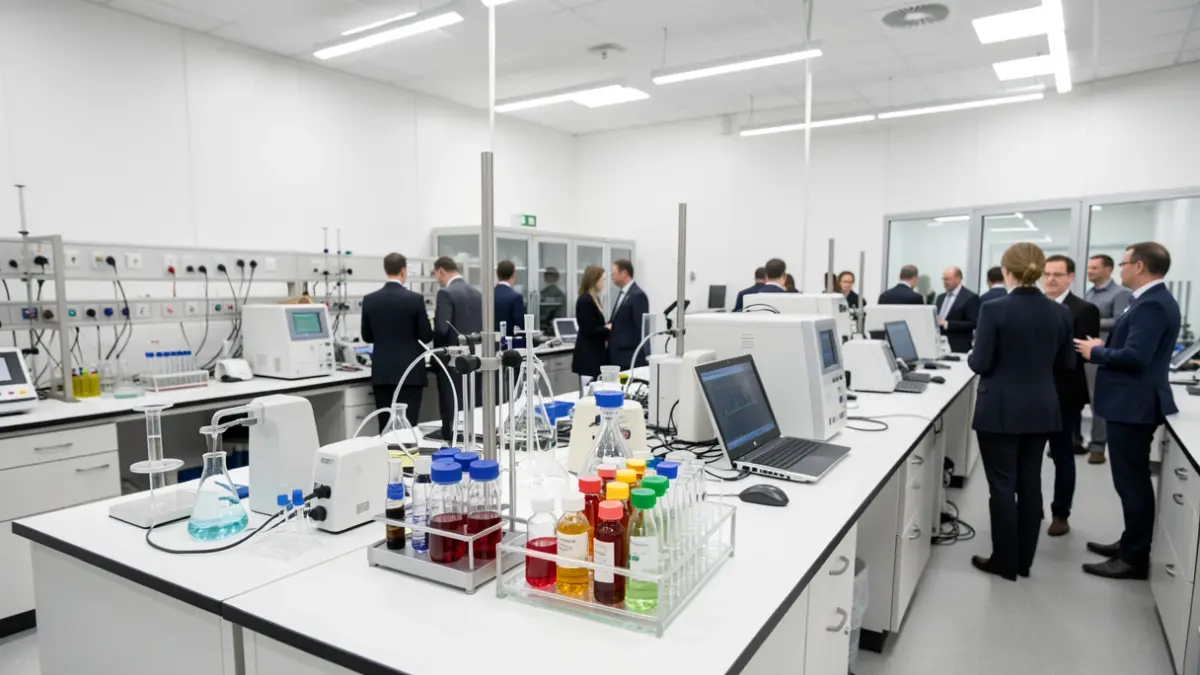
The Regional Center for Advanced Therapies (CRETA) of the Community of Madrid, previously announced by Isabel Díaz Ayuso, has opened its doors. Its primary objective is to strengthen the region's leadership in producing cutting-edge therapies, utilizing genes, cells, and tissues to prevent and treat conditions such as leukemia, multiple myeloma, and transplant rejection.
Specifically, it has been detailed that CRETA will be capable of developing up to three types of innovative medicines: NC1, already used at the Puerta de Hierro Majadahonda hospital to treat spinal cord injury sequelae in approximately 75 patients; Celyvir, targeting metastatic tumors in children and adults unresponsive to conventional chemotherapy; and ThyTreg, a therapy developed by researchers at the Gregorio Marañón Hospital to prevent rejection in children receiving heart transplants.
Regional President Isabel Díaz Ayuso emphasized during the inauguration that the new center, spanning 200 square meters and featuring three "clean rooms" equipped with advanced technology, will enable "scaling up projects" and ensuring that "no brilliant idea born in a hospital stalls due to lack of production."
In the Community of Madrid, we always fight for life.
The launch of CRETA, coinciding with an annual investment increase of nearly 18 percent, complements the eight advanced therapy production units already operational in the region's public hospitals, including Niño Jesús, Gregorio Marañón, La Paz, Puerta de Hierro (with two operational units), and Ramón y Cajal, Clínico San Carlos, and 12 de Octubre (currently undergoing accreditation).
Since 2018, these units have served nearly 400 patients, including about a hundred from other regions of Spain, as part of the Community of Madrid's Regional Strategy for Advanced Therapies.