
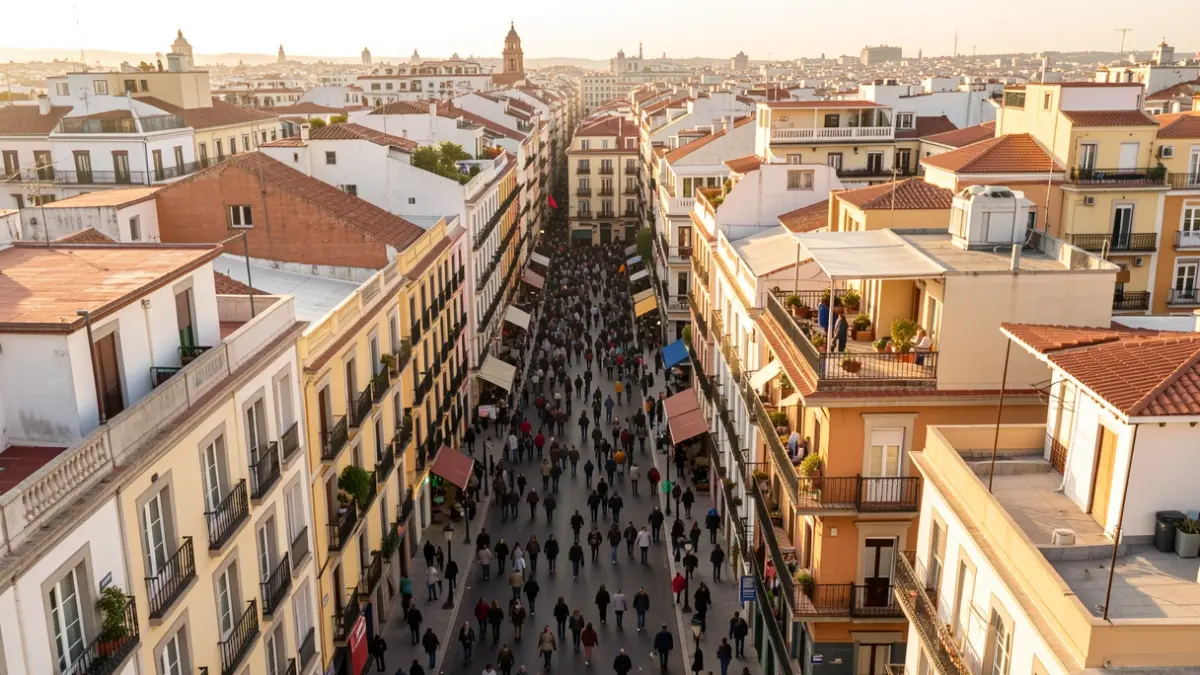
From August 2024 to May 2026, the Spanish capital has gone from having 22,435 registered tourist accommodations to 13,431, a decrease of almost 9,000 homes in 21 months. This 40% drop contrasts with the 15% decrease recorded across Spain during the same period, where the total number of tourist apartments fell from 403,267 to 341,001.
Other major cities like Barcelona, second in volume for this type of accommodation, have seen a smaller decline of 15%, going from 18,690 to 15,905 units.
This decline in Madrid began with a shock plan in April 2024, prior to the implementation of the RESIDE Plan in September 2025. This regulation aims to prevent tourist apartments from competing with residential use in apartment buildings.
One of the key measures of the RESIDE Plan is the restriction on granting licenses for individual tourist apartments in the historic city center. Outside this area, they are only authorized if they have independent access from the street, on the ground or first floor, to avoid coexisting with permanent residents.
The plan also promotes the conversion of offices into housing to increase the residential supply and toughens penalties for unlicensed operators. Previously, fines for illegal operation ranged from 1,000 to 3,000 euros. Now, under the land law of the Community of Madrid, the first firm fine is 30,001 euros, potentially rising to 60,001 and 100,001 euros for repeat offenses.
Additionally, a public list of all licensed tourist apartments and their exact locations has been published, allowing residents to verify the legality of neighboring properties. The strategy also includes coordination with the College of Property Administrators of Madrid to inform property communities about current regulations and the risks of irregular tourist rentals.