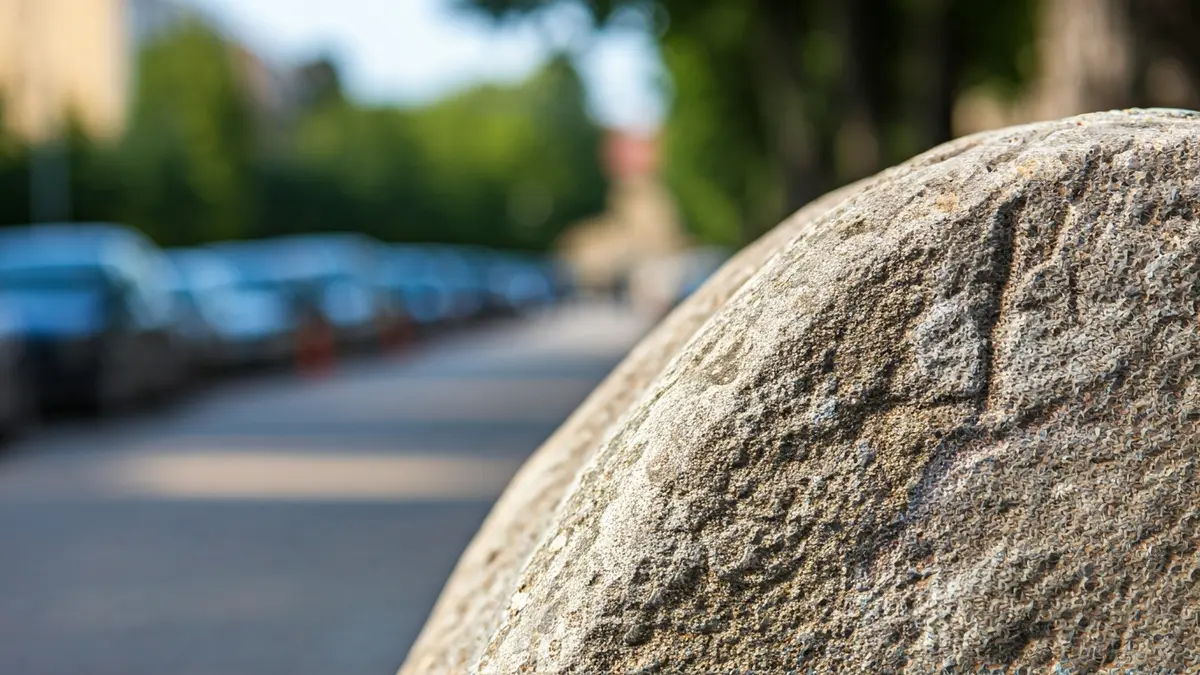
The delegate for Culture, Tourism, and Sport, Marta Rivera de la Cruz, has voiced her concern over the monument's condition, labeling the marks as "shameful." She explained that, until now, the technical complexity of the task had prevented their removal without compromising the structure's integrity.
“"The vandalistic inscriptions are shameful and date back to the 1980s. Until now, their removal could not be addressed due to the technical difficulty of doing so without damaging the support."
Rivera de la Cruz emphasized that the deterioration is not recent, but originated in the 1980s, a period when awareness regarding the protection of historical heritage was lower. The current sensitivity towards these assets is, according to the delegate, very different.
The Temple of Debod, a monumental site with over two thousand years of history and profound symbolic value for Madrid, displays scratches and messages etched into the stones of its entrances. This image of incivility is considered particularly serious by the City Council.
Although the Consistory has reinforced surveillance around the temple, maintaining permanent 24/7 control, Rivera de la Cruz acknowledged that vandalism is difficult to prevent entirely.
It is important to note that the stones affected by the inscriptions are not the original Egyptian ones, but those used in the monument's reconstruction in Madrid, sourced from Segovia. This detail, while not minimizing the severity of the damage, does influence the type of restoration intervention that can be applied. Thanks to the evolution of restoration procedures, the City Council is now investigating whether a safe and effective intervention is possible to remove these traces without affecting the underlying stone.