The Spanish capital, still celebrating the political change, began to be covered in ash and tension. Convents, religious schools, hospitals, and ecclesiastical orders were an essential part of Madrid's landscape in the early 20th century, with bells marking daily life and many religious buildings occupying privileged spaces in the city center.
However, alongside tradition and faith, there was growing anti-clericalism fueled for decades by political conflicts, social inequality, and ideological clashes. The trigger came after several incidents between monarchists and republicans in May 1931, leading to street tensions that culminated in attacks and fires against religious buildings.
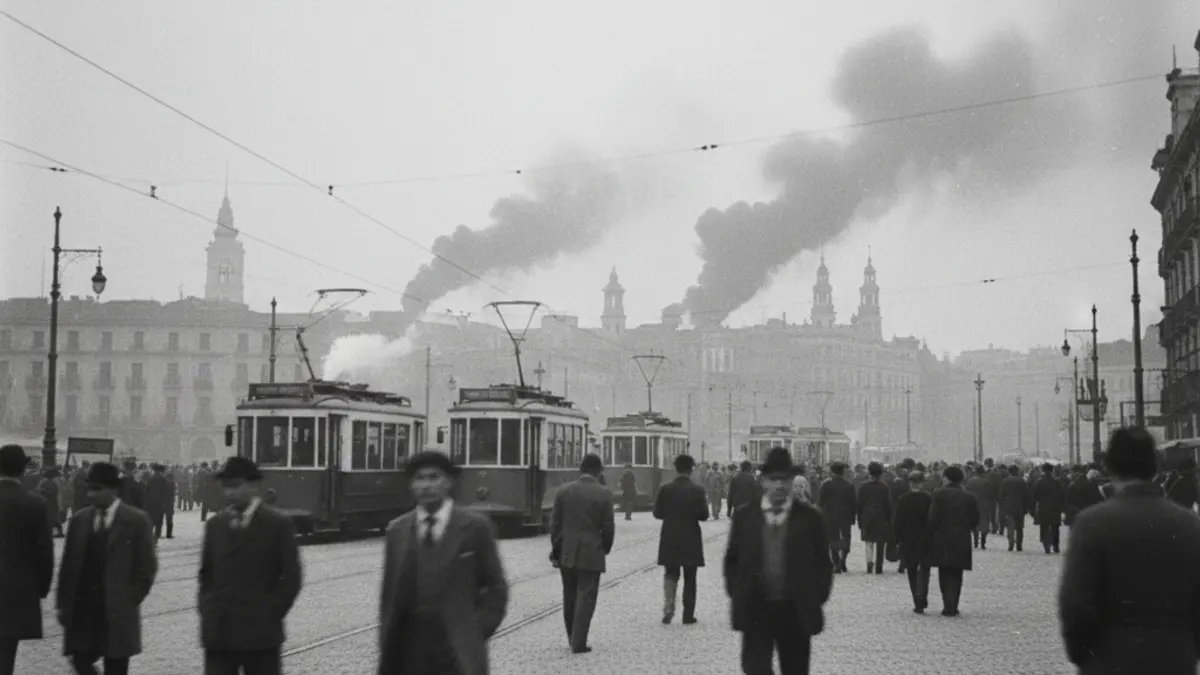
The flames spread rapidly, drawing hundreds of Madrileños who came to observe the events. Chroniclers of the time described almost surreal scenes, with trams crossing smoke-filled streets and groups of onlookers commenting on the fires from balconies and rooftops.
The episode also revealed a city deeply divided emotionally. While some celebrated the attacks as a response against the old power, others tried to save books, archives, and works of art before they were destroyed by the flames.
The reaction of the Republican Government was slow and hesitant, fearing that a harsher intervention would provoke even more violence. This lack of control fueled a sense of bewilderment and projected a delicate image of the young Republic, both nationally and internationally.
Almost a century later, these fires remain one of the most complex and uncomfortable episodes in Madrid's recent history. Not only due to the material destruction but because they starkly reflected the political, social, and cultural fractures that ran through the city and would shape Spain's future in the following decades.