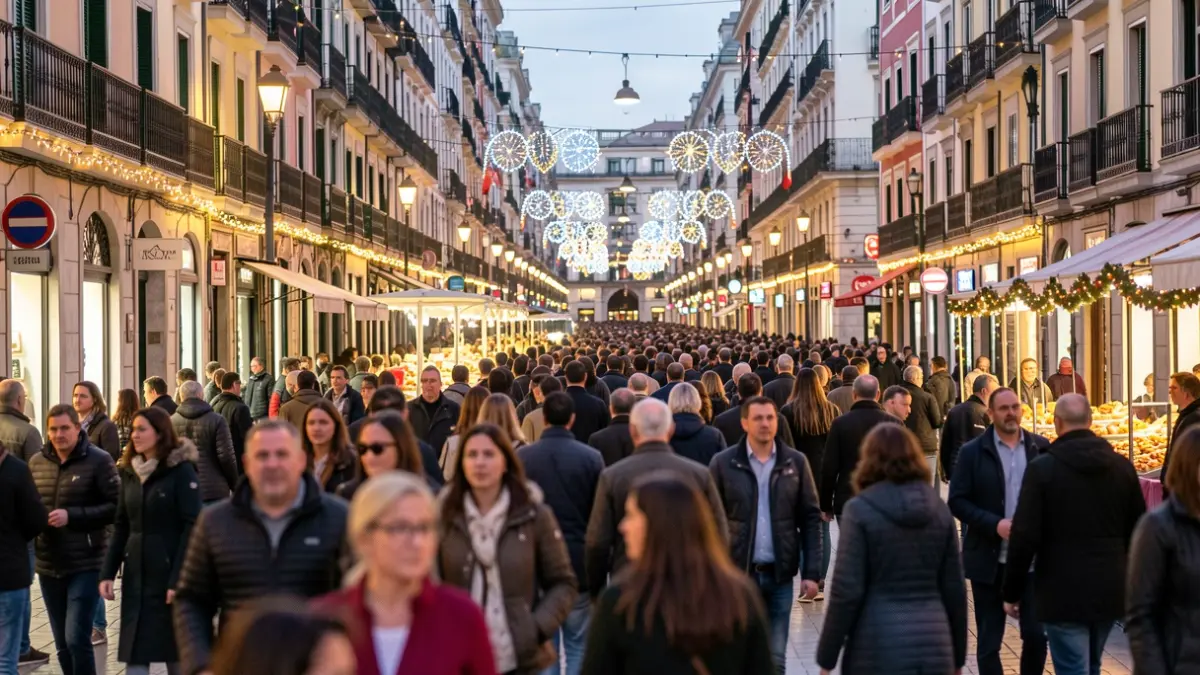
The restaurant sector will concentrate the largest portion of this additional tourist spending, accounting for 78% of the total. Transportation will absorb 16% of the economic impact, and accommodation and other hotel services will make up the remaining 6%.
Hotel rates in the capital have seen a notable increase. Two weeks before the visit, the average rate stands at 298 euros per night, a 4.5% rise compared to the same period in 2025. This growth is primarily due to the premium segment, with five-star hotels recording the largest increase (15.2%), followed by three-star hotels (5.2%). Four-star establishments, however, are experiencing a slight average decrease of 1.5%.
The Business Association of Hoteliers of Madrid estimates an average occupancy of 81.82% between June 5th and 9th. This figure coincides with the papal visit and the Bad Bunny concerts in the city, a circumstance that could influence the analysis of the specific impact of each event.
According to a survey of its over 330 associated establishments, international tourists will represent 58.48% of the total visitors, compared to 41.52% domestic. The main source markets are expected to be United States, France, and the United Kingdom.
“"The overlap of events can introduce certain distortions in the analysis, but the data reflects the strong multiplier effect that major events can generate in a destination and their impact on local businesses."
Carlos Cendra, Marketing and Communication Director of The Data Appeal Company, highlights the significant role of restaurants and food services in the projected spending, as well as the high proportion of incremental spending linked to transportation. The latter is attributed to the volume of domestic travel, reflecting the capital's drawing power for visitors from all over Spain.