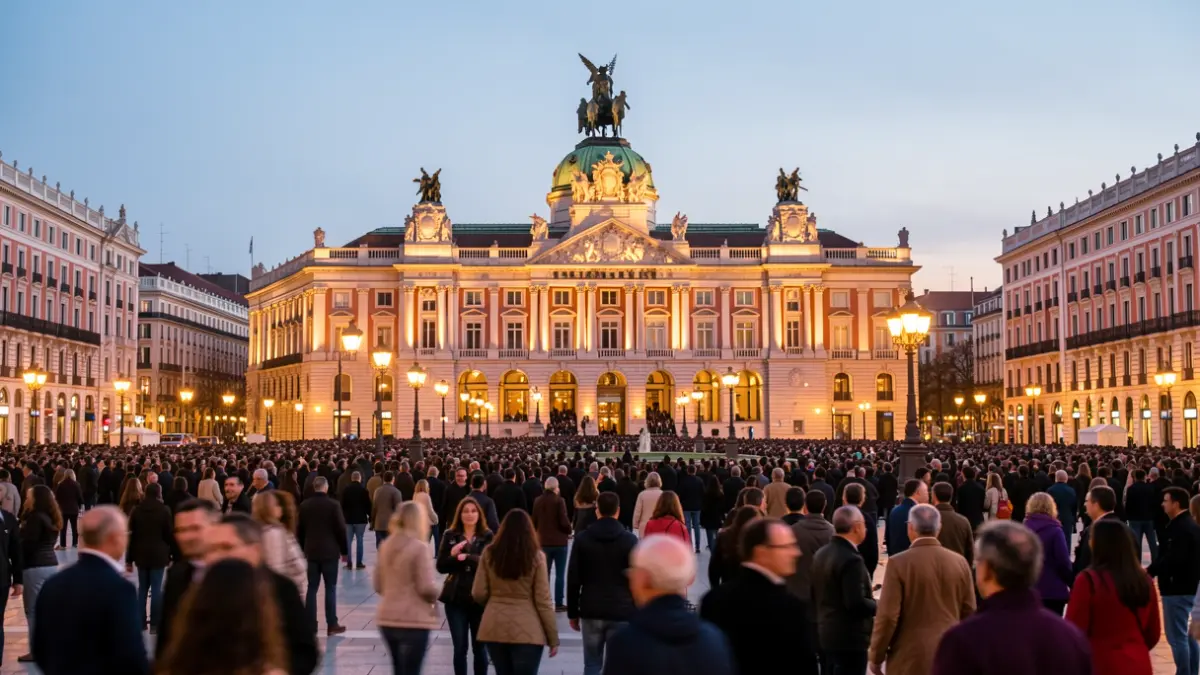
The Spanish capital is gearing up to welcome Pope Leo XIV between June 6 and 9, an event that will alter the city's routine with traffic restrictions, public transport reinforcements, and special security and assistance measures. A considerable economic impact is expected, estimated at 73.8 million euros, according to Data Appeal Mabrian, with an anticipated 1.8 million attendees at the scheduled events.
The papal journey will begin on Saturday, June 6, with the Pontiff's arrival at the airport at 10:30 AM. During his stay, he will participate in various institutional, religious, and social events at different locations in Madrid. The hospitality sector will be the main beneficiary, absorbing 78% of the additional tourist spending, followed by transportation (16%) and accommodation (6%).
Hotel prices are expected to rise, with the average rate during the visit weekend standing at 298 euros per night, 4.5% more than in the same period of 2025. Five-star hotels will see the most significant increase (15.2%), while three-star hotels will rise by 5.2%. Average hotel occupancy is estimated at 81.82%.
The Pope's agenda in Madrid includes a welcome ceremony at the Royal Palace, meetings with authorities, civil society, and the diplomatic corps, as well as visits to social centers and encounters with young people. Highlights include the Prayer Vigil in Plaza de Lima and the Corpus Christi Mass in Plaza de Cibeles on Sunday, June 7, where he will process with the historic Renaissance silver monstrance owned by the City Council.
On Monday, June 8, the Pontiff will meet with the President of the Government and deliver a speech at the Congress of Deputies, becoming the first Pope to do so before the Spanish Parliament. He will also visit the headquarters of the Episcopal Conference and the Almudena Cathedral, and in the afternoon, he will hold a meeting with the diocesan community at the Santiago Bernabéu Stadium.
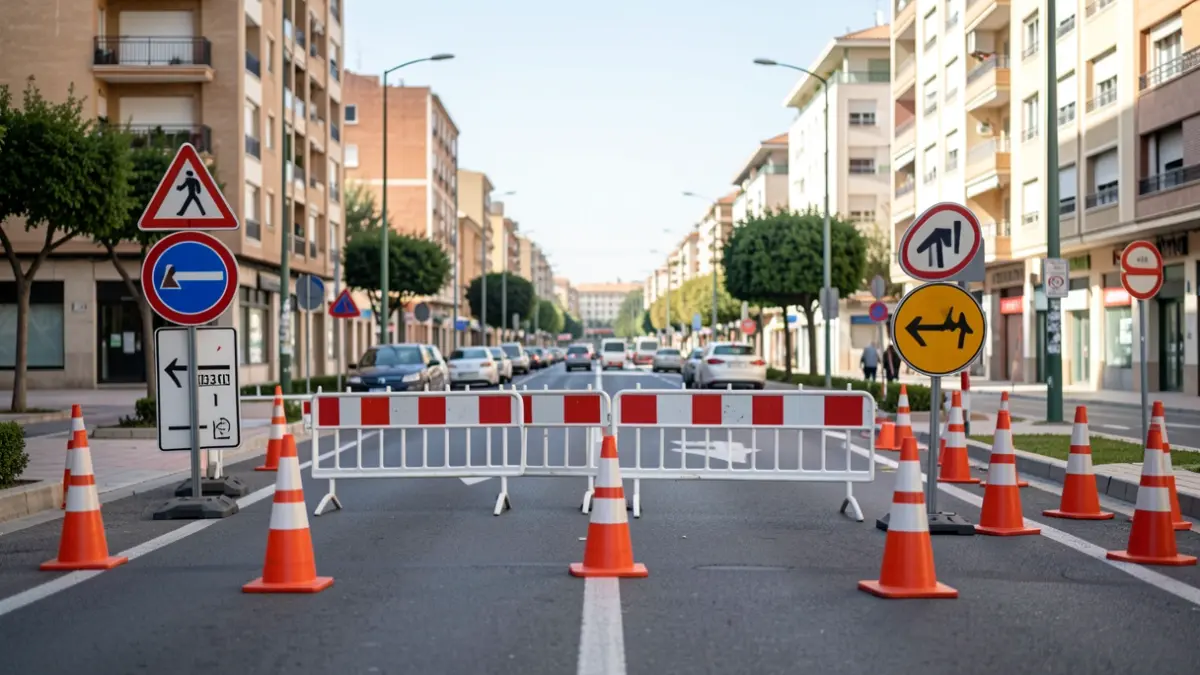
To manage mobility, significant restrictions will be implemented, with complete closures in Plaza de Lima and Plaza de Cibeles starting June 3 and 4, respectively. The City Council recommends teleworking and flexible working hours, and promotes the use of public transport, which will be free from June 3 to 9, along with bicimad. Madrid Metro will extend its operating hours and increase train frequencies.
An extensive security and emergency operation will be deployed, involving 4,000 Municipal Police officers and 1,000 Samur-Civil Protection personnel. The Ministry of Health will reinforce Primary Care Points (PACs) with doctors, and Samur Social will activate a specific device to address social needs, including lost children, the elderly, or homeless individuals.
The Community of Madrid will provide public schools and institutes as free accommodation spaces for pilgrims, a measure opposed by the STEM union, which believes the Catholic Church should bear this responsibility. The use of educational centers will be limited from Friday, June 5, to Sunday, June 7.
The President of the Community of Madrid, Isabel Díaz Ayuso, will present the Pope with the International Medal of the Community of Madrid and typical regional products. The Royal House of Correos will serve as the International Press Center during the visit.