Pope Leo XIV's stay in Spain, marked by heat and the proximity of the Football World Cup, is set to become a landmark in diplomatic relations between the country and the Vatican. This event provided a temporary respite from the usual political hostility between parties, who showed apparent unity before the Catholic figure.
However, analyzing this situation is urgent, as the dynamic of judicial investigations and the shadow of corruption over the coalition government resumes after the Pontiff's departure. The supposed moral superiority of the left, a concept coined by Gramsci, was temporarily overshadowed by the papal presence and his stance against immigration, a position reminiscent of figures like Trump.
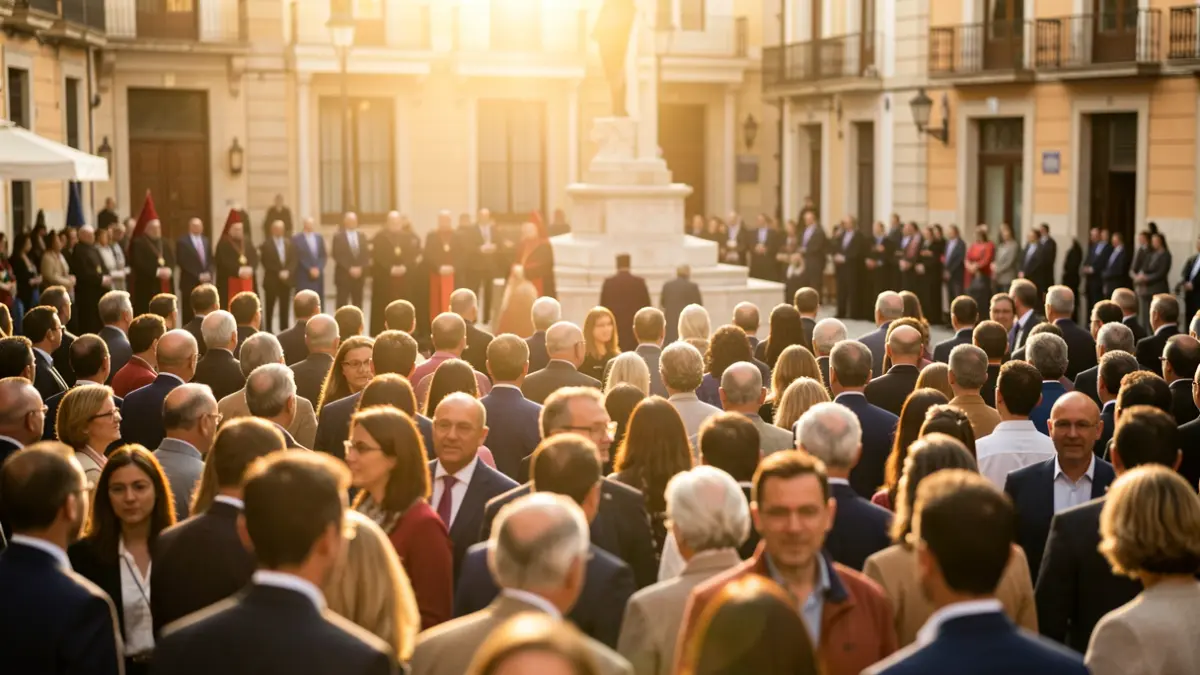
The Pope's spiritual message on immigration, however, seems to have resonated particularly with sectors that do not ideologically align with him. The massive gatherings of citizens who came to welcome the Pontiff, according to analyses, largely come from the PP and Vox electorate, highlighting a notable contradiction.
The Pope's defense of human rights, especially concerning the management of the immigrant population in the West, has found conspicuous followers among PP and Vox faithful. Paradoxically, the governance of these forces in several autonomous communities is based on a restrictive immigration policy, under the slogan of 'national priority'.
The 'love-Pope-immigration' equation appears to be dissolving in favor of the 'affection-PP-Vox-immigration' composition. Pope Leo XIV, in his attempt to connect with the earthly reality, faces this complex dynamic. His ecumenical message, which defends the validity of all beliefs, seemed to take a backseat during institutional greetings, where political acronyms paraded in a protocol order.
The government delegate in Madrid, as described, found himself isolated in the Palacio de Oriente, surrounded by PP members, contemplating solitude, quoting Baltasar Gracián. President Ayuso also experienced moments of contemplation during the protocol greeting. The Pope thus emerges as the figure of greatest sincerity, whose prior actions and words have strengthened his image against the influence of figures like the President of the United States.
The political forces present at the welcome events displayed, in some cases, an unexpected insincerity. The crowd, with fervor and chants, clung to the theological virtues of faith, hope, and charity, values that transcend worldly political controversy. The message from God's highest representative on Earth demands behavior consistent with his teachings.
The unanimous applause for the Pope's speech in Congress contrasted with the previous attitude of some deputies, such as those from Vox. If this change in behavior is not maintained, it could be interpreted as a moral fraud. It is expected that the public and political representatives will make an effort consistent with the narrative of the visitor's message, recalling Milan Kundera's quote: 'if lying is essential, I want to be in a situation that resembles the truth as much as possible'.