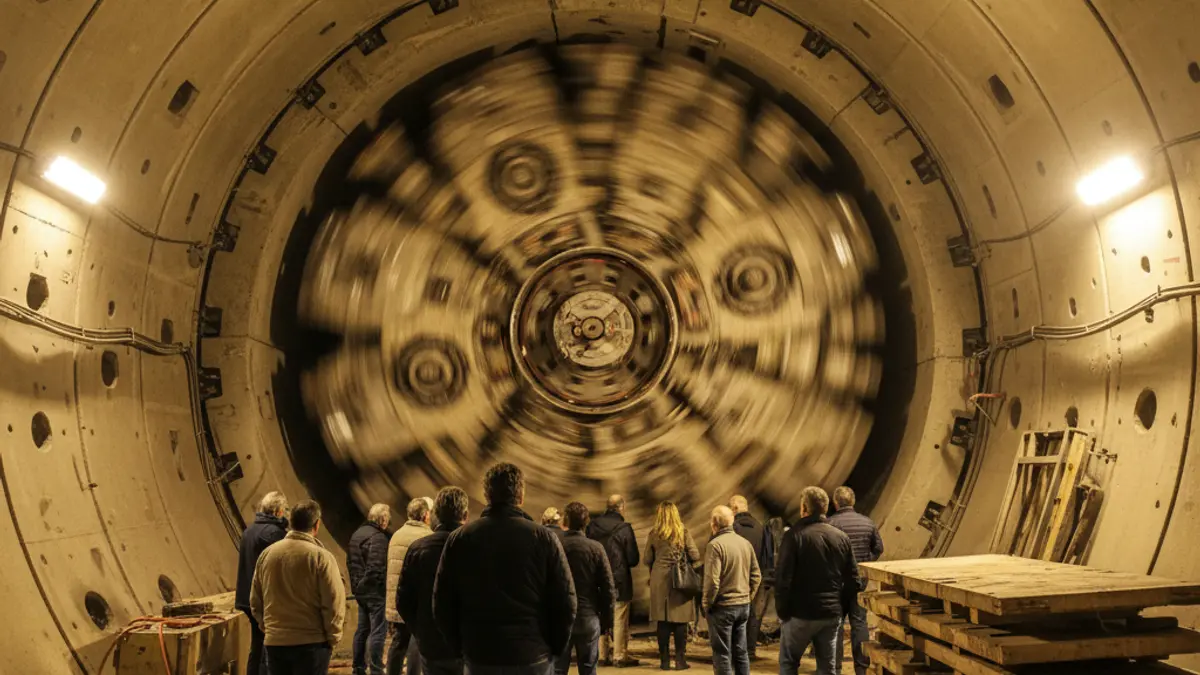
The regional minister of Housing, Transport and Infrastructure, Jorge Rodrigo, highlighted the progress of the tunnel boring machine, which joined the works in March. During a visit to the facilities in Noblejas (Toledo), where the tunnel segments are manufactured, the minister stated that the project is proceeding as planned, even exceeding initial expectations.
“"The incorporation of Mayrit allows us to execute this project more agilely, and on site, we have verified that it meets the established deadlines, even at a higher speed than initially foreseen."
The tunnel boring machine is crucial for excavating and consolidating the tunnel, requiring over 3,000 rings to complete the 5.5 kilometers separating Comillas from Conde de Casal, the endpoint of this section of Line 11. Each ring consists of seven segments, totaling approximately 25,000 concrete pieces for the entire project.
Currently, Mayrit has completed 500 of the 1,114 meters needed to reach Madrid Río. The segments for the first phase of the works are already manufactured and stored in Noblejas and at the Comillas park.
Industrialized construction, a technique also used in other regional projects such as the future Conde de Casal interchange, optimizes timelines and reduces costs. The production of concrete pieces began in September 2025, even before the tunnel boring machine completed its journey from Schwanau (Germany).
The Noblejas factory, with 50 workers, can simultaneously manufacture 42 segments in approximately seven hours. The transport of these pieces to Madrid is carried out in special vehicles, with between 7 and 10 trips daily, as the tunnel boring machine operates seven days a week.
The regional government will invest over 739 million euros in this project, which marks the beginning of a more ambitious extension of Line 11, set to reach 33 kilometers and connect Cuatro Vientos with Valdebebas. Of the total investment, 586 million will be allocated to the construction of the tunnel and the five stations.