The Board of Directors of SEPI has greenlit HUNOSA's 2025/2028 Strategic Plan, previously ratified by the company's own board. This plan, which defines the public company's future until 2050, follows an agreement in principle reached in June between HUNOSA's management and unions, mediated by SEPI.
The document solidifies HUNOSA's role as a decarbonization agent, environmental manager, and economic and social driver in its reference territory. The planned projects will mobilize over 110 million euros during the Strategic Plan's horizon, with the creation of 80 new jobs within the company considered necessary for their execution.
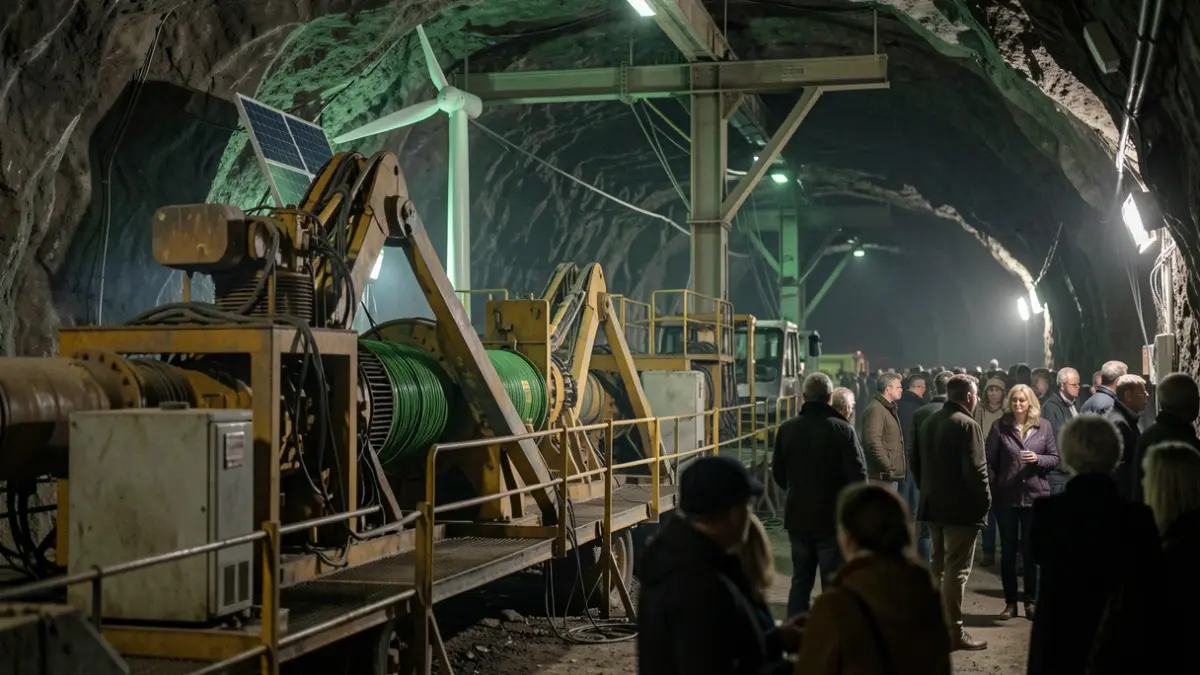
In its capacity as a decarbonization agent, HUNOSA will transform the La Pereda thermal power plant into a biomass facility, a project currently underway with an investment exceeding 56 million euros. Furthermore, it will promote a renewable energy park at the Pozo San Nicolás, pending technical and economic viability assessment, which will include a reversible pumped-storage plant, a project for harnessing underground streams, and a photovoltaic project. The company will also continue developing heat networks based on mine water, biomass, and waste heat recovery, alongside promoting photovoltaic and hydraulic projects.
The company will advance in R&D&I with projects related to the pilot plant for CO2 capture at La Pereda, studying its industrial scaling, and developing green hydrogen and sustainable fuel projects.
As an environmental manager, HUNOSA will continue with the closure and post-closure activities of its mining sites and waste heaps, as well as those of third parties. These activities, which could be carried out by Sadim as its own subsidiary, are estimated to create up to 80 jobs within this Group subsidiary.
The HUNOSA Group will also play a significant role in the activities to be developed within the National Mining Exploitation Program 2026-2030. The Strategic Plan also foresees the creation of a National Rescue Center at the Santiago mine (Aller), based on the company's Mining Rescue Brigade, to offer advisory services, 24-hour on-site personal assistance, and specialized training in various fields.
HUNOSA will continue to act as an economic and social driver of the territory through Hunosa Empresas and Sodeco, by financing job-creating business projects. Additionally, Hunosa Empresas will be responsible for marketing the industrial land developed by HUNOSA in former mining areas, aimed at attracting new companies to the Caudal and Nalón valleys.