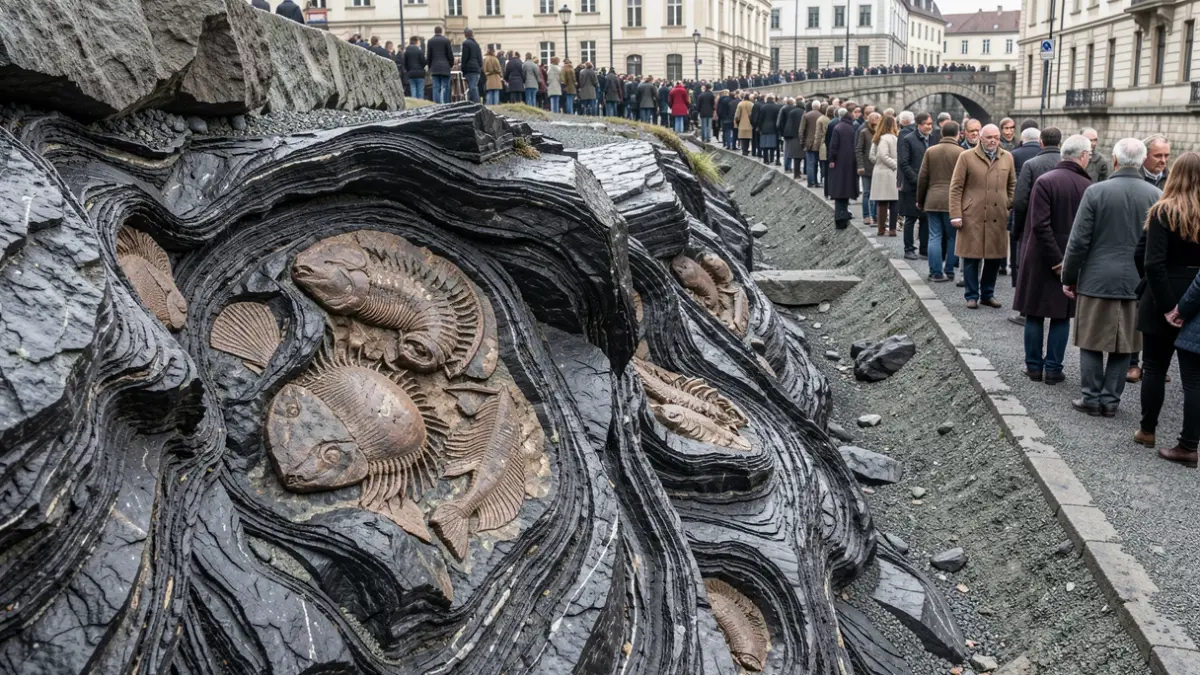
The remains, identified in Paleozoic slate outcrops in the areas of Patones and El Atazar, correspond to various marine invertebrates such as trilobites, brachiopods, mollusks, and graptolites. These rocks, which were part of ancient seabeds, form the geological basement of the region.
The UCM explains that the geological complexity of the terrain, subjected to intense deformation and metamorphism processes, makes the presence of fossils in this type of rock particularly exceptional, thus increasing their scientific value.
The study reviews the paleontological evidence from the Paleozoic era in the Sierra Norte of Madrid and nearby areas of Guadalajara, providing new information about the marine fauna that inhabited the territory when much of what is now the Community of Madrid was submerged.
These remains are the oldest body fossils identified in the region, preceded only by fossil tracks of marine arthropods discovered in the 19th century in Puebla de la Sierra.
The work involved paleontologist Sara Romero from the Faculty of Geological Sciences at UCM, and Juan Carlos Gutiérrez-Marco from the Institute of Geosciences (CSIC-UCM). The findings will be presented at the 80th scientific session of the Geological Society of Spain and published in the journal ‘Geogaceta’.