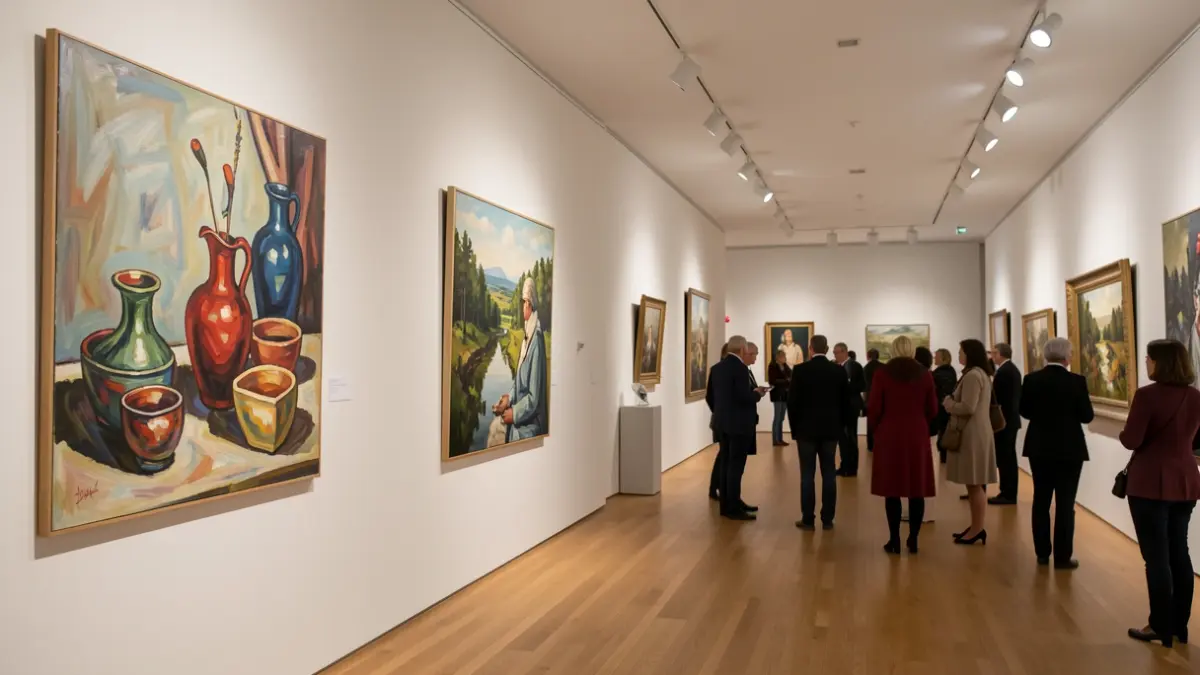
The exhibition, running until September 27, displays 77 works organized into nine thematic sections that cover more than six decades of artistic creation. The museum's artistic director, Guillermo Solana, highlighted Laffón's progression from a local context to international recognition, linking her work with contemporary art movements.
The exhibition focuses on the artist's figurative universe, exploring recurring motifs and ideas in her compositions, presented as variations throughout her career. Carmen Laffón, a full academician at the Royal Academy of Fine Arts of San Fernando, lived and worked between Sanlúcar, Seville, and Madrid. The selection includes oil paintings, charcoal drawings, and sculptures, with a focus on still life and landscape, prioritizing works from 1992 onwards.
“"She was an artist who, from a more local context (more Spanish, from Seville, from Madrid), moved towards the world very early on, and increasingly so over the years. And she increasingly related her work to the major currents, to the major movements of contemporary art."
The curator, Paula Luengo, proposed the project after personally contacting collectors and the artist's family, the primary lenders, to assemble the pieces. Two works—'La terraza Madrid' and a sewing machine—were specifically restored for this occasion.
The thematic sections explore Laffón's most recurrent iconographies: the Marcelina doll, the cradle, baskets, wardrobes, the Coto de Doñana, vineyards, lime, and salt flats. The initial sections feature pairs of oil paintings from 1965-1995 concerning the Marcelina doll and the cradle theme, connecting with childhood and memory. Luengo noted that the early Marcelina series from the sixties evokes a dreamlike atmosphere reminiscent of magical realism.
The exhibition also includes still lifes, a genre that allowed Laffón to experiment with formats and techniques using everyday objects, urban landscapes of Madrid and Seville, and a prominent presence of the Coto de Doñana, a space where the artist developed her pictorial language more personally, represented through horizontal views in pastel tones. Laffón's work evolved from a realistic perspective to a painting more interested in itself than in its subject, approaching abstraction through glazes and blurred strokes. Solana stated that the exhibition is a "recognition" of her career, emphasizing the Thyssen's commitment to showcasing female artists.
“"In Carmen's painting, there is this tendency towards the cyclical, towards returning again and again to the same motifs and never considering anything finished."