The Community of Madrid has officially declared the Teatro Pavón a Heritage Interest Asset (BIP), categorized as a Monument. This recognition highlights the building's significant historical, architectural, and typological interest, located at number 9 Calle Embajadores, and its role as a stage for Madrid's popular culture in the 20th century.
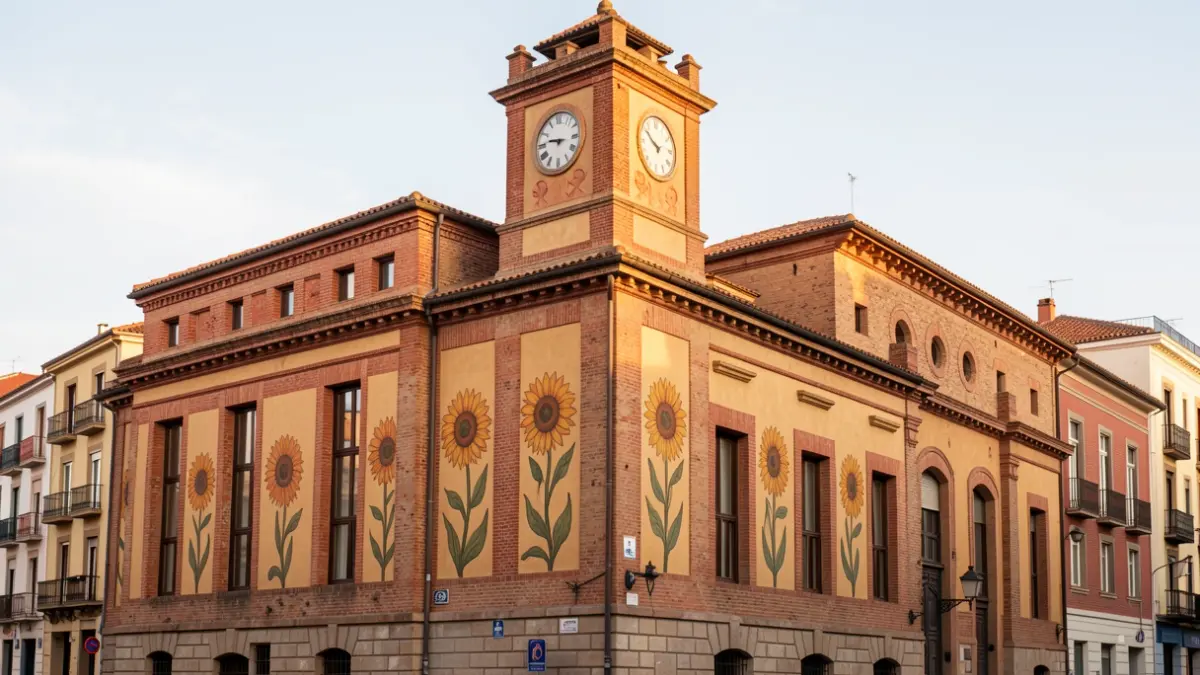
Designed by architect Teodoro de Anasagasti, the theater opened its doors on April 11, 1925. The building, considered ahead of its time, features reinforced concrete structure, brick walls, and metal roofing. Its facade displays reddish sgraffitos, ochre plaster, exposed brick, and secessionist-inspired sunflower paintings, with influences from art deco and Viennese architecture.
The characteristic corner tower with a clock, reconstructed from the original 1925 design, presides over the building. Since its inauguration, the Pavón has hosted popular genres like zarzuela, revista, and flamenco, featuring artists such as Manolo Caracol and Juanito Valderrama. In 1931, the successful "Las Leandras" premiered with Celia Gámez.
The theater has survived the Civil War, censorship, and various transformations, including its conversion into a cinema in the 1950s. After a period of closure, it was recovered in 2001 and subsequently renovated, restoring its theatrical use and updating its facilities.
The protection of the Pavón includes two movable assets: an old film projector and a wooden furniture piece for ticket collection. Additionally, a protection zone has been established to preserve its visibility and comprehension.
Despite its heritage value, the file notes the need to address dampness in the basement, dirt on the facades, and deterioration in wooden joinery, urging future interventions to respect the principles of reversibility and minimal action.