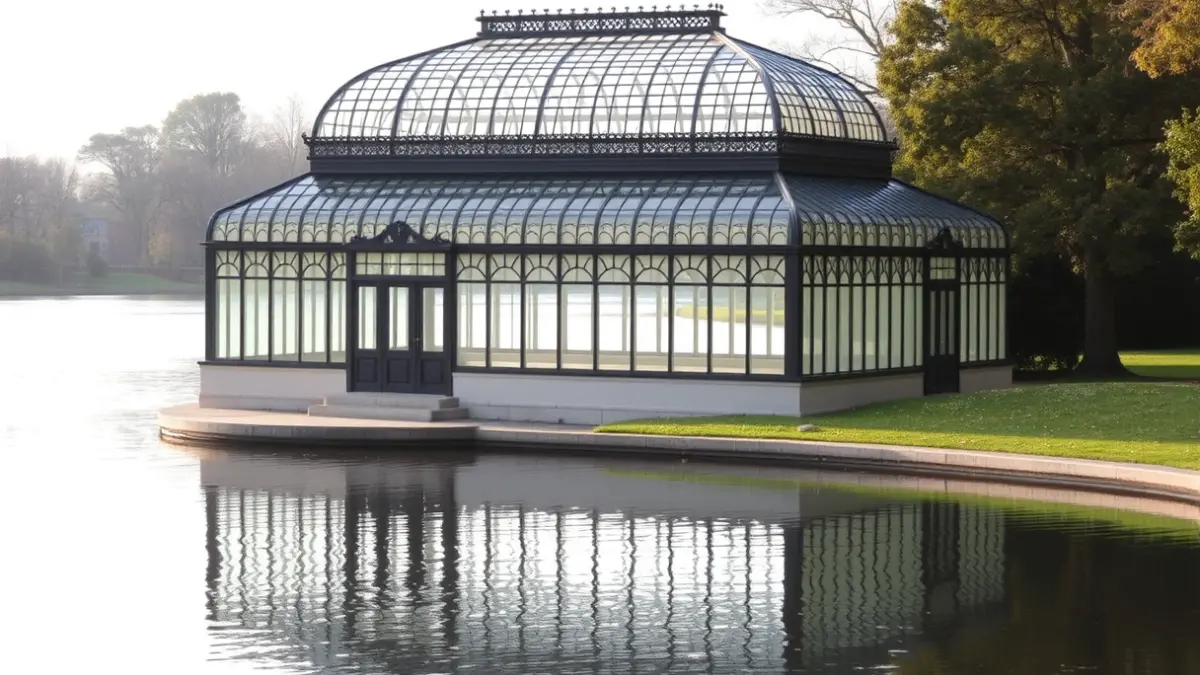
In the spring of 1887, the promenades of Retiro were transformed by the appearance of a unique building. A transparent structure, erected next to the pond, whose lightness and brilliance evoked the great constructions of London or Paris, contrasting with the Madrid of the late 19th century, still under development.
The architect Ricardo Velázquez Bosco was responsible for erecting this work in just a few months, inspired by the famous Crystal Palace in London. Its purpose was to host the General Exhibition of the Philippine Islands, an event that sought to project an image of Spain as a modern, cultured, and imperial power, at a time when its empire was beginning to show signs of weakness.
The exhibition included groups of Filipinos brought to Madrid to recreate daily scenes for European visitors. Among them were indigenous Igorots, whose presence aroused a strange mixture of scientific curiosity, paternalism, and spectacle.
Inside the Crystal Palace, visitors could find a mix of tropical plants, sculptures, textiles, exotic woods, and reproductions of indigenous villages. The high humidity and heat under the glass transported Madrileños to the distant islands, which for many were almost a territory of fantasy.
Today, the Crystal Palace remains a meeting point in Retiro, a place for contemplation and refuge. Although colonial exhibitions and imperial discourses have disappeared, the building stands as a silent witness to a bygone era, a reminder of a Madrid that, for an instant, believed it could contain the entire world under a glass roof.