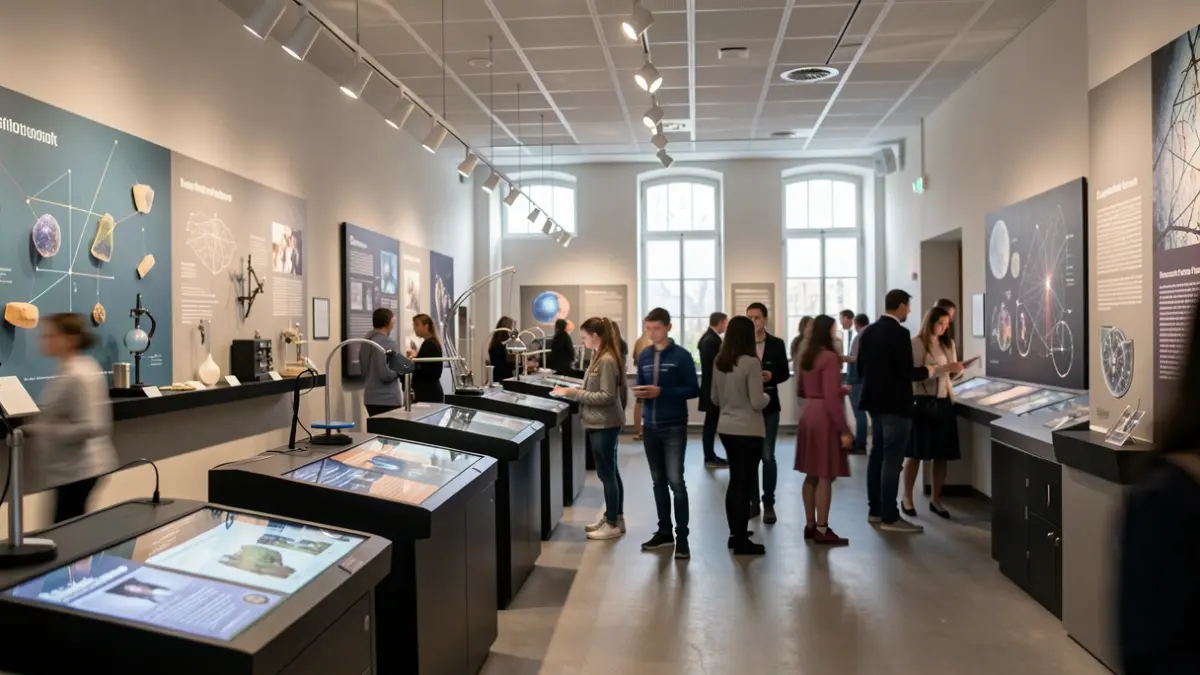
The institution offers a wide range of activities for the educational community, including visits, workshops, itineraries, and resources adapted to different educational levels. The MNCN-CSIC aims to be an increasingly open, accessible, and inclusive space, maintaining its program of free activities for people with disabilities and vulnerable groups.
Throughout the course, key events such as the European Researchers' Night and the Madrid Science and Innovation Week will be held. In the spring, a new edition of the Scientific Congress for Schoolchildren will take place, where Secondary and Baccalaureate students will present their own research projects.
The Paleo in the Neighborhood project continues to expand its reach, bringing paleontology and archaeology to new educational centers. The free application Paleo-Go will provide teachers with a tool to work on these contents before and after visiting the Museum.
The program also extends beyond regular school hours with Scientific After-School Activities, aimed at children aged 7 to 12. Participants are encouraged to discover the podcast Gabinete Sonoro and participate in the VII MNCN Drawing Contest, which combines science, creativity, and art. Additionally, those seeking a different experience can join the Museum Nights, an activity offering a unique perspective on the collections.
The Museum will continue to renew its exhibition offerings with new proposals on biodiversity, evolution, and the history of natural sciences for all audiences. The guide is intended to help find the activity that best suits each student group.