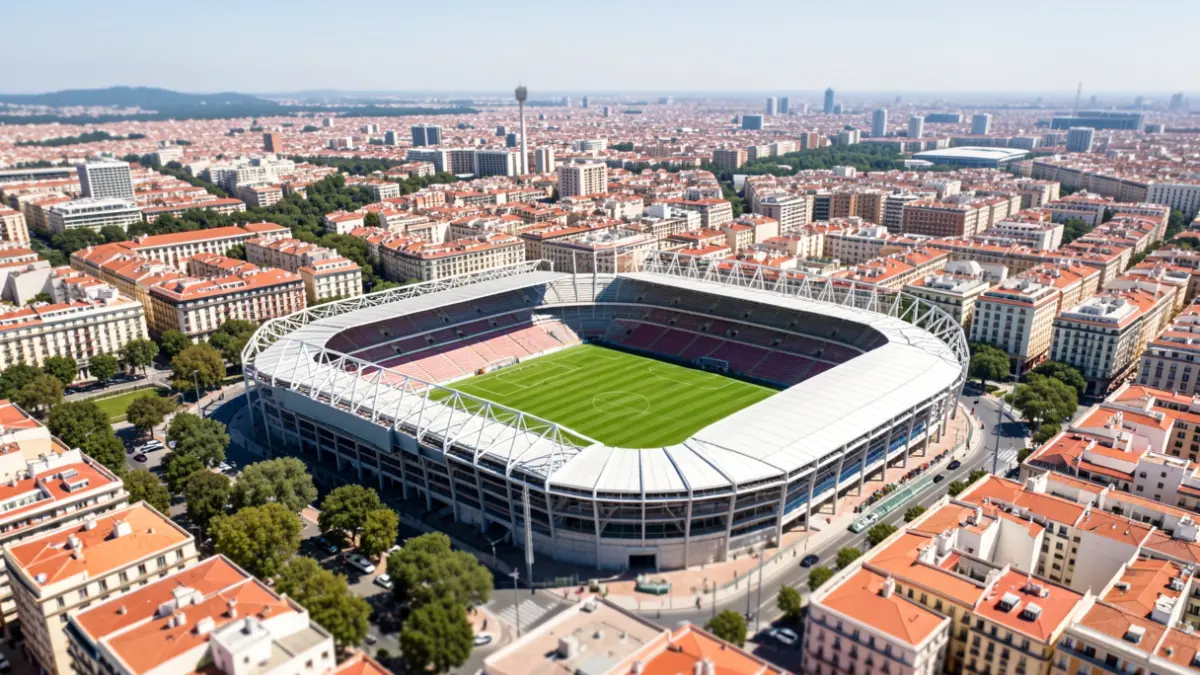
The project includes expanding the capacity and adapting the pitch to LaLiga standards for top-tier competitions. The renovation seeks to enhance the venue's functionality, accessibility, and ability to host new sports and social activities.
A key intervention involves constructing a new stand on the side facing Teniente Muñoz Díaz street, restoring the stadium's historical four-sided seating configuration. Symmetrical cantilevered stands are planned, allowing for a rearrangement of the venue through an aerial expansion without altering the current footprint.
The project also features the creation of a wide pedestrian zone, the integration of a technological frieze around the inner perimeter, and a light, translucent facade that will reveal part of the building's original structure. The stadium is listed with partial protection in Madrid's General Urban Planning Plan.
The stadium's interior will undergo a complete refurbishment, including new seating, updated corridors and stairs, and improvements to other field infrastructure and services. Space distribution for areas such as team changing rooms, the press room, trophy room, mixed zone, and the honorary box will also be optimized.
Furthermore, a multifunctional building with underground parking will be constructed on a nearby Community of Madrid-owned plot on Arroyo del Olivar street. This new infrastructure will connect directly to the stadium, enhancing its services and transforming the complex into a space for various sports and social initiatives, particularly for the Puente de Vallecas district.
The Community of Madrid will seek private financing for the management of the new stadium, fostering a public-private partnership for its concession.