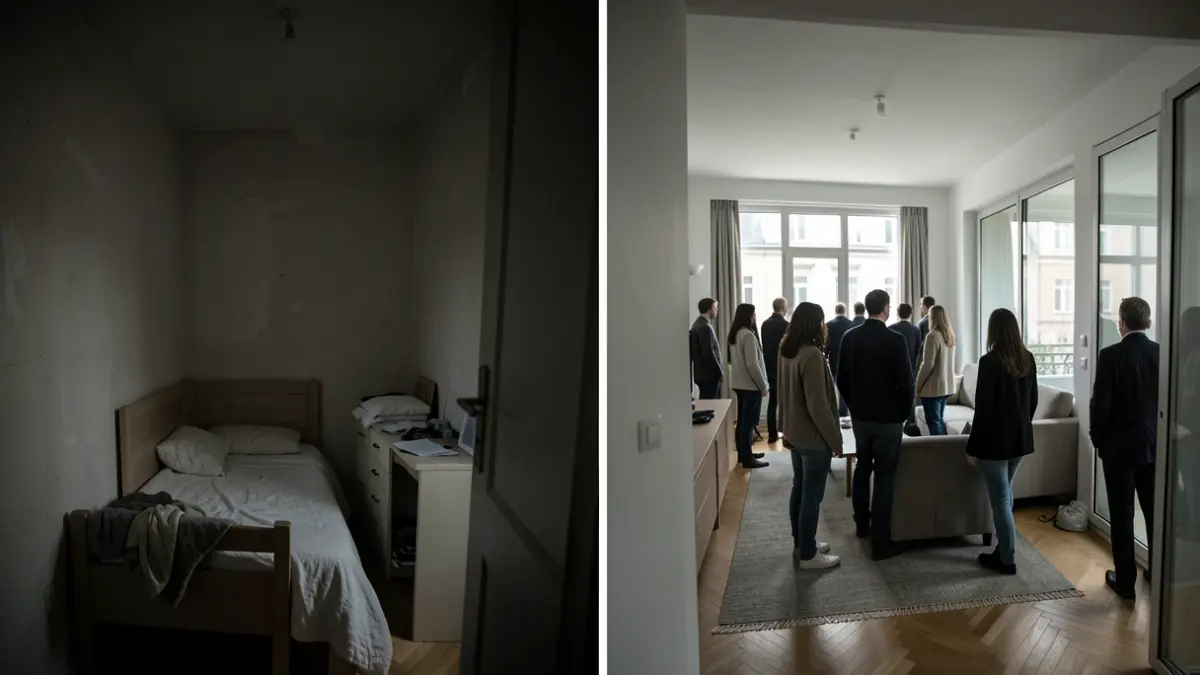
The V Cofidis Observatory on Economy, Sustainability, and New Trends in Spanish Households 2026 reveals that 60.6% of residents in Madrid have had to make residential decisions because of rental costs. The most common measures include moving to a smaller and more economical home (21.2%), relocating to the outskirts (15.2%), and starting to share a flat (14.1%). The study, conducted among 6,185 Spanish households, points to growing economic fragility and reduced financial margin, with difficulties in saving and facing unforeseen expenses.
The impact of rental prices is significant, with 74% of Madrid households dedicating over 30% of their income to cover rent, often exceeding the recommended 35% to avoid over-indebtedness. Twenty-two percent of tenants reduce other expenses to pay rent, while 8.1% resort to help from family or friends. Despite this, 69% of households can afford rent solely with their salary.
Economic pressure is reflected in limited savings capacity: 23% of Madrid households save nothing, and 34% save less than 10%. Furthermore, 16.7% of households have received external financial support in the past year, primarily used for basic needs (43.2%) and rent or mortgage payments (26.1%). The ability to respond to unforeseen expenses is also low, with 21% unable to cover a €5,000 expense.
In terms of responsible consumption, price is identified as the main barrier to choosing sustainable food options by 58% of Madrid households. However, the willingness to change is widespread, with 78.3% open to modifying consumption habits if there is an economic return, either through long-term savings (36.6%) or immediate savings (22.3%).
Specifically in the city of Madrid, 69% of households allocate over 30% of their income to rent. Twenty-five percent cut other expenses, and 9.4% rely on external help. Regarding savings, 22% save nothing and 33% save less than 10%. Twenty-one percent of the capital's households could not afford an unforeseen expense of €5,000, and nearly 8% could not even cover €1,000.