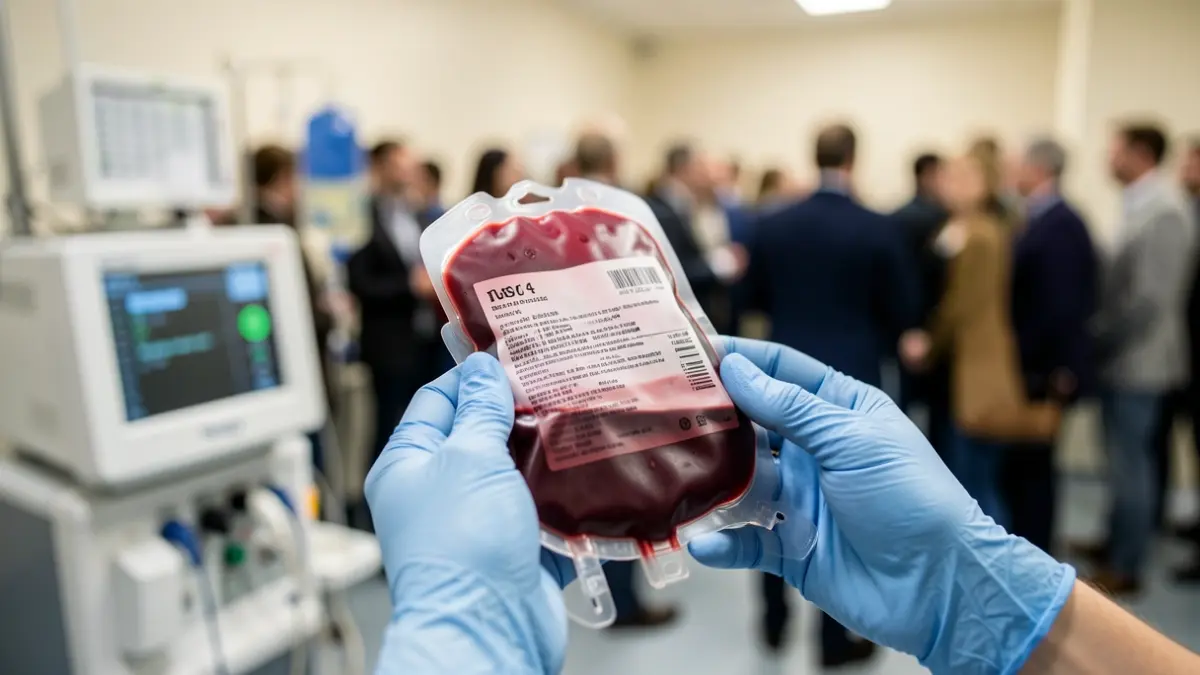
The Blood Transfusion Center of the Community of Madrid has issued an emergency call due to a drastic drop in blood reserves. Blood groups 0+, 0-, A-, and B+ are now in red alert, necessitating an immediate response from citizens to prevent disruptions in hospital care across Madrid.
Blood group A+ is also showing signs of strain, currently in yellow alert, and donors of this type are advised to visit donation points within the next two to three days. While groups AB+, AB-, and B- remain at normal levels, the Transfusion Center emphasizes the importance of regular donation as a habit to avoid future sharp declines in reserves.
Blood is an irreplaceable component in modern medicine, crucial for emergencies, surgical procedures, cancer treatments, and scheduled transfusions. To meet the constant demand, the region requires approximately 900 donations daily.
The limited shelf life of blood components necessitates continuous renewal of reserves. Blood cannot be stored indefinitely, making public solidarity essential to ensure its availability and quality when needed.
Residents of Madrid have numerous options for donating blood. In addition to the Valdebernardo Transfusion Center, there are 30 hospitals equipped for donations, mobile units from the Community of Madrid and the Red Cross, and a dedicated Red Cross donation center at Juan Montalvo street, number 3, in Madrid.
All information regarding hours and addresses can be found on the official website www.comunidad.madrid/donarsangre. The basic requirements to donate are being between 18 and 65 years old, weighing over 50 kilograms, and being in good health. The process is quick, safe, and takes approximately 20 minutes, with each donation potentially saving lives.