
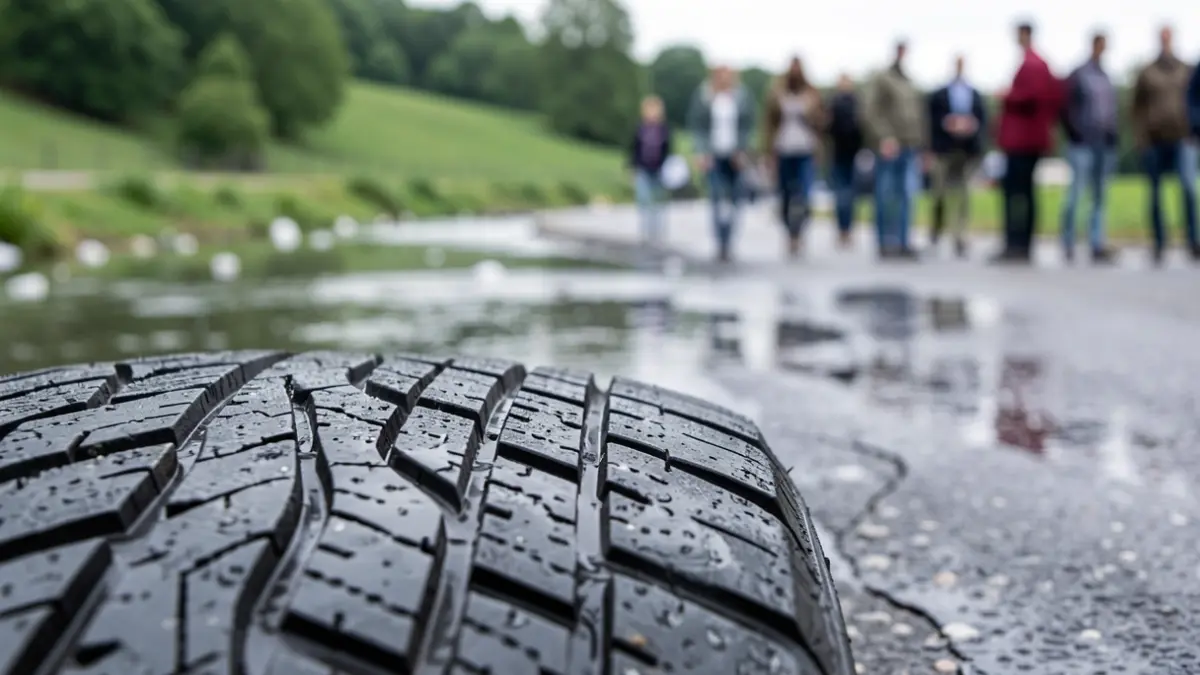
Road traffic not only emits polluting gases; the constant friction of tires against asphalt releases small rubber particles and chemical additives. These compounds, often unstable, detach easily and, washed away by rain, reach sewers, treatment plants, and finally, rivers, affecting aquatic ecosystems.
Research by the CIEMAT's Unit for POPs and Emerging Contaminants in the Environment has, for the first time, analyzed the complete cycle of these compounds. The study integrated an examination of wastewater (influent and effluent of treatment plants), the generated sludge, and surface water from the Tagus River basin. Using advanced technology (UHPLC-MS/MS), 25 compounds derived from tire wear were tracked.
The results confirm a widespread presence of these pollutants in all three analyzed media. Benzotriazoles and benzothiazoles were the most abundant, along with 6PPD-quinone, a transformation product toxic to aquatic life. Conventional treatment plants only remove a portion, and concentrations are higher in urban and heavy traffic areas, confirming roads as the primary source.
Wastewater sludge acts as a reservoir for compounds that bind to particulate matter. As this sludge is frequently used as fertilizer in Spanish agriculture, there is a risk of these pollutants entering cropland and accumulating over time, potentially posing a threat to soil organisms.
In the aquatic environment, the combined exposure to the mixture of substances reaches moderate risk levels in areas of high human influence, and 6PPD-quinone is associated with a high acute risk. The European Union has recently added 6PPD and 6PPD-quinone to its watch list, a precursor to establishing legal limits.
The study highlights the need for continuous monitoring, improved wastewater treatment processes, and consideration of these contaminants in future regulations, adopting a 'One Health' approach that links human, animal, and environmental health.