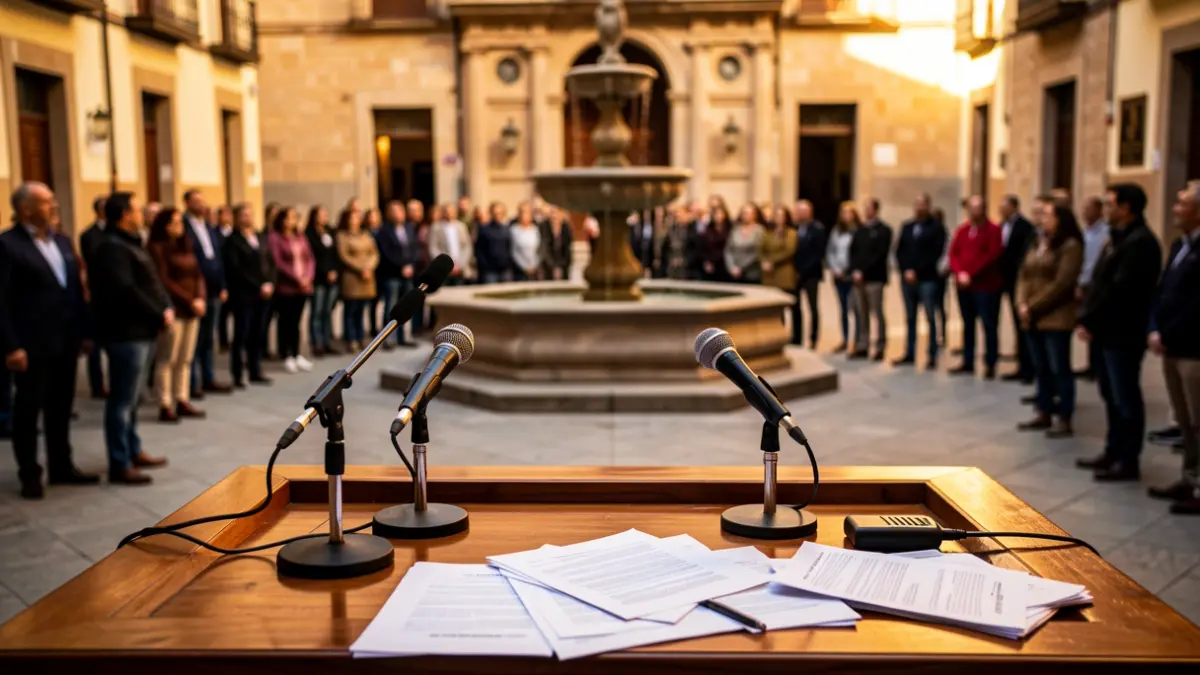
In the political landscape, some cities view socialist primaries as a healthy exercise in internal democracy, a means to renew leadership, or a friendly competition. However, Alcalá de Henares appears to present an exception, where the mere mention of the word 'primaries' elicits sideways glances, weather checks, and even suspicions of conspiracy.
This phenomenon contrasts with the normality observed in other municipalities. While in Madrid, socialist spokesperson Reyes Maroto announces her candidacy for the mayoral primaries without incident, and in Leganés, an alternative led by Sara Oviedo emerges without causing alarm, in Alcalá, the simple convocation of an event about the party's future seems to generate more caution than enthusiasm. The situation is striking, given it involves the same party, the same statutes, and an already established democratic procedure.
“"‘Very well… and who puts the bell on the cat?’"
The situation recalls Samaniego's fable about mice agreeing to bell a cat to anticipate its presence. While the idea generates unanimous enthusiasm initially, the crucial question of who will dare to carry out the action reveals the gap between intention and reality. Within Alcalá's socialism, for years, private conversations have often pointed to the need for a new era, regaining enthusiasm, or redefining the project. However, when it came time to step forward, silence prevailed, highlighting the difficulty in finding someone willing to take the lead.
The so-called 'renewers,' though late in their appearance, have needed time to conclude that a caretaker committee should manage a transition, not become permanent. Their decision to step forward marks a turning point, although the debate seems to have shifted. Now, the concern lies not so much in the advisability of primaries, but in the mere fact that the possibility has been publicly raised.
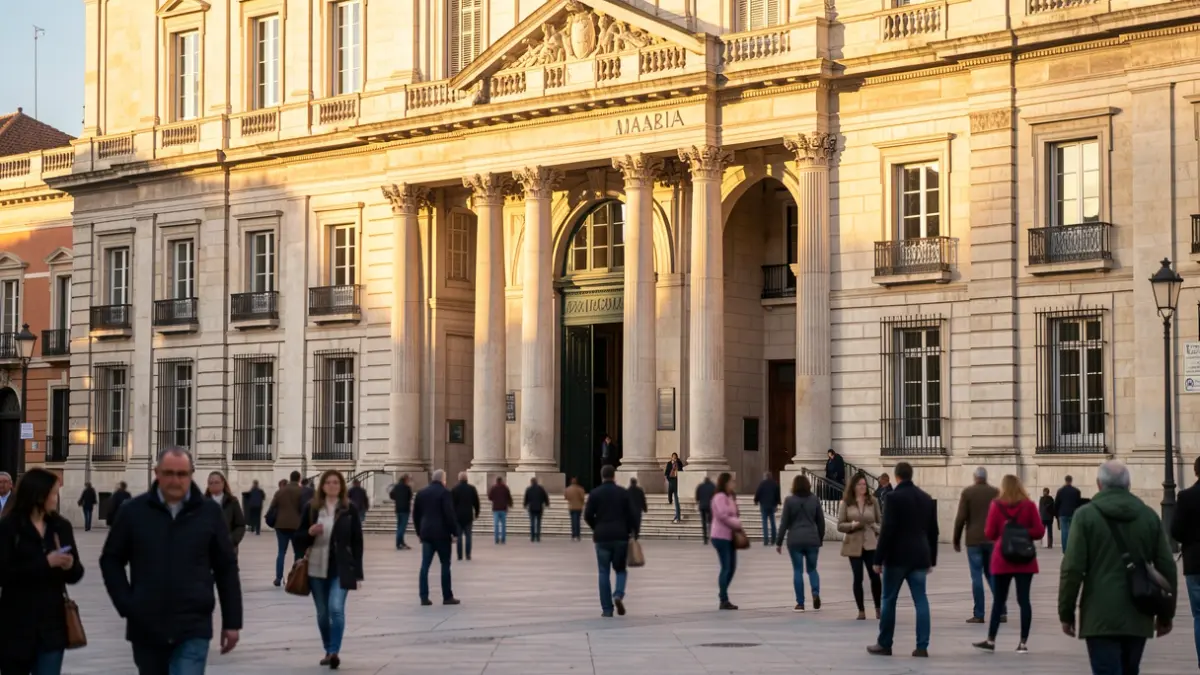
Questions arise as to why a democratic procedure like primaries is perceived as a healthy exercise in Madrid and a risk in Alcalá. What distinguishes the Puerta del Sol from the Plaza de Cervantes to make the same process acquire such disparate meanings within thirty kilometers? Hypotheses, for now, seem to lean towards environmental explanations, such as the climate or humidity of the Henares river.
It is undeniable that primaries involve personal ambitions, strategies, and calculations. However, their purpose is precisely to order these ambitions through a known procedure, subjecting interests to a collective decision, which constitutes the essence of internal democracy.
Furthermore, it is crucial to remember that primaries do not guarantee electoral victories nor automatically solve an organization's problems. Their value lies in conferring legitimacy, ensuring that whoever attains a position has passed through the filter of the membership, a significant political asset after turbulent periods.
The reluctance towards any conversation about primaries suggests that the real debate may not be about the best project for Alcalá's PSOE, but rather whether to allow members to decide for themselves. This question underscores the nature of democracy, which periodically consults public opinion.
The recent survey published by ALCALÁ HOY, while not an oracle, has brought a latent debate to the surface. Its greatest contribution was not presenting data, but reminding us that certain questions, if ignored, do not disappear. Just as Cervantes portrayed Don Quixote seeing giants where there were only windmills, in contemporary politics, some seem intent on discovering conflicts where there are simply citizens exercising their right to vote for their ideas.
In the coming months, it will become clear who was right. Perhaps the 'renewers' will find the path more arduous than imagined, or those who today view internal debates with suspicion will eventually recognize their value. The uncertainty of the outcome is precisely the greatness and the burden of primaries.
Finally, the fable of the mice resonates: the problem was not the bell itself, but the unsettling possibility that the cat could also hear its jingle, suggesting that intentions and reactions can be more complex than they appear.