Under the title Madrid, 1950s, Cranes, Mud, and Dreams, and in collaboration with the Filmoteca Española (Spanish Film Archive), the free program will offer three films reflecting the capital's profound social and urban transformation. These films address rural exodus, the growth of peripheral neighborhoods, housing shortages, and the stark social inequalities of the era.
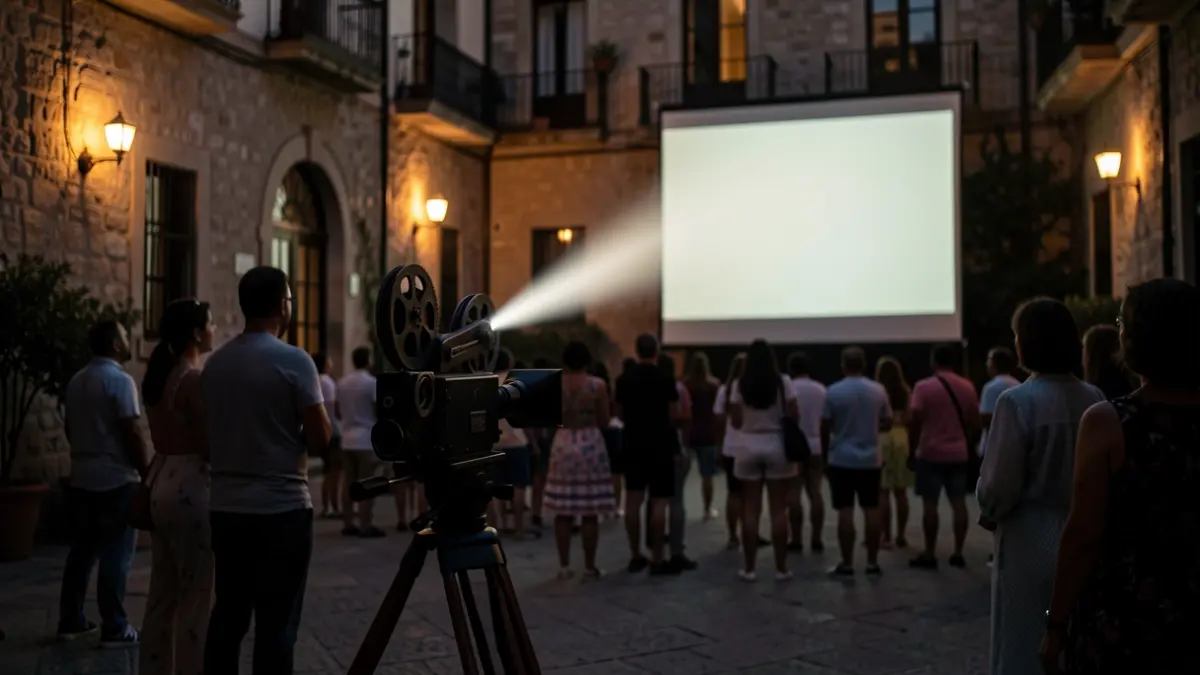
True to its commitment to preserving cinematic heritage, all screenings will use an original 35mm projector. Before each session, an explanation of its operation will be provided, offering the audience a chance to experience these works in their original format and learn about the traditional craft of film exhibition.
The cycle begins on Thursday at 10:00 PM with Surcos (1951), directed by José Antonio Nieves Conde. The film narrates the arrival of a farming family in Madrid seeking a better future, showcasing recognizable locations like Atocha station, Carabanchel Cemetery, and Lavapiés square. It serves as a portrait of internal migration and the post-war challenges.
On Friday, at the same hour, El inquilino (1957), also directed by José Antonio Nieves Conde, will be screened. The film tells the story of a couple with four children desperately seeking housing as their building is slated for demolition. Thanks to the conservation efforts of the Filmoteca Española, the definitive version considered by the director will be shown.
The closing event on Saturday features Los golfos (1959), the debut feature by Carlos Saura. Set in Madrid's outskirts, it follows a group of youths surviving through petty theft while one dreams of becoming a bullfighter. Before the screening, the director of the Filmoteca Española, Valeria Camporesi, will present the research and restoration work that recovered Saura's initial cut intended for the 1960 Cannes Festival.
The Águila Mueve programming naturally dialogues with the exhibition Madrid en construcción: 1940-1985 (Madrid Under Construction: 1940-1985), open for free until September 22 in the Sala Cristóbal Portillo. The exhibition gathers photographs by artists such as Juan Pando Barrero, Otto Wunderlich, and Martín Santos Yubero, tracing four decades of urban, social, and architectural transformation in the region, complementing the cycle's cinematic narrative.