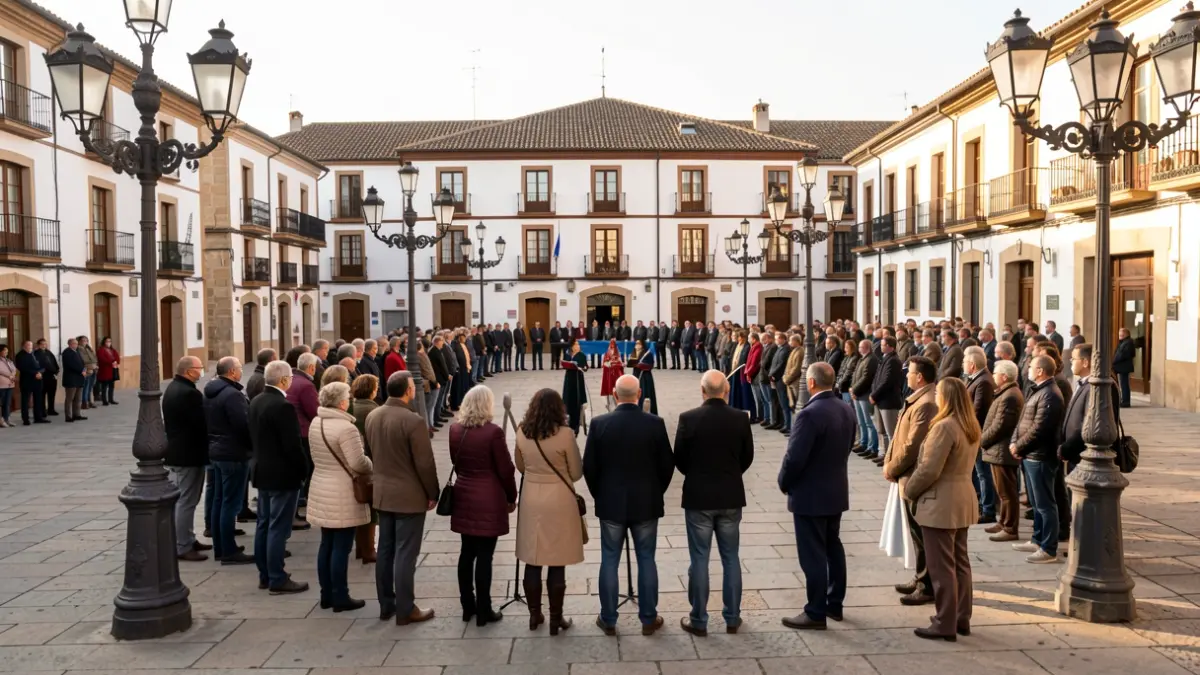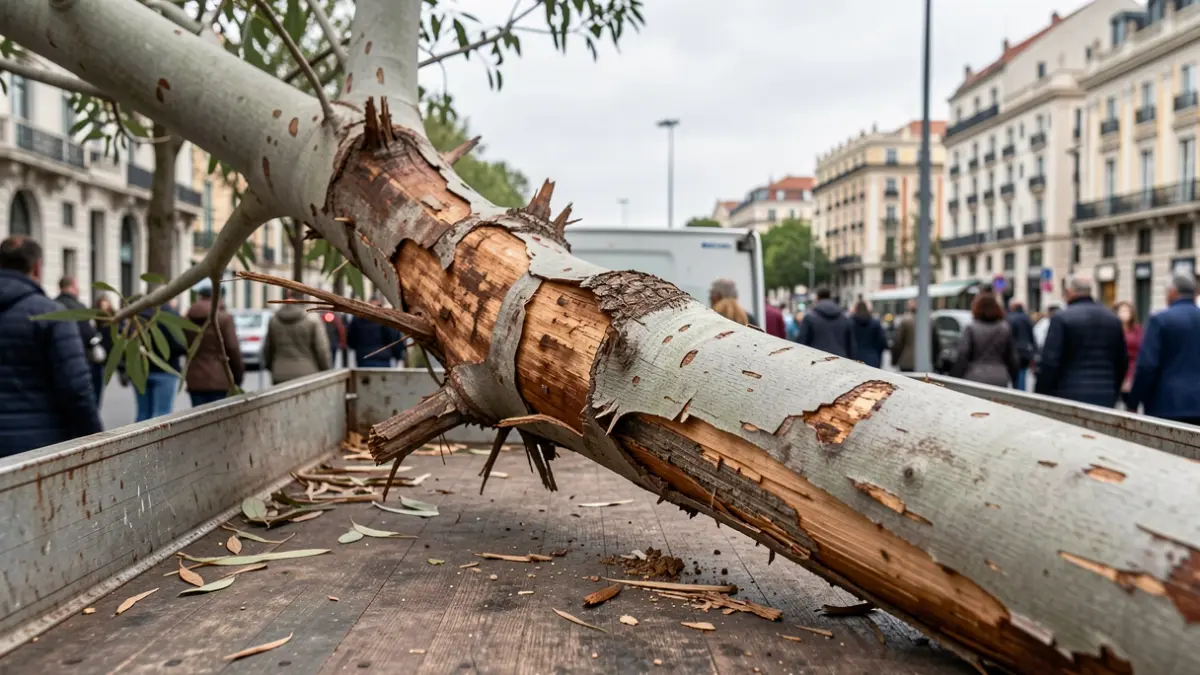
The Citizen Tree Council, along with the Regional Federation of Neighborhood Associations of Madrid (FRAVM), has expressed its strong rejection of the recent removal of six mature acacia trees (Albizia julibrissin) in Plaza de Cibeles. This action, carried out by the Madrid City Council to clear space for the main stage during the Pope's visit, has been labeled by the groups as a 'disguised felling' that contradicts the sustainability principles promoted by the pontiff in his encyclical Laudato si.
Although the Consistory justifies the intervention by stating that the six specimens have been moved to municipal nurseries, environmental groups maintain that the operation is technically irreversible. They argue that the trees' maturity, the damage sustained during extraction and transport, and the high temperatures recorded in May render their re-rooting unviable. This situation echoes the controversy of February 2025, when two specimens moved for the construction work at the Santiago Bernabéu stadium died shortly after.
The complaint also focuses on the management of public resources following a change in aesthetic criteria to decorate the city with the Vatican flag's colors (white and yellow). The Municipal Greenhouse of El Retiro had produced over 80,000 plants for general decoration, which were discarded as they did not match the new theme. Due to the risk of decomposition, these plants were urgently donated to schools, neighborhood associations, and urban gardens. The lack of foresight has forced the City Council to make an urgent purchase of flowers from external suppliers, thus doubling public spending to meet the new aesthetic requirements.
Social entities have urged the municipal government to abandon the technical subterfuges used to justify the loss of arboreal mass in the capital, considering this deployment clashes with the sobriety advocated by the Archdiocese of Madrid.