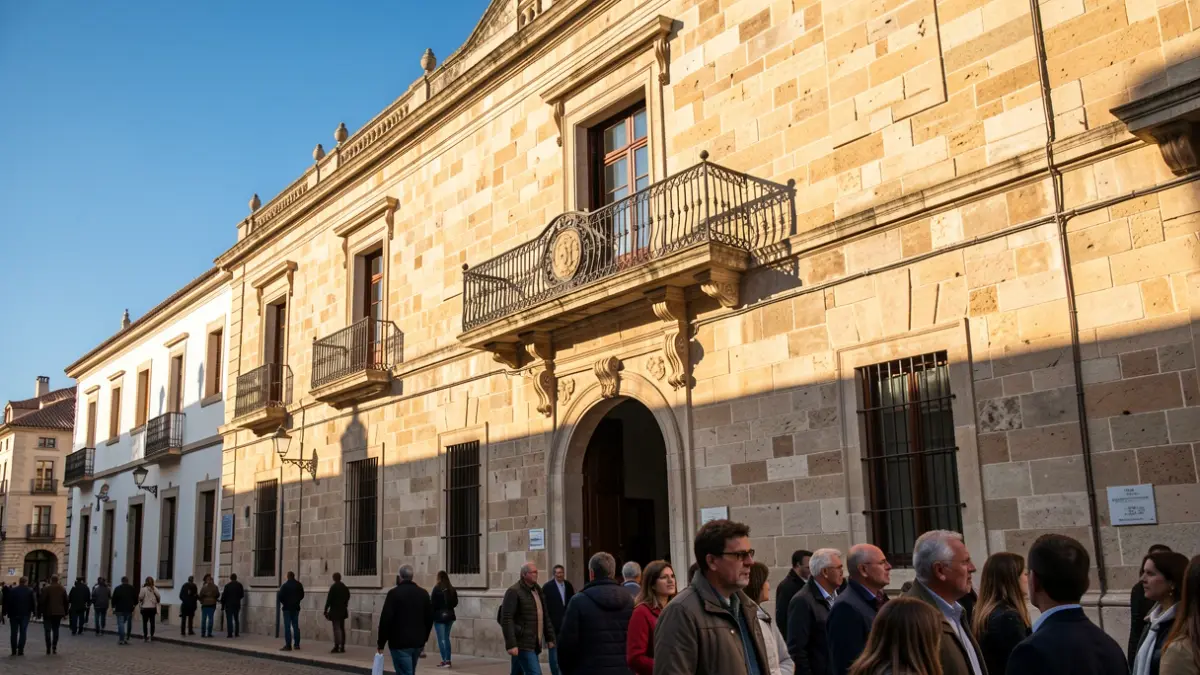
Alcalá de Henares, September 26, 2026.- The Alcalá de Henares City Council has announced and awarded the 'World Heritage City' Award, recognizing the valuable work of protection, administration, and dissemination carried out by the Aranjuez Cultural Landscape Foundation (FAPC).
The jury, presided over by mayoress Judith Piquet, highlighted the FAPC's management, which views the Aranjuez Cultural Landscape as a common, dynamic, and living asset, fostering institutional collaboration and citizen participation. The FAPC also promotes the Alliance of Cultural Landscapes.
This award coincides with the commemoration of the 25th anniversary of Aranjuez's declaration as a UNESCO World Heritage site, and underscores the twinning between the two Madrid-based cities.
The FAPC, a non-profit private entity founded in 2005, serves as the management body for the Aranjuez Cultural Landscape, coordinating initiatives from local, regional, and state administrations for its rehabilitation and improvement.
Its objectives include territorial sustainability, optimizing heritage, natural, historical, and cultural resources, and fulfilling commitments related to the UNESCO declaration. It also aims to support biodiversity recovery, improve the urban environment, and promote sustainability.
The Foundation operates in three main areas: monitoring and coordinating actions affecting the Cultural Landscape, managing national and international relations with other World Heritage entities, and focusing on education and dissemination, including landscape interpretation, environmental education, and citizen participation.
The Aranjuez Cultural Landscape, declared a World Heritage site in 2001, is notable for the complex relationship between nature and human work, the influence of the Crown since the 16th century, and the integration of the Tajo and Jarama rivers. It covers 2,047.56 hectares and includes historic orchards, tree-lined promenades, riverbanks, the Palace, its gardens, and the historic city center.
The original design of its elements remains largely intact, with only a discreet intrusion of modern communication routes. The historic 19th-century railway line adds a fundamental charm and attribute of contemporary culture.