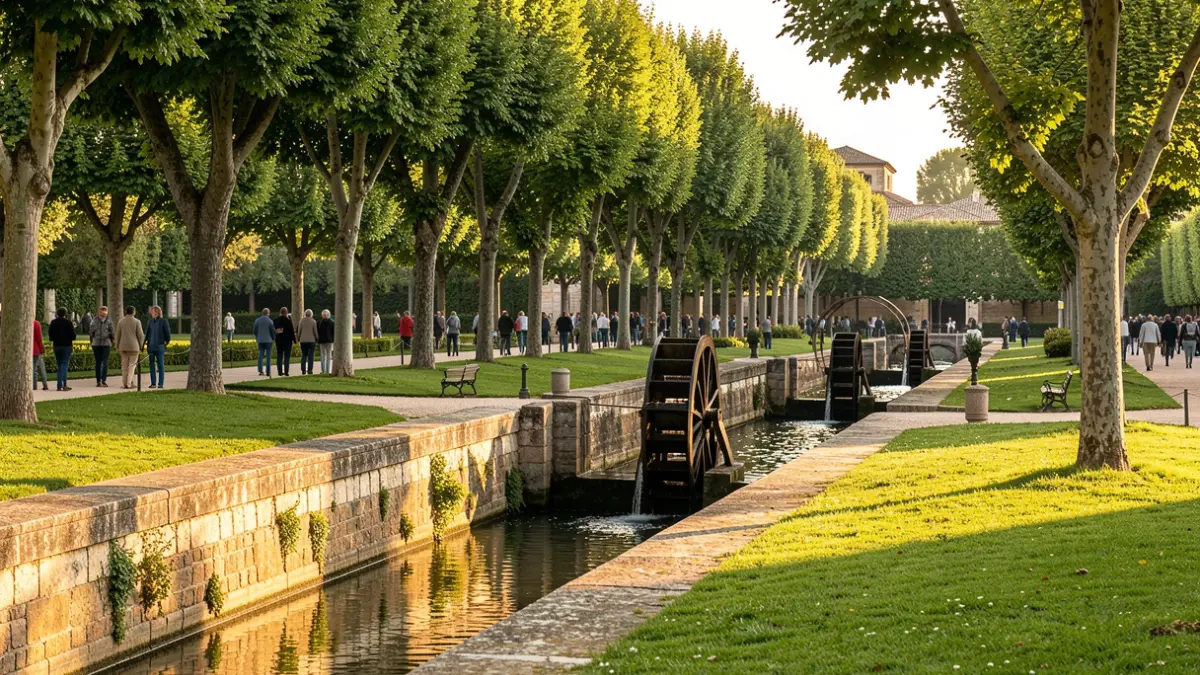
The Aranjuez City Council has launched the traditional irrigation system, allowing water to flow through important channels and ditches in the city. The water wheel in the Azuda Forest Park plays a key role, supplying water to tree-lined areas with ash, plane, and white poplar trees. These tasks also include the maintenance of historical hydraulic structures such as embankments, registers, and gates.
The Delegation of Green and Blue Projects and Infrastructures of the City Council coordinates these efforts, which extend along historic tree-lined streets like San Antonio Street, Toledo Street, Chillones Street, and Reina Street. The initiative is carried out in collaboration with entities such as Patrimonio Nacional, IMIDRA, the Water User Communities of Aves and Azuda, and the Tagus Hydrographic Confederation.
The main objectives are to supply water from the Tagus River to Aranjuez's historic trees and to ensure efficient water use, maintaining the complex irrigation network. This positions Aranjuez as a significant municipality in hydraulic engineering in Spain.
Irrigation has begun in the channels fed by the water wheel of the Azuda Forest Park, benefiting the tree-lined areas and reforestation of that park, as well as San Antonio Street and Carretera de Toledo. In the coming days, work will expand to other areas with this traditional system.
This recovery of historic irrigation joins other modern intelligent and automatic irrigation systems, including the expansion of the network with reclaimed water. All of this will form part of the new Aranjuez Efficient Irrigation Systems Plan, currently in development.
Through these actions, Aranjuez benefits from significant environmental advantages and preserves much of the cultural legacy for which it was named a World Heritage Cultural Landscape.