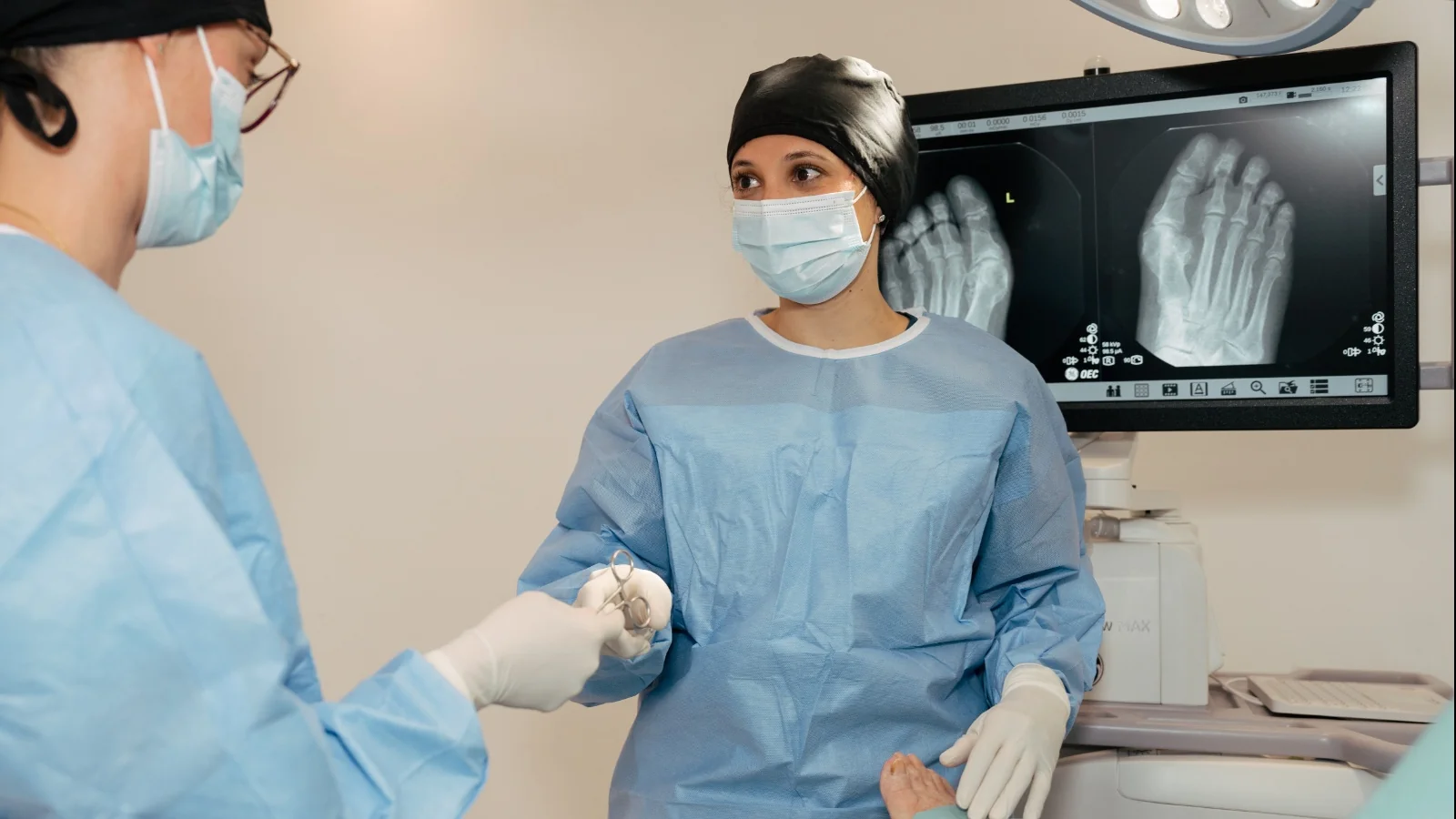
For decades, the image associated with bunion surgery has been the same: an aggressive operation, with a wide incision, weeks without putting weight on the foot, and a recovery that could last for months. That memory—often inherited from a family member's experience years ago—is still the main reason today why many people delay their consultation, despite the pain or difficulty wearing normal shoes.
The current reality is very different. Microsurgery or minimally invasive surgery techniques allow for the correction of a bunion or hallux valgus through incisions of just a few millimeters, without the need for screws in most cases, and with a postoperative period that, for many patients, allows them to walk in special footwear from the very same day. There is no hospital admission or cast, and the aesthetic result of the scar is negligible.
This evolution is not limited to the classic bunion. The same techniques are applied today to other foot deformities that for years were treated with much more invasive surgeries, such as claw or hammer toes, offering comparable results with a notably faster recovery.
"What we find most in the consultation is not that people don't know they have a bunion, but that they have been postponing the surgery for years for fear of a process that, in reality, no longer exists as they remember it," explains Dr. Sara Benamar, a foot surgery specialist at Pievital. "When we explain what the technique is like today, the most common reaction is surprise: they didn't expect it to be so simple."
Dr. Benamar insists that not every deformity requires immediate surgery, and that the first step is always an individualized assessment. But for those who live with pain, difficulty walking, or finding suitable footwear, knowing that there are much less invasive alternatives than they imagine can be, in itself, a reason to stop postponing the consultation.