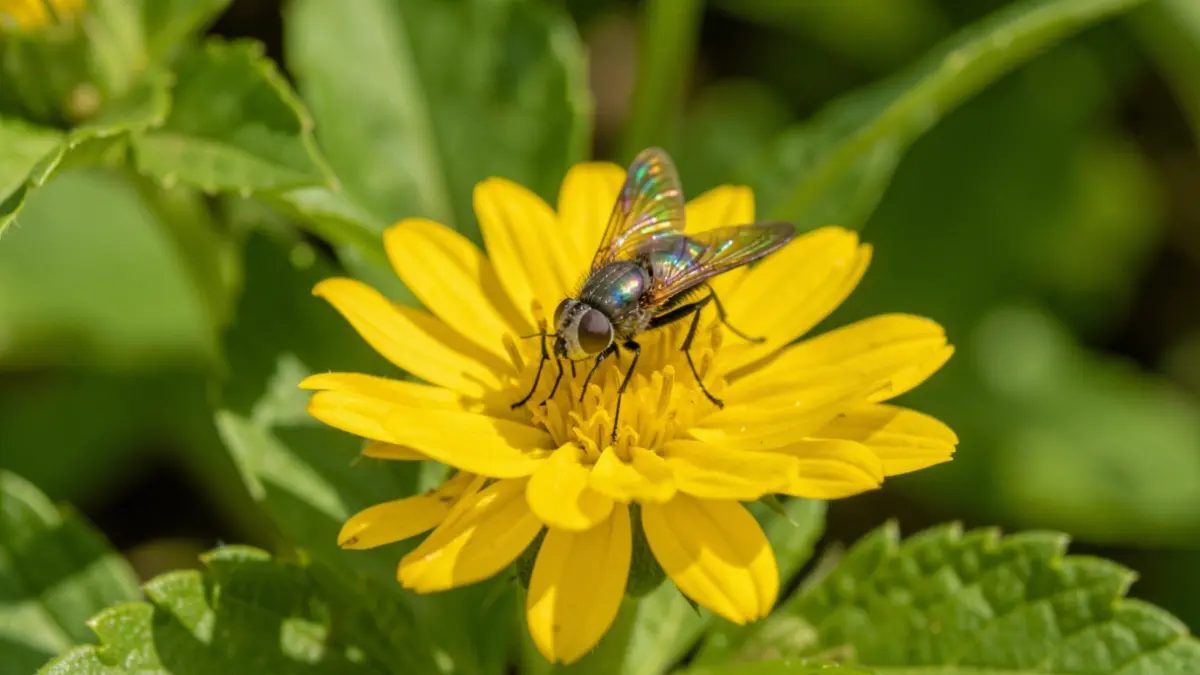
The inclusion of this hoverfly species in the catalog was published on October 19th in the Official State Gazette (BOE), through an Order from the Ministry for Ecological Transition and the Demographic Challenge. The Royal Botanical Garden-CSIC thus becomes a valuable refuge for Mallota dusmeti, also known as Dusmet's hoverfly.
This flower fly, endemic to the western Mediterranean, has been observed and documented since 2024 by naturalist Javier Martín, a collaborator with the Scientific Culture Unit of the RJB-CSIC. This year marks the centenary of its description by entomologist José María Andréu. The species is also featured in the "Visual guide to wild bees and other pollinators of the Royal Botanical Garden-CSIC and Madrid's green spaces", published by Editorial CSIC and available for free download.
Adult Mallota dusmeti are floricolous and efficient pollinators, flying from March to July and feeding on pollen and nectar, with a particular preference for spurge and rockrose flowers. However, their larval stage leads a very different life. The larvae develop within moist cavities of accumulated water in mature tree trunks such as holm oaks, oaks, and ash trees, where they feed on microorganisms associated with wood decomposition.
The abundance of centenary trees and the presence of decaying wood at the Royal Botanical Garden, characteristics uncommon in other green areas of Madrid, make it an ideal habitat for this and other species, thereby promoting biodiversity through the diversity of ages, habitats, and ecological niches.