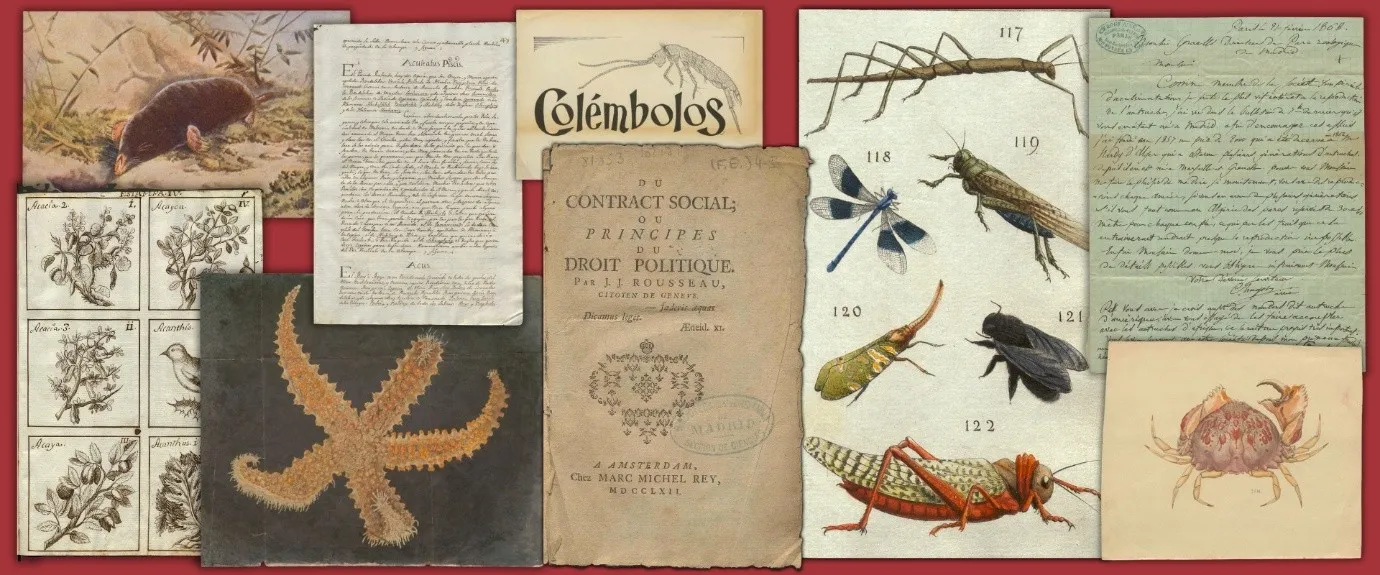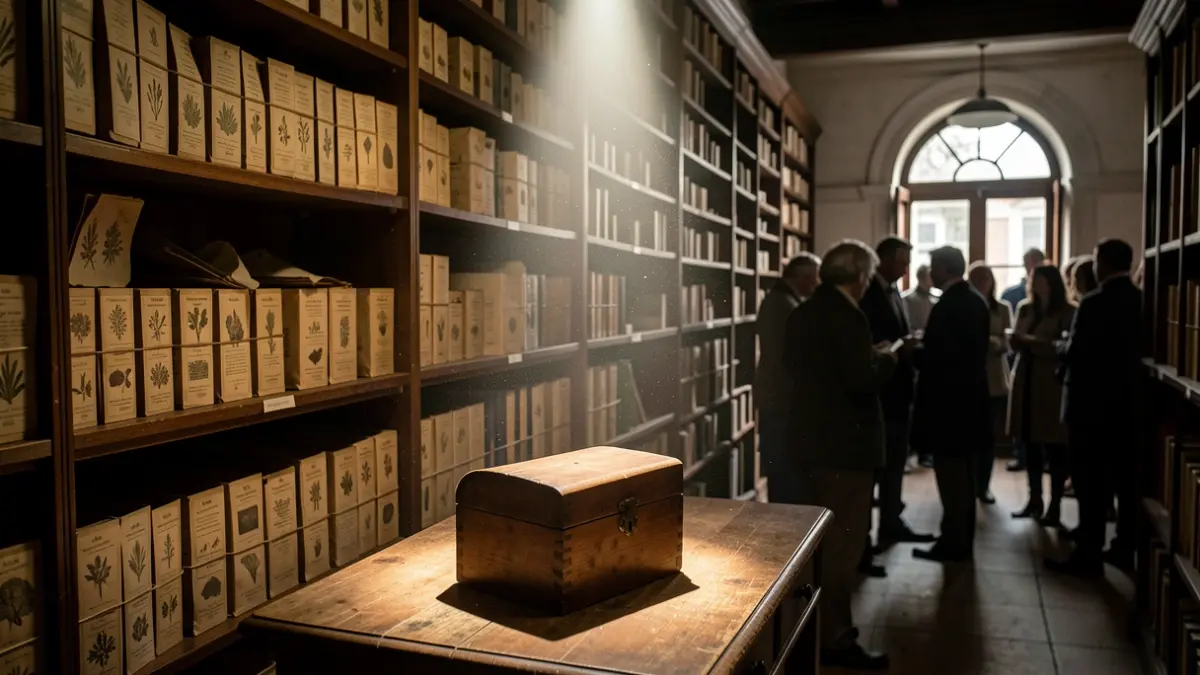
In the second basement of the Herbarium of the Royal Botanical Garden-CSIC, in Madrid, lies deposit S59, a repository of botanical material primarily from the 18th and 19th centuries originating from former colonies. This material, unclassified for various reasons and gathered as discards, forms a blind spot within the official archive.
This setting serves as the starting point for 'Estados generales' (2025), an experimental film-documentary by Mauricio Freyre. The work reimagines the return journey of a packet of seeds from this deposit to the location where they were collected on the southern coast of Peru. The film inaugurates this Tuesday, October 6th, the XI edition of Cine en el Jardín, organized by the Royal Botanical Garden (RJB) and the Spanish Association of Landscape Architects (AEP).
Mauricio Freyre explains that the film conceives a "counter-narrative" to explore the "spectral capacity of the archive" and examine the continuity of "contemporary neocolonial structures," linking colonialism, European modernity, and anthropocentrism.
“"For colonial science, the colonized plant world, beyond being an object of study, was an economic tool: capital susceptible to exploitation and, in turn, an instrument of control and subjugation. Facing this logic, the film establishes dialogues between absent dimensions, between landscapes and specters, between bodies and shadows."
The 'Cine en el Jardín' initiative, now in its eleventh edition, aims through cinema to explore our relationship with nature, territory, and gardens. The inauguration will be attended by the president of the AEP, Iñaki Viñuela, the director of the RJB-CSIC, María-Paz Martín, and the cycle coordinators, Manuel Sánchez Hernández (AEP) and Jesús García Rodrigo (RJB-CSIC).
María-Paz Martín highlighted that the film "undertakes a much broader journey connecting Madrid with the Peruvian coast and the Chincha valley," inviting reflection on the construction of scientific knowledge, historical memory, colonial legacy, and the circulation of plants.
Mauricio Freyre, an artist and filmmaker born in Lima, Peru, and residing in Madrid since 2019, has developed his practice at the intersection of film and installation, examining blind spots in history. His work 'Estados generales' premiered at FIDMarseille in 2025, receiving awards such as FIPRESCI and Talents at D'A, and has been presented at international festivals.
The Cine en el Jardín cycle consists of four sessions, each preceded by a thematic walk through the Garden to the auditorium. After the presentation and screening, a brief colloquium will take place. Access is via Claudio Moyano street, 1, except for the group on the walk who enter via Plaza de Murillo, 2. Tickets for all four sessions are already sold out.
The second session, on October 13th, will screen the German silent film 'The Miracle of Flowers' (Das Blumenwunder) by Max Reichmann, celebrating its centenary.