The increasing resistance to antimicrobials and the slowdown in the discovery of new drugs pose a serious threat to public health. The World Health Organization has prioritized combating the ESKAPE group bacteria (Enterococcus faecium, Staphylococcus aureus, Klebsiella pneumoniae, Acinetobacter baumannii, Pseudomonas aeruginosa, and Enterobacter spp.), known for their ability to develop and accumulate antibiotic resistance, complicating the treatment of infections they cause. These bacteria are responsible for tens of thousands of deaths annually in hospitals across Europe and over a million globally.
Julio Jesús Estrada Valbuena, a researcher at the Department of Microbiology and Parasitology at UCM, highlights that bioprospecting in soils allows for the identification of microorganisms that, by competing for resources, produce substances capable of inhibiting the growth of others, which could serve as a basis for developing new antibiotics.
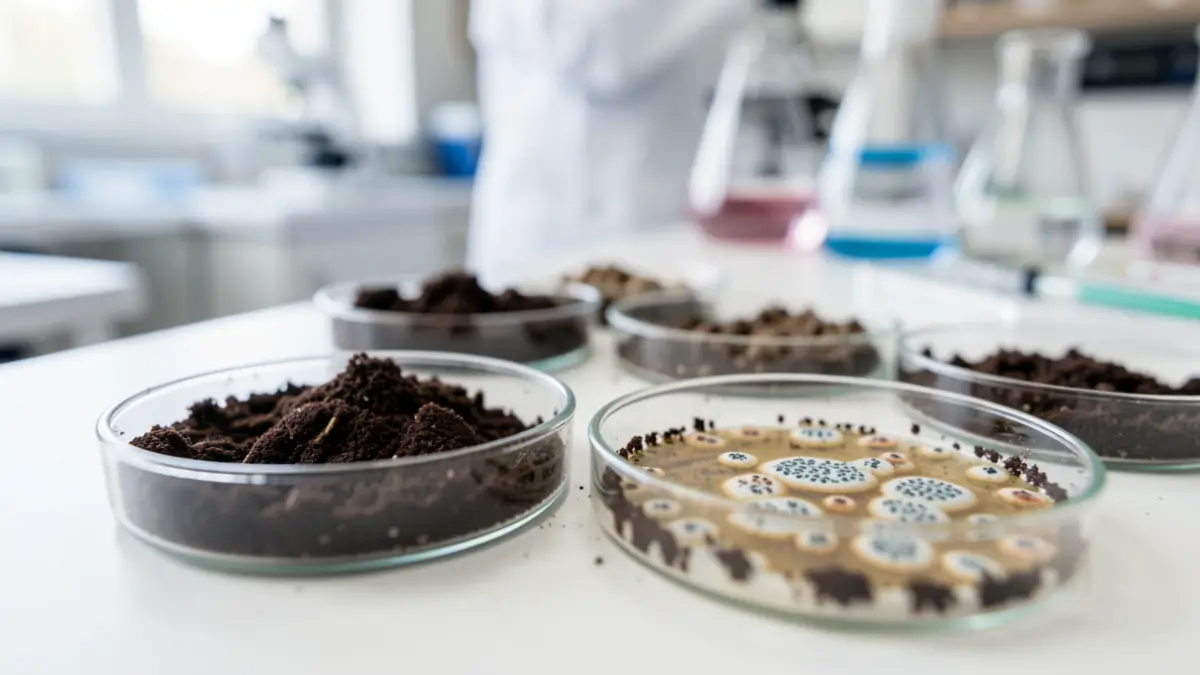
In the MicroMundo project, secondary, high school, and university undergraduate students collected a total of 478 soil samples from various locations in the Community of Madrid between 2017 and 2019. From these samples, UCM researchers isolated 6,403 bacterial colonies, which were initially evaluated for their ability to inhibit the growth of two harmless model strains (Kocuria rhizophila and Escherichia coli).
The study, published in Medicine Bulletin, indicates that 261 isolates (4.1%) showed inhibitory capacity. Of these, 45 were selected for preservation and subsequent characterization.
Upon evaluating these 45 candidates against a panel of clinically relevant pathogens, including members of the ESKAPE group, 58% maintained their antibiosis capacity. Staphylococcus aureus was the most sensitive pathogen, while Gram-negative bacteria showed reduced susceptibility.
Molecular identification of species such as Bacillus pumilus, Paenibacillus peoriae, and Bacillus cereus was performed on the most promising isolates. Crude organic extracts obtained maintained the ability to inhibit microbial growth, demonstrating bactericidal activity in minimum inhibitory concentration (MIC) and minimum bactericidal concentration (MBC) assays.
Víctor J. Cid, Professor of Microbiology at the UCM Faculty of Pharmacy and a study author, adds that the chemical diversity of soil microbiota still holds many secrets and that the MicroMundo project is a benchmark in service-learning and citizen science from a One Health perspective, with potential for discovering new drugs.